
The Dominican Republic (Spanish: República Dominicana) is a Caribbean country that occupies the eastern half of the island of Hispaniola, which it shares with Haiti. Besides white sand beaches and mountain landscapes, the country is home to the oldest European city in the Americas, now part of Santo Domingo.
Explored and claimed by Columbus on his first voyage on December 5, 1492, the island of Ayití, named by Columbus as La Hispaniola, became a springboard for Spanish conquest of the Caribbean and the American mainland.
The island was first inhabited by the Taínos and Caribes. The Caribes were an Arawakan-speaking people who had arrived around 10,000 BCE. Within a few short years following the arrival of European explorers, the population of Tainos had significantly been reduced by the Spanish conquerors. Based on Fray Bartolomé de las Casas (Tratado de las Indias) between 1492 and 1498 the Spanish conquerors killed around 100,000 Taínos.
 The first European settlement founded on the American continent was located on La Isabela, founded in 1493 using a 15th century style located in La Isabela, Puerto Plata (19º53'15.08" N 71º04'48.41" W). The City of Santo Domingo was founded by Bartolomé Colón, on August 5, 1496 and was later moved by Frey Nicolás de Ovando to the west side of Ozama river in 1502.
In 1606 the royal crown of Spain ordered the depopulation of the western end of the island due to high piracy and contraband. This led to the French invasion and the establishment of Haiti.
In 1697, Spain recognized French dominion over the western third of the island, which in 1804 became Haiti. The remainder of the island, by then known as Santo Domingo, sought to gain its own independence in 1821, but was conquered and ruled by the Haitians for 22 years; it finally attained independence as the Dominican Republic in 1844.
A legacy of unsettled, mostly non-representative rule for much of its subsequent history was brought to an end in 1966 when Joaquín Balaguer was elected president for his second, non-consecutive term (he had first served from 1960-1962). He maintained a tight grip on power for most of the next 30 years, until international reaction to flawed elections forced him to curtail his last term, hold new elections in 1996, and give up power. Since then, regular competitive elections have been held every four years.
The Dominican economy has had one of the fastest growth rates in the hemisphere.
Tropical maritime with little seasonal temperature variation. There is a seasonal variation in rainfall. The island lies in the middle of the hurricane belt and is subject to severe storms from June to October. It experiences occasional flooding and periodic droughts.
Rugged highlands and mountains with fertile valleys interspersed.
- Los Haitises National Park
- Jaragua National Park
- National Park Isla Cabritos
- Armando Bermudez National Park
- Jose Del Carmen Ramirez National Park
- Sierra del Bahoruco National Park
- Parque Nacional del Este
- Monte Cristi National Park
- Parque Historico La Isabela
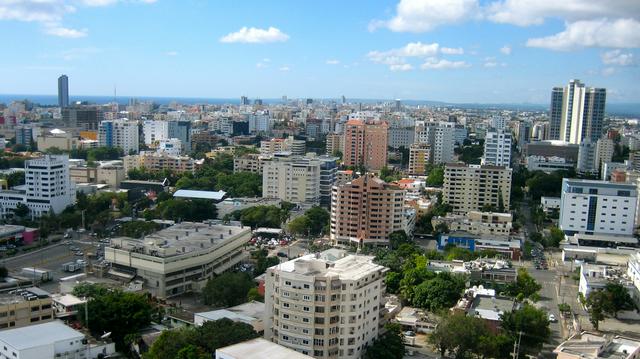
- Santo Domingo. - Capital.
- Higüey.
- Juan Dolio.
- Puerto Plata.
- Punta Cana.
- San Pedro de Macoris.
- Santa Barbara De Samana.
- Santiago de los Caballeros.
- Sosua.
- Rio San Juan.
- La Romana. - 3rd largest city
Santo Domingo. - Capital.
Higüey.
Juan Dolio.
Puerto Plata.
Punta Cana.
San Pedro de Macoris.
Santa Barbara De Samana.
Santiago de los Caballeros.
Sosua.
Rio San Juan.
La Romana. - 3rd largest city

- Bayahibe.
- Bonao.—secluded village
- Cabarete.
- Jarabacoa.
- Las Terrenas.
- Las Galeras.
- Miches.
- Bahia de las Aguilas.
- Playa Bonita.—secluded beach strip popular with Europeans and Americans in the know
Bayahibe.
Bonao.—secluded village
Cabarete.
Jarabacoa.
Las Terrenas.
Las Galeras.
Miches.
Bahia de las Aguilas.
Playa Bonita.—secluded beach strip popular with Europeans and Americans in the know
The official language of the Dominican Republic is Spanish. You will find some Spanish-English bilingual locals especially in Santo Domingo and tourist areas. If you speak some Spanish, most Dominicans will try hard to meet you half way and communicate. If you have a problem, you can probably find someone who speaks sufficient English (or probably French and possibly German, Italian or Russian) to help you out. Dominicans are quite friendly and will be quite helpful if you are polite and respectful. Haitians living in the DR may speak Haitian Creole and you may hear a few African and Arawakan words interspersed with the Spanish, especially in rural areas. Communication should not be a problem even for those who speak only a minimum of Spanish. If you are traveling to one of the large all-inclusive hotels, you will have no language problems.
There is one UNESCO World Heritage Site, the old town of Santo Domingo which is the oldest European city in the Americas. In addition to that there are many national parks and beaches in the country.
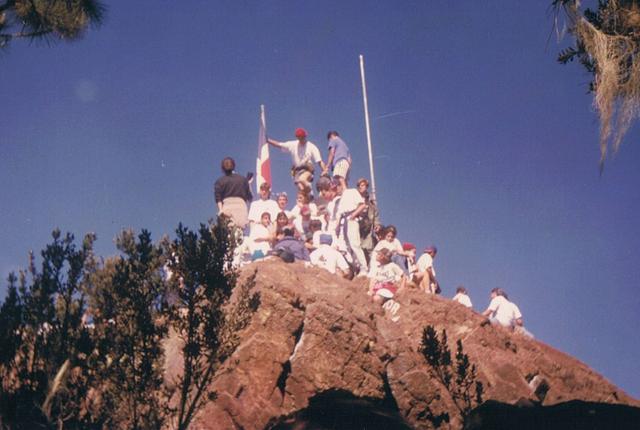 Climb/hike to the top of Pico Duarte. At 3,098m it's not only the highest mountain in the Dominican Republic but in the whole Caribbean.
The currency of the Dominican Republic is the Dominican peso denoted by the symbol "$" or "RD$" (ISO code: DOP). Wikivoyage uses "RD$" for clarity.
At airports and harbors you can change your US dollars and euros in Dominican pesos, though the rates there are not great. It makes sense to get only as many pesos as necessary there and change more later on at your destination or to withdraw pesos from an ATM with your credit- or debit-card. You may not be able to exchange back Dominican pesos to US dollars and Euros in most countries, so do it before leaving.
In most cities one can find a Banco Popular and Scotiabank - their ATMs allow withdrawals with Visa, Mastercard and Maestro. They usually impose a very low limit but allow several withdrawals at once. Even though it is possible to withdraw money in the bank directly, most will flatly refuse this and point one at their ATMs. Unless one is very proficient in Spanish and willing to fight this out with the staff one has to obey (and thus pay a fee for every withdrawal - between RD$100 and RD$200). Depending on the season the limits change - in high season the limits are higher, in low season they go lower. It always makes sense to try a value that ends in 900 if the 1,000 don't work (e.g. if 4,000 is over the limit, try 3,900 first before trying 3000). Bank Reservas does not work for US-issued Fidelity debit card and could cause errors in the statement. Banco Popular would decline withdrawals too, while Scotiabank has been very reliable.
One of the best spots in the Colonial District of Santo Domingo to shop is the several blocks long outdoor mall, El Conde Street. It offers everything from street vendors (it is not recommended to eat off these) to knock-off name brand clothing for extremely inexpensive prices. There are some very pleasant outdoor restaurants that serve as perfect spots to people watch and drink Presidente (their most popular beer).
During the day, there are also several touristy shops where you can buy cheap presents for the family back home including authentic paintings and beautiful jewelry. There is also a very nice cigar shop at the end of the mall across from the cathedral. Clothes, however, are generally very economical and often of good quality. Most prices can be negotiated. US dollars are accepted in most areas.
- Beer: Presidente, Brahma, Bohemia
- Rum: Brugal, Barcelo, Bermudez, Macorix, Siboney, Punta Cana.
- Mama Juana: a mixture of bark and herbs left to soak in rum, red wine and honey.
Additionally, other imported drinks are available for purchase—at least in the towns and cities—they might not be as readily available out in the countryside.
Do not drink tap water! Locals, even in the most rural areas, will either boil their water or purchase bottled water. Eating salads or other food that may be washed in tap water is not advisable. Ice is a bad idea as well, except in luxury hotels and restaurants (which produce ice from bottled water). If you plan on cooking or washing dishes for longer stays, it is a good idea to rinse everything with bottled or boiled water before use.
Beer: Presidente, Brahma, Bohemia
Rum: Brugal, Barcelo, Bermudez, Macorix, Siboney, Punta Cana.
-hXHXF.medium.jpg)
Food in the Dominican Republic is typical Caribbean fare, with lots of tropical fruits, rice, beans, and seafood. Most restaurant meals will cost an additional 16% tax plus 10% service: for very good service, it is customary to leave an additional 10%.
The Dominican Republic is generally a safe country. Although the major cities of Santo Domingo and Santiago have experienced the growth of a thriving middle class, construction booms and reached a high level of cosmopolitanism, the Dominican Republic remains a third world country and poverty is still rampant so you need to take common sense precautions:
- Try to avoid being alone in cities as muggings are fairly common.
- Very few streets are lit after dark, even in the capital of Santo Domingo. Those that are lit are subject to routine power outages.
- Wild dogs are common throughout the country but largely ignore people (feeding these dogs is not recommended as this may induce aggressive behavior).
- Western travelers should dress casually and remove rings and other jewelry when away from tourist destinations, but common tourist destinations, particularly the more expensive and the luxury hotels and areas, are very safe.
- Sex tourism is prevalent in the Puerto Plata province of the country, so you may be hassled by young men or women trying to offer you 'services'. A firm 'No' is good enough. The age of consent is 18, and tourists who have sex with minors may also be prosecuted by their home country.
- There are no laws dictating the maximum amount of alcohol that can be drunk prior to driving. However, there is a 0.05% limit for professional drivers. Be wary of vehicles, especially during the late evening, as there is a much higher possibility at that time that the driver is intoxicated. It is illegal for tourists and visitors to drink and drive and besides it being a bad idea you may be penalized for doing so.
- The level of professionalism of the National Police is somewhat debatable. To protect income from tourism, the government has established the Politur or "tourist police" for the safety of foreign tourists. Travelers should contact this agency if any problems are encountered as they will have a much more positive response than with the national police.
 Malaria can be a rare issue around rainforests if travelers don't take protective measures such as repellents against mosquito bites. No cases have been reported over the past 8 years within the tourist areas. Be sure to consult with a physician before departure.
There is a risk of dengue fever and chikungunya fever which is contracted through mosquitoes that bite during the day and during some seasons of the year. No vaccine is available, so again using mosquito repellent is advisable.
Many of the local foods are safe to eat including the meats, fruits, and vegetables.
Visitors, however, should not drink any of the local water and should stay with bottled water or other beverages. It is important for visitors to stay hydrated in the hot, humid climate.
Sunburn and sun poisoning are a great risk. The sun is very bright here. Use at least SPF30 sunblock. Limit sun exposure.
The country's adult HIV/AIDS prevalence is reaching 2.0% or 1 in 50 adults, which is almost 3 times higher than the USA. Practice safe sex.
Dominicans are kind and peaceful people. Attempts at speaking Spanish are a good sign of respect for the local people. Be polite, show respect, and do your best to speak the language, and you will be treated with kindness.
Avoid talking about Haiti. Although relations have improved, many Dominicans, particularly of the older generations, harbor resentment towards Haitians. Santo Domingo was invaded and occupied by Haiti for a good part of the 19th century, and the Dominican Republic actually fought its first war of independence against Haiti, not Spain, after which the Dominican Republic faced several other invasions from its neighbor.
Trujillo's dictatorship massacred tens of thousands of Haitians in the 1930s, which fueled the resentment between both nations. Nowadays, about a million Haitians (which is a lot considering the small populations of either country) live in the Dominican Republic, most of them illegally. Some Dominicans' opinions towards illegal immigrants from Haiti are similar to some Americans' attitudes towards Mexican illegal immigrants, with the major difference that, unlike the US, the Dominican Republic is a small and poor country by world standards, but still much much richer and more stable than Haiti. Gang wars can erupt along the border, so stay cautious and be sensitive.
Still, the issues remain very complex and Dominicans often find their position to be misunderstood by foreigners. For example, the Dominican Republic was the first country to come to Haiti's aid in the 2010 Haitian earthquake and has made impressive efforts to help its neighbor during this crisis. This shows that despite their historical, linguistic, religious, cultural and ethnic differences, Haitians and Dominicans still consider each other to be brotherly, yet proudly independent, nations.
When staying at the luxury resorts or really any place in the Dominican Republic, it is advisable to tip for most services. The Dominican Republic is still a fairly poor country and tipping the people who serve you helps them better their sometimes dire economic situation.
Telephone numbers in the Dominican Republic use area code 809 with 829 and 849 as overlay codes. Telecommunications in the Dominican Republic use the North American Numbering Plan country code, 1, followed by the area code as in the US and Canada.
When in the Dominican Republic, the 3-digit area code followed by the 7-digit phone number must be dialed. When calling the Dominican Republic from the United States or Canada, this must be prefixed by the digit "1", it will be charged at international rate. From other countries the international prefix used in the originating country must be dialed before the "1".