
Dinant is a relatively small but very picturesque city in the province of Namur in Belgium. It stretches along the river Meuse against the steep rock face behind on the eastern side, with a thinner strip on the western side against a forest. Its old town is perhaps one the most impressive sights in Wallonia, but the locality is relatively remote. The main sights are all close to each other and not very numerous, while accommodation opportunities are scarce, so Dinant is probably a good option for a nice day trip from larger Belgian cities such as Brussels, Charleroi or Liège. It also can serve as the starting point for a more thorough exploration of the Ardennes.
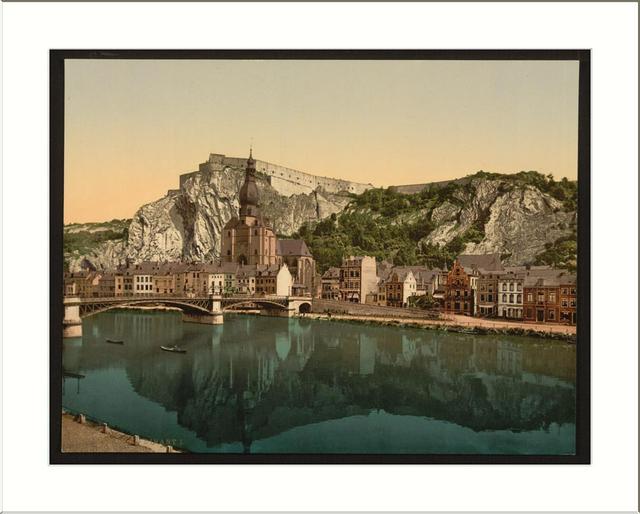 The site where Dinant is now located has been inhabited since neolithic times, and its name stems from Celtic for "divine valley". It grew to become an important city in the Middle Ages, specializing in producing fine objects out of a silvery brass alloy called dinanderie after its origin. Later the main industries were leather tanning, manufacturing of playing cards and the famous Dinant biscuits.
All of the time, Dinant found itself on the borders of various warring entities, also often falling in conflict with its metropole Liège and neighbour Namur, and was repeatedly pillaged and burnt down. Although at present it looks very much like an authentic old town, it was all but razed by the invading Germans in 1914, after the Battle of Dinant which went on record as one of the more important in the First World War. The city's historic part under the citadel was meticulously rebuilt and retains its pre-war appearance.
Dinant is also the birthplace of Adolphe Sax, the inventor of the saxophone. A street named after him passes in front of Dinant's most recognized landmark, the collegiate church.
A tourist information office can be found at the Dinant and the Upper Meuse Tourist Office, Avenue Cadoux, 8 (Near the bridge on the left bank., +32 82 22 28 70. 09:00—17:00., only a block or two from the train station and offers free WiFi.
- Collégiale Notre Dame de Dinant. The church dominating the city's riverbank stands in the place where a previous romanesque one was destroyed by rocks falling from the cliff in 1227. The collegiate church took many centuries to be completed, during which the original plan to build two towers was abandoned in favour of the single one with the onion dome we see today. This is why the church's facade is so unusually tall. The interior is even more striking, almost as tall as wide and twice as long, flanked by columns appearing both sleek in comparison to the structure and thick in human scale. The interior is kept in the simple gothic style characteristic for the Meuse region - this is thanks to the restoration work in the nienteenth century to bring stylistic uniformity to the interior. After the church's destruction in the First World War, the church was rebuilt verbatim to how it looked like before the war.
- Citadel of Dinant, Place Reine Astrid 3, +32 82 22 36 70. Daily 10:00—18:00. On a cliff, more than 100 meters above the River Meuse, it offers spectacular views of the town and countryside. A fortification may have stood on this spot as long ago as the fourth century, and the Bishop Prince of Liège certainly ordered the construction of a fortress on this spot in 1051, but the present structure dates to the early 19th century. It is reached from the town either by cable car or by the 408 steps cut into the hillside. The citadel plays host to a small Arms Museum and several interesting art pieces that reveal the glorious past of this Meuse town. €8,50 for adults, €6,00 for children aged 4-12.
- Grotte la Merveilleuse, Route de Philippeville 142, +32 82 22 22 10. This cave was discovered in 1904 and is one of the most beautiful ones in Belgium. There are small waterfalls inside the cave. A visit to the beautiful caves is highly recommended. They are easy to visit. A 50-minute guided tour costs 9€ for adults and 6€ for children. The hourly guided tours are in French, Dutch and English.
- Rocher Bayard. The forty meters tall rock needle at the Meuse riverbank according to the local legend been separated from the main rock mass by the strike of the hoof by Bayard, the magical horse carrying the four sons of Duke Ayman on the run from Charlemagne. The reality, however, is more prosaic - the separation happened in the times of Louis the XIV in order to build the road along the Meuse still in place today.
- Le triomphe de la lumière. Designed by Antoine Wertz and originally meant to be put atop the rock of Dinant, the statue weilding a sword and a torch is said to have inspired Frederick Auguste Bartholdi when he created the Statue of Liberty in New York City.
- Abbaye Notre-Dame de Leffe, Place de l'Abbaye 1, +32 82 22 23 77. Located in the neighbourhood of Leffe north of the Citadel, the abbey has been inhabited since 1152 and features a splendid organ.
- Maison Leffe, 23 Charreau des Capucines, +32 82 22 91 91. Tu-Su: 11:00—18:00. Leffe is a popular beer in Belgium and it originated in Dinant. The former abbey beer unfortunately is no longer made in Dinant, but in this museum you can learn all about the origins of the beer, the life of the monks and the actual Leffe, followed by a Leffe tasting. €7.
- French Military Cemetery, Chemin de la Citadelle. Finished in 1923, 1 104 French soldiers are buried here who died during battles in the Dinant region between 15 and 23 August 1914. On the right side of the cemetery, behind the French flag, there are 30 tombs of British, New Zealand and French soldiers who died during the Second World War.
Collégiale Notre Dame de Dinant. The church dominating the city's riverbank stands in the place where a previous romanesque one was destroyed by rocks falling from the cliff in 1227. The collegiate church took many centuries to be completed, during which the original plan to build two towers was abandoned in favour of the single one with the onion dome we see today. This is why the church's facade is so unusually tall. The interior is even more striking, almost as tall as wide and twice as long, flanked by columns appearing both sleek in comparison to the structure and thick in human scale. The interior is kept in the simple gothic style characteristic for the Meuse region - this is thanks to the restoration work in the nienteenth century to bring stylistic uniformity to the interior. After the church's destruction in the First World War, the church was rebuilt verbatim to how it looked like before the war.
Citadel of Dinant, Place Reine Astrid 3, +32 82 22 36 70. Daily 10:00—18:00. On a cliff, more than 100 meters above the River Meuse, it offers spectacular views of the town and countryside. A fortification may have stood on this spot as long ago as the fourth century, and the Bishop Prince of Liège certainly ordered the construction of a fortress on this spot in 1051, but the present structure dates to the early 19th century. It is reached from the town either by cable car or by the 408 steps cut into the hillside. The citadel plays host to a small Arms Museum and several interesting art pieces that reveal the glorious past of this Meuse town. €8,50 for adults, €6,00 for children aged 4-12.
Grotte la Merveilleuse, Route de Philippeville 142, +32 82 22 22 10. This cave was discovered in 1904 and is one of the most beautiful ones in Belgium. There are small waterfalls inside the cave. A visit to the beautiful caves is highly recommended. They are easy to visit. A 50-minute guided tour costs 9€ for adults and 6€ for children. The hourly guided tours are in French, Dutch and English.
Rocher Bayard. The forty meters tall rock needle at the Meuse riverbank according to the local legend been separated from the main rock mass by the strike of the hoof by Bayard, the magical horse carrying the four sons of Duke Ayman on the run from Charlemagne. The reality, however, is more prosaic - the separation happened in the times of Louis the XIV in order to build the road along the Meuse still in place today.
Le triomphe de la lumière. Designed by Antoine Wertz and originally meant to be put atop the rock of Dinant, the statue weilding a sword and a torch is said to have inspired Frederick Auguste Bartholdi when he created the Statue of Liberty in [[New York City]].
Abbaye Notre-Dame de Leffe, Place de l'Abbaye 1, +32 82 22 23 77. Located in the neighbourhood of Leffe north of the Citadel, the abbey has been inhabited since 1152 and features a splendid organ.
Maison Leffe, 23 Charreau des Capucines, +32 82 22 91 91. Tu-Su: 11:00—18:00. Leffe is a popular beer in Belgium and it originated in Dinant. The former abbey beer unfortunately is no longer made in Dinant, but in this museum you can learn all about the origins of the beer, the life of the monks and the actual Leffe, followed by a Leffe tasting. €7.
French Military Cemetery, Chemin de la Citadelle. Finished in 1923, 1 104 French soldiers are buried here who died during battles in the Dinant region between 15 and 23 August 1914. On the right side of the cemetery, behind the French flag, there are 30 tombs of British, New Zealand and French soldiers who died during the Second World War.
- Regional Cultural Centre, Rue Grande 37, entrance through Rue En Rhée, +32 82 21 39 39.
- Dinant Casino, Boulevard des Souverains 6, +32 82 69 84 84. Game machines, roulette tables and blackjack. Bar and restaurant with French dishes. Free parking on Place d'Armes.
- Taverne-bowling du Plateau, Chemin de la Citadelle 15, +32 82 22 28 34. M-F: 11:00—01:00, Sa: 14:00—02:00. Closed on Su. American bowling with 4 tracks accessible for everyone aged older than 5. Small restaurant but the food here receives mixed opinions.
- Les Bains de Dinant, Charreau des Capucins 28 (Next to Maison Leffe, +32 82 67 74 11. Sa-Su: 16:00—23:00. Wellness centre with warm baths, saunas, lounge, terrace and garden. Free private parking space. €29—€90.
Regional Cultural Centre, Rue Grande 37, entrance through Rue En Rhée, +32 82 21 39 39.
Dinant Casino, Boulevard des Souverains 6, +32 82 69 84 84. Game machines, roulette tables and blackjack. Bar and restaurant with French dishes. Free parking on Place d'Armes.
Taverne-bowling du Plateau, Chemin de la Citadelle 15, +32 82 22 28 34. M-F: 11:00—01:00, Sa: 14:00—02:00. Closed on Su. American bowling with 4 tracks accessible for everyone aged older than 5. Small restaurant but the food here receives mixed opinions.
Les Bains de Dinant, Charreau des Capucins 28 (Next to Maison Leffe, +32 82 67 74 11. Sa-Su: 16:00—23:00. Wellness centre with warm baths, saunas, lounge, terrace and garden. Free private parking space. €29—€90.
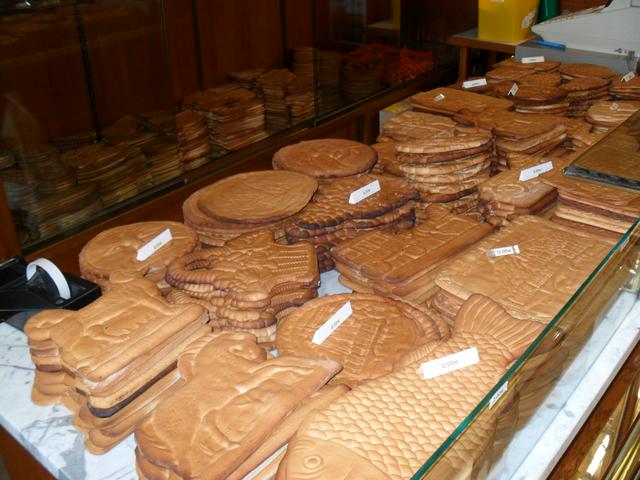 Couque de Dinant, a type of very hard biscuits, is the local speciality, typically eaten with coffee or hot chocolate.
There are several nice restaurants along the river, some with lovely views. Next to the departure points of boat tours, there is a Match supermarket. For a cheap lunch, buy some groceries and enjoy a picnic by the riverside!
- Hoa Sen, 49 Rue Grande, +32 82 64 68 81. This Thai/Vietnamese restaurant is a local favourite, so make a reservation if you're looking to eat here during a weekend, or come early. It opens at 18.30h.
- La Table d'Antonio, Rue Alexandre Daoust 49, +32 82 22 22 49. A cosy Italian restaurant with a nice outdoor terrace along the riverside. It's a small place with friendly owners and good value food. Lunch from €17, €34 for a 3 course dinner.
Hoa Sen, 49 Rue Grande, +32 82 64 68 81. This Thai/Vietnamese restaurant is a local favourite, so make a reservation if you're looking to eat here during a weekend, or come early. It opens at 18.30h.
La Table d'Antonio, Rue Alexandre Daoust 49, +32 82 22 22 49. A cosy Italian restaurant with a nice outdoor terrace along the riverside. It's a small place with friendly owners and good value food. Lunch from €17, €34 for a 3 course dinner.
There is free WiFi in the tourism office.
Being the relaxed small town it is, Dinant does not pose any major danger to travellers.
- Namur — You probably have to go through this city on your way to Dinant. This provincial capital is worth some time as well.
[[Namur]] — You probably have to go through this city on your way to Dinant. This provincial capital is worth some time as well.