
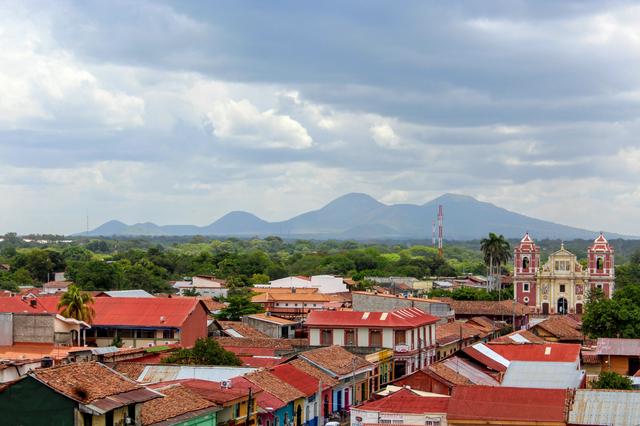
 León is one of the oldest cities in the Americas. It was founded in 1524 on a different site and moved here in 1610. With colonial splendor, it is the intellectual center of Nicaragua, renowned for its university, old churches, fine museums, revolutionary history and student life. It is also the home town of two of the finest poets in the Spanish language, Rubén Darío and Alfonso Cortés.
The core of León is its Central Park (Parque Central) with the adjoining cathedral, and most important sights can be found within a 10-minute walk from there. From the perspective of the Central Park, the city’s lively commercial area is in the northeastern quadrant, where you will find the banks, most stores, the two municipal markets behind the cathedral and the San Juan church respectively, as well as many hotels and restaurants. This is also where the main bus station is located, serving all destinations except the Pacific Ocean beaches. The more quiet cultural part of the city is in the northwestern and southwestern quadrants, and here you will find the university, the municipal theater, the cultural center, the park of the poets, the old monastery and the majority of the museums. The southeastern quadrant is home to the hospital, and it is the least interesting quadrant from a tourist perspective. The major exception to this general outline is a cluster of bars and restaurants one block west of the Central Park.
Fourteen blocks west of the cathedral is the center of Sutiava, which is older than Leon, and which used to be an independent town populated by indigenous Americans. It still has its own cultural flavor and traditions. Here you will find the Suitava church and central square, a couple of museums, some old church ruins, a small municipal market and the bus station for the Pacific Ocean beaches.
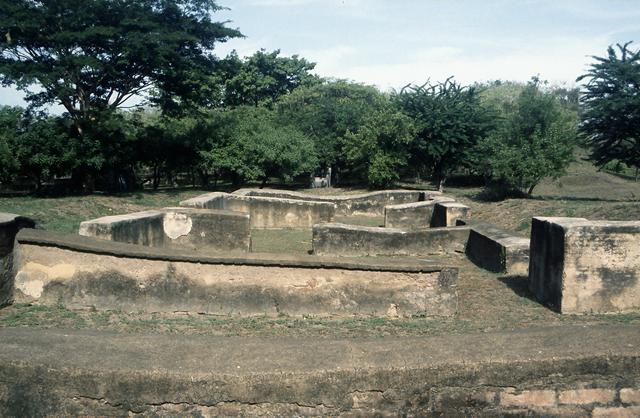 León is named after León, Spain. The original León was closer to Lake Managua (also known under its indigenous name Xolotlán) but evacuated after volcanic activity rendered it uninhabitable. Although the city (including some of the dead in the cemeteries and some of the saints in the churches) was moved almost entirely some ruins can still be seen of León viejo. After independence, the elites of León and Granada struggled over which city would be the capital, ultimately leading to civil war and Granada being burned down by liberal aligned filibuster William Walker late in 1856. León was dominated by the liberal faction and Granada by the conservatives. The fighting ended when Managua became capital, but Granada conservatives held onto the presidency until the rise of liberal general José Santos Zelaya in 1896.
After Granada, which is better preserved, León has the most colonial architecture in Nicaragua. It is a university town that stubbornly remains somewhat pro-Sandinista. During the 1979 revolution, the Sandinistas took over León in violent street by street fighting. Somoza then had the city bombed, after he lost it, which cost him a lot of sympathies because the bombs hit civilians and fighters alike. The National Guard took León back over, again in street by street fighting, but this time less intense since the Sandinistas melted away. Finally, the Sandinistas took León back over and held it until the Somoza government fell. You can still see bullet marks on some buildings. Also, there is a shell of a church on the road out of town that was destroyed during the bombing. Across the street from this church is the Museo de los Mitos y Leyendas Tradiciones (Museum of Myths and Legends), which prominently displays a statute of a Sandinista guerrilla holding a handmade bomb. Some sarcastically call it the Museo de las Traiciones (Museum of the Treasons) as a reference to how the Sandinista rank and file has been cheated by Daniel Ortega and the rest of the Sandinista elite.
León used to be the hub of cotton growing but that has declined. The economy is relatively depressed. Tourists have not been a large, visible presence in León, though it is popular among backpackers and as of late, tour groups. Still León sees many fewer tourists than Granada. León still is a university town, filled with students. Backpackers, volunteers and other extranjeros usually meld with local students. During semana santa (Easter week) León and the surrounding beaches of Las Peñitas and Poneloya get packed with Nicas and foreigners alike.
León has more colonial churches and cathedrals than any other place in Nicaragua. If you are still on the church tour, there are thirteen to check out in town.
The main attraction in León is the city itself, with its colonial houses and churches, and its vibrant student life. The two specific sights not to miss are the cathedral, with a side visit onto its roof, and the beautiful Ortiz-Gurdián Art Museum.
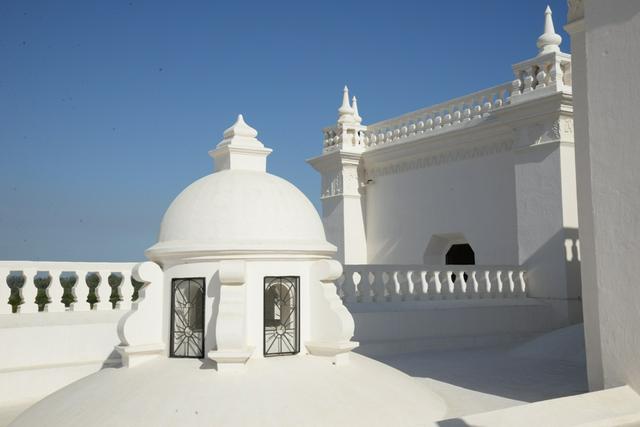
- León Cathedral. The biggest cathedral in Central America and a UNESCO World Heritage site. The cathedral is the final resting place of the poet Rubén Darío, as well as many other notable Nicaraguans. For a small fee you can climb the stairs up to the roof, where you get a great view of all of León's churches and the surrounding volcanoes. You also get a close-up view of the giant sculptures holding up the cathedral bells; just don't ring them. You can also go into the cellars beneath the cathedral.
- Central Park. A beautiful park with a fountain and lots of shady trees opposite the main cathedral. The park is a great place to people watch as it is packed with families and youth chatting, kids riding their bikes and vendors selling candy and drinks. On the weekends street performers, dancers and musicians may add to the atmosphere.
- Museum of the Revolution, Parque Central, Leon (Western side of Central Park.. The museum consists of a room with some displays and artifacts, none of which offer any explanations in English. The most unique aspect of this museum are the old guides, who provide an animated commentary on the beatings, arrests, street fights and assassinations of the revolutionary period, much of which are based on their own experiences. They will be sure to point out a picture of their younger self, rifle and all. NIO50.
- Park of the Poets. Newly renovated park honoring the major poets of León, including Rubén Darío, Alfonso Cortes, Salomón de la Selva, Azarías Pallais and Antenor Sandino Hernández.
- Ortiz-Gurdián Art Museum. Arguably the finest art museum in Central America, located in four inter-connected colonial houses. Excellent collection of 20th century Nicaraguan and Latin American art, but there is also indigenous, colonial and contemporary Latin American art. The museum also has some European art, including work by Picasso, Chagall and Miró. Even if you hate art, make a visit to enjoy the museums beautiful colonial architecture. C$20 general, C$10 student (with ID).
- Rubén Darío Museum. The colonial home of writer and poet Rubén Darío, founder of the modernismo movement in Spanish literature. Pick up some of his poetry; Azul is probably his most famous work.
- San Francisco Church. Built in 1639, this is one of the oldest churches in Leon, located adjacent to the former Franciscan convent. It has a nice bell tower and a couple of beautiful altarpieces.
- Centro Cultural y Museo Rigoberto López Pérez. A beautifully restored colonial building honoring the poet Rigoberto López Pérez. In 1956, in this building, he assassinated the dictator Anastasio Somoza García (father of the other two dictators, Luis and Anastasio Somoza Debayle), after which he himself was killed in a hail of bullets. The building has some nice art work including a mural by painter Ricardo Morales.
_(3282393728)-BNfwm.medium.jpg)
- Street Murals. As you’re wandering around the streets, keep a lookout for large and small street murals, located in various places around the city. The murals usually have a political message or commemorate historical events such as the 1959 massacre of protesting students by the military.
- Center for Initative on the Environment, +505 2311 0752. 8-12,2-5:30. An educational center about animals, plants, biodiversity and the environment. C$20.
Sutiava
- Sutiava Church. One of the oldest colonial churches in Leon, serving a traditionally indigenous community. The rustic wood interior is a pleasant deviance from the often ornate styles that are more typical of the period.
- El Fortín de Acosasco. For the best view over the city and the volcanoes, go to this old Somoza stronghold southwest of León, best reached from Sutiava.
León Cathedral. The biggest cathedral in Central America and a [[UNESCO World Heritage site]]. The cathedral is the final resting place of the poet Rubén Darío, as well as many other notable Nicaraguans. For a small fee you can climb the stairs up to the roof, where you get a great view of all of León's churches and the surrounding volcanoes. You also get a close-up view of the giant sculptures holding up the cathedral bells; just don't ring them. You can also go into the cellars beneath the cathedral.
Central Park. A beautiful park with a fountain and lots of shady trees opposite the main cathedral. The park is a great place to people watch as it is packed with families and youth chatting, kids riding their bikes and vendors selling candy and drinks. On the weekends street performers, dancers and musicians may add to the atmosphere.
Museum of the Revolution, Parque Central, Leon (Western side of Central Park.. The museum consists of a room with some displays and artifacts, none of which offer any explanations in English. The most unique aspect of this museum are the old guides, who provide an animated commentary on the beatings, arrests, street fights and assassinations of the revolutionary period, much of which are based on their own experiences. They will be sure to point out a picture of their younger self, rifle and all. NIO50.
Park of the Poets. Newly renovated park honoring the major poets of León, including Rubén Darío, Alfonso Cortes, Salomón de la Selva, Azarías Pallais and Antenor Sandino Hernández.
Ortiz-Gurdián Art Museum. Arguably the finest art museum in Central America, located in four inter-connected colonial houses. Excellent collection of 20th century Nicaraguan and Latin American art, but there is also indigenous, colonial and contemporary Latin American art. The museum also has some European art, including work by Picasso, Chagall and Miró. Even if you hate art, make a visit to enjoy the museums beautiful colonial architecture. C$20 general, C$10 student (with ID).
Rubén Darío Museum. The colonial home of writer and poet Rubén Darío, founder of the modernismo movement in Spanish literature. Pick up some of his poetry; Azul is probably his most famous work.
San Francisco Church. Built in 1639, this is one of the oldest churches in Leon, located adjacent to the former Franciscan convent. It has a nice bell tower and a couple of beautiful altarpieces.
Centro Cultural y Museo Rigoberto López Pérez. A beautifully restored colonial building honoring the poet Rigoberto López Pérez. In 1956, in this building, he assassinated the dictator Anastasio Somoza García (father of the other two dictators, Luis and Anastasio Somoza Debayle), after which he himself was killed in a hail of bullets. The building has some nice art work including a mural by painter Ricardo Morales.
Street Murals. As you’re wandering around the streets, keep a lookout for large and small street murals, located in various places around the city. The murals usually have a political message or commemorate historical events such as the 1959 massacre of protesting students by the military.
Center for Initative on the Environment, +505 2311 0752. 8-12,2-5:30. An educational center about animals, plants, biodiversity and the environment. C$20.
Sutiava Church. One of the oldest colonial churches in Leon, serving a traditionally indigenous community. The rustic wood interior is a pleasant deviance from the often ornate styles that are more typical of the period.
El Fortín de Acosasco. For the best view over the city and the volcanoes, go to this old Somoza stronghold southwest of León, best reached from Sutiava.
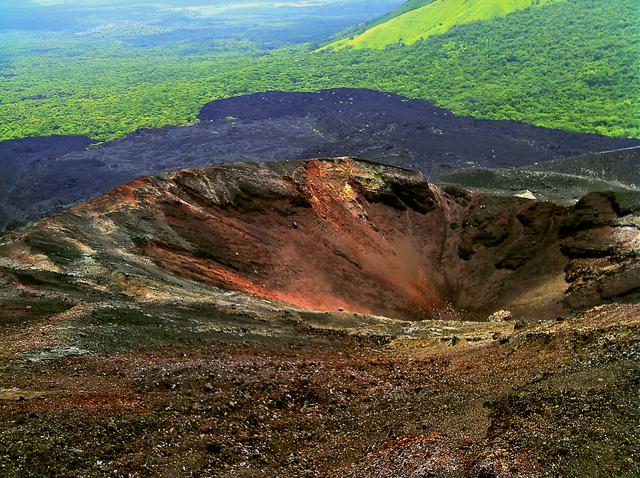
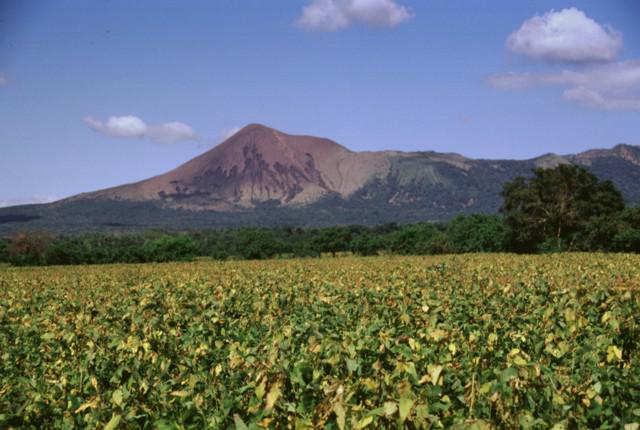 Leon is nearby the Cordillera de Los Maribios, a mountain range with multiple volcanoes, and it is possible to hike most of them. The most popular volcano is Cerro Negro, a young, small volcano that offers incredible views and slopes to practice sandboarding. Nearby there are two atypical volcanoes; Las Pilas and El Hoyo, which can be hiked together. Telica, the most active volcano in the region, is climbable but only when it is calm so be prepared to give this one a miss. Hikers interested in a demanding climb should head to Momotombo, which is also an active volcano. It is the most difficult volcano to hike but has the most spectacular views in Nicaragua, and it is worth the effort. Below Momotombo there are two volcanic lagoons: Asososca and Monte Galan, and these are great for cooling off after a long day or two of hiking.
While it is possible to climb the volcanoes on your own, it is recommended to go with a guide or an organized tour, as hiking the volcanoes can be dangerous (easy to get lost, run out of water, volcanic activity, etc.) Here is a list of tour companies:
- SONATI Leon, +505-23154696. Social enterprise that provides accommodation and tour services with all proceeds going to a number of environmental initiatives and environmental education activities.
- Quetzaltrekkers Leon, 1/2 blocks west of the Mercantíl (next to the restaurant La Mexicana), +505 2311-7388. Provides treks with all profits going to the street kids of Leon. They offer a full suite of 1- 2- and 3-day hikes to most volcanoes.
- Tierra Tours. Fun guides and air conditioned transport.
SONATI Leon, +505-23154696. Social enterprise that provides accommodation and tour services with all proceeds going to a number of environmental initiatives and environmental education activities.
Quetzaltrekkers Leon, 1/2 blocks west of the Mercantíl (next to the restaurant La Mexicana), +505 2311-7388. Provides treks with all profits going to the street kids of Leon. They offer a full suite of 1- 2- and 3-day hikes to most volcanoes.
Tierra Tours. Fun guides and air conditioned transport.
It is almost a rite of passage for every traveller that visits Leon to board down the side of Cerro Negro. Even for those not so interested in boarding, the 45-minute hike up and the view from the top are spectacular. The actual boarding down is fairly fun and generally involves sitting down on the board, leaning back and controlling the speed with your feet in the sand. If you dare, you can reach speeds of up to 95km/h on the steepest sections of the hill. All tour companies provide equipment, transport and usually a beverage after the ride. No tour organizations offer stand up style boarding so if you want to do this you will need to find your own gear. All tour companies listed above in 'Volcano Climbing' also offer volcano boarding.
The hot springs at Hervidores San Jacinto, at the foot of the Telica volvano, makes for a great daytrip. Catch a bus at the terminal or take a taxi, round trip for C$300. Entrance is C$20 and you'll be hooked up with one of the local kids/guides. They are really nice and a must. Pay careful attention to where they walk, and take the same path, as you will be walking just above thermal activity. As someone said, "It's like a mini Yellowstone, without the fences."
Catch a baseball game if you are there during the season. For C$50 you can sit right behind home plate, or pay less for 3rd base side where the lively crowd sits with the unofficial band. Order some vigoron, get a Victoria and enjoy. The stadium is in the northern part of the city.
Go for a day trip to the beach, to either swim or surf. About half an hour by bus from Sutiava or 15 minutes by taxi (C$150-200 per person) lies two of Nicaragua's nicest beaches. Choose between Las Peñitas, which is known for its surfing and mellow vibe, or Poneloya, which is less touristic. The last bus leaves the coast at 6:30pm which gives you enough time to watch the spectacular sunsets over the beach.
All across the city you will find small pulperias that sell food, drinks, phone cards and common household items. Most of these operate out of the owners home.
- Mercado Central. Lots of vegetables, fruits, grains, meats and fish.
- Marcado La Estación. Larger and cheaper than the Mercado Central.
- La Colonia. Upscale supermarket. Expensive, but they have some international foods that you cannot get elsewhere. The best wine selection in town.
- La Unión. The most centrally located supermarket, owned by Walmart. More expensive than the municipal markets.
- Pan y Paz French Bakery, +505 2311 0949. 7am-9m, Monday-Saturday. Sells wonderful bread, excellent cheeses and good wine.
Mercado Central. Lots of vegetables, fruits, grains, meats and fish.
Marcado La Estación. Larger and cheaper than the Mercado Central.
La Colonia. Upscale supermarket. Expensive, but they have some international foods that you cannot get elsewhere. The best wine selection in town.
La Unión. The most centrally located supermarket, owned by Walmart. More expensive than the municipal markets.
Pan y Paz French Bakery, +505 2311 0949. 7am-9m, Monday-Saturday. Sells wonderful bread, excellent cheeses and good wine.
- Centro de Compras Metropolitano. A market place for clothes in a colonial architectural setting.
- JBernhard Designs. Designer leather products including shirts, belts, holsters, handbags, backpacks and computer cases. Locally made.
Centro de Compras Metropolitano. A market place for clothes in a colonial architectural setting.
JBernhard Designs. Designer leather products including shirts, belts, holsters, handbags, backpacks and computer cases. Locally made.
- Buho Books. Small independent bookstore. Has books in Spanish, English, French, German, Italian, Dutch, Norwegian, Danish and Swedish, and maybe other languages as well.
- Librería Universitaria. The university book store with a good collection of academic literature.
- Librería y Variedades la Bendición. Small store selling school and office supplies. Friendly personal service.
Buho Books. Small independent bookstore. Has books in Spanish, English, French, German, Italian, Dutch, Norwegian, Danish and Swedish, and maybe other languages as well.
Librería Universitaria. The university book store with a good collection of academic literature.
Librería y Variedades la Bendición. Small store selling school and office supplies. Friendly personal service.
Food is sold by street vendors all across town and they are a popular source of energy among the local student population. Some good places to find them are in the Central Park, outside the La Union supermarket, and by the La Salle School three blocks west of the Central Park.
- Central Market. Large food court with all sorts of great beans and eggs and rice and fried cheese and cheese-stuffed platanos and thick tortillas. Great for breakfast, you can fill up for a dollar or two. You can also buy fresh-made juices, and gaze in awe at the giant blocks of fried cheese. On the street behind the market is Buen Gusto, where you should grab some Pollo Vino on the cheap.
- Los Chinitos. An excellent comedor which charges C$45 for main courses.
- Buena Cuchara. The food is delicious-- C$25 for a full lunch, including either fish or chicken (both delicious).
- Pelo de Chancho. The best Mondongo soup in León, but you have to get there early for lunch or they might run out.
- Asados Pelibuey. A simple buffet style restaurant serving grilled chicken, beef, pork and pelibuey (lamb). Very popular among the locals. The restaurant is named after a type of sheep that does not grow wool, making it suitable for warm climates. C$60.
Central Market. Large food court with all sorts of great beans and eggs and rice and fried cheese and cheese-stuffed platanos and thick tortillas. Great for breakfast, you can fill up for a dollar or two. You can also buy fresh-made juices, and gaze in awe at the giant blocks of fried cheese. On the street behind the market is Buen Gusto, where you should grab some Pollo Vino on the cheap.
Los Chinitos. An excellent comedor which charges C$45 for main courses.
Buena Cuchara. The food is delicious-- C$25 for a full lunch, including either fish or chicken (both delicious).
Pelo de Chancho. The best Mondongo soup in León, but you have to get there early for lunch or they might run out.
Asados Pelibuey. A simple buffet style restaurant serving grilled chicken, beef, pork and pelibuey (lamb). Very popular among the locals. The restaurant is named after a type of sheep that does not grow wool, making it suitable for warm climates. C$60.
- Restaurante Casa Vieja. Small cozy restaurant serving excellent Nicaraguan food. More popular among the Leonéses than the tourists. Try their refreshing house lemonade.
- Cocinarte. 12:00 - 22:00. Closed on Tuesdays. Charming restaurant in the oldest extant house in León. Serves mainly international vegetarian food, but there are also a couple of dishes for carnivores. The service tends to be slow and the food has received mixed reviews. They also sell organic chocolates and coffee. Ask for the table by the balcony. US$8 for a meal and a drink.
- Los Pescaditos. Seafood restaurant. Worth the cab ride.
- ViaVia. 8am - 9.30pm. International and local food, with live music every Friday. In the back there is a hostel with 2 dorm-rooms and 6 well-kept private rooms with bath. Staff at the location speaks little or no English. C$25-145.
- El Sesteo. Great location with views of the cathedral. Has a diverse menu from typical local food and beverages to fast food. Ask for the Nicaraguan vegetable soup, which is delicious. Popular among tour groups.
Restaurante Casa Vieja. Small cozy restaurant serving excellent Nicaraguan food. More popular among the Leonéses than the tourists. Try their refreshing house lemonade.
Cocinarte. 12:00 - 22:00. Closed on Tuesdays. Charming restaurant in the oldest extant house in León. Serves mainly international vegetarian food, but there are also a couple of dishes for carnivores. The service tends to be slow and the food has received mixed reviews. They also sell organic chocolates and coffee. Ask for the table by the balcony. US$8 for a meal and a drink.
Los Pescaditos. Seafood restaurant. Worth the cab ride.
ViaVia. 8am - 9.30pm. International and local food, with live music every Friday. In the back there is a hostel with 2 dorm-rooms and 6 well-kept private rooms with bath. Staff at the location speaks little or no English. C$25-145.
El Sesteo. Great location with views of the cathedral. Has a diverse menu from typical local food and beverages to fast food. Ask for the Nicaraguan vegetable soup, which is delicious. Popular among tour groups.
- Carnivorio. Serves excellent meat dishes.
- Manhattan Restaurant. Fresh hand-rolled tuna and salmon sushi.
- Montezerino. Serves a good fillet mignon or churrasco. It is open on the sides and large and serves as a night club at night.
Carnivorio. Serves excellent meat dishes.
Manhattan Restaurant. Fresh hand-rolled tuna and salmon sushi.
Montezerino. Serves a good fillet mignon or churrasco. It is open on the sides and large and serves as a night club at night.
- Café La Rosita. Cappuccino, espresso, granita, etc.
Café La Rosita. Cappuccino, espresso, granita, etc.
There is a cluster of bars if you walk around the block just west of the Central Park. Two other options are:
- Go Bar, +505 2311 1400. Alternative place where diversity is the main ingredient. You will find a wide variety of domestic and imported drinks and some dishes to try. US$1.
- La Olla Quemada. Live music on Wednesdays and Saturdays. Salsa night on Thursdays. Serves simple but tasty food.
Go Bar, +505 2311 1400. Alternative place where diversity is the main ingredient. You will find a wide variety of domestic and imported drinks and some dishes to try. US$1.
La Olla Quemada. Live music on Wednesdays and Saturdays. Salsa night on Thursdays. Serves simple but tasty food.
León is by both Central American and Nicaraguan standards a safe city. You can safely walk in the city center during both the day and in the evening.
There are Cybers all over town
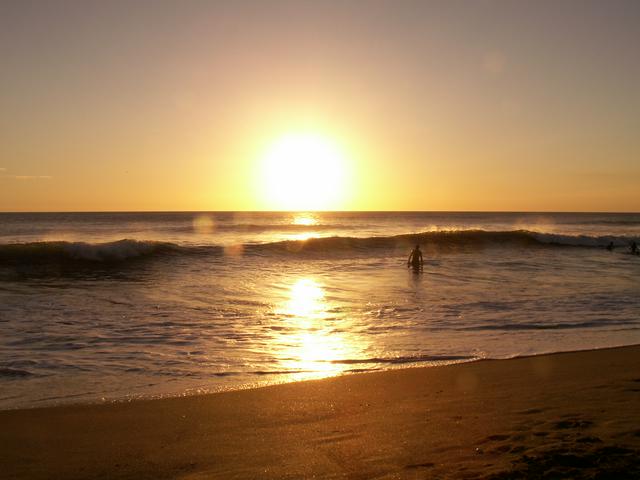
- Poneloya and Las Peñitas - two Pacific ocean beach towns and fishing villages. Great places for swimming, surfing and kayaking. Located 20 km southwest of the city, they are easily reachable by car or taxi (C$150-250). Buses depart from the municipal market in Sutiava.
- Chinandega - The neighboring city by Volcán Cristóbal that is even hotter than León. It has an excellent archeological museum and some beautiful churches. Located 40 km northwest of León, buses leave every 15 minutes from the main bus terminal.
- The northern beaches of Aposentillo, Juiqilillo, Padre Ramos and Mechapa, for swimming and surfing. First go to Chinandega and then continue further north by car or bus.
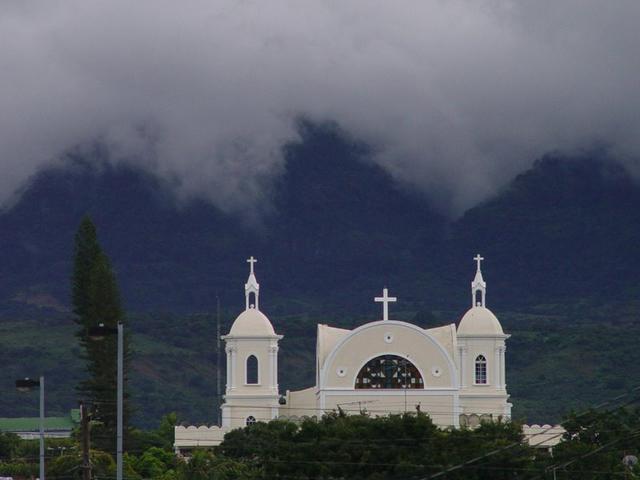
- Estelí - A lively mountain city in the cooler northern part of the country, famous for its murals and cigar makers, and surrounded by nature reserves. Direct bus service from the main bus terminal.
- Ruins of León Viejo — the original site of León on the shore of Lake Managua and at the foot of the Momotombo volcano. This is a UNESCO World Heritage site. Located almost half way to Managua, take a bus to La Paz Centro, and then another bus to Puerto Momotombo.
- Granada - the other colonial city in Nicaragua. From the bus terminal, take a minivan to Managua UCA station and transfer to another minivan to Granada. It takes around 4 hours and costs less than C$90.
- Honduras - From the neghboring city of Chinandega there is regular bus service to the Honduras border at El Guassaule. If you're heading all the way to the Bay Islands, there are 3-4 weekly shuttles to La Ceiba ($65, 13 hours) leaving at 2:00am and arriving in time for the afternoon ferry to Útila or Roatán.
- El Salvador - To El Tunco, El Salvador there is a 10-person direct mini-shuttle with a/c ($45pp, 10 hours). $7pp fee at Nicaragua-Honduras border not included. If you want to avoid Honduras, take a bus to Chinandega and then another bus to Potosí on the Gulf of Fonseca. From there you can take a boat to La Unión in El Salvador.
[[Poneloya]] and [[Las Peñitas]] - two Pacific ocean beach towns and fishing villages. Great places for swimming, surfing and kayaking. Located 20 km southwest of the city, they are easily reachable by car or taxi (C$150-250). Buses depart from the municipal market in Sutiava.
[[Chinandega]] - The neighboring city by Volcán Cristóbal that is even hotter than León. It has an excellent archeological museum and some beautiful churches. Located 40 km northwest of León, buses leave every 15 minutes from the main bus terminal.
The northern beaches of Aposentillo, Juiqilillo, Padre Ramos and Mechapa, for swimming and surfing. First go to Chinandega and then continue further north by car or bus.
[[Estelí]] - A lively mountain city in the cooler northern part of the country, famous for its murals and cigar makers, and surrounded by nature reserves. Direct bus service from the main bus terminal.
Ruins of León Viejo — the original site of León on the shore of Lake Managua and at the foot of the Momotombo volcano. This is a [[UNESCO World Heritage site]]. Located almost half way to Managua, take a bus to La Paz Centro, and then another bus to Puerto Momotombo.
[[Granada_(Nicaragua)|Granada]] - the other colonial city in [[Nicaragua]]. From the bus terminal, take a minivan to Managua UCA station and transfer to another minivan to Granada. It takes around 4 hours and costs less than C$90.
[[Honduras]] - From the neghboring city of [[Chinandega]] there is regular bus service to the Honduras border at El Guassaule. If you're heading all the way to the [[Bay Islands]], there are 3-4 weekly shuttles to [[La Ceiba]] ($65, 13 hours) leaving at 2:00am and arriving in time for the afternoon ferry to [[Útila]] or [[Roatán]].
[[El Salvador]] - To [[El Tunco]], [[El Salvador]] there is a 10-person direct mini-shuttle with a/c ($45pp, 10 hours). $7pp fee at Nicaragua-Honduras border not included. If you want to avoid Honduras, take a bus to [[Chinandega]] and then another bus to Potosí on the Gulf of Fonseca. From there you can take a boat to La Unión in El Salvador.