
Uruguay is the second-smallest country in South America, wedged between Argentina and Brazil. The country is known for its colonial-era historic districts in Colonia and Montevideo, popular beaches on the Atlantic Coast, and beef production—a former meat processing plant in Fray Bentos is a world heritage site. Calmer and safer than its neighbors, Uruguay is a low-key, easygoing destination.
Uruguay is divided into 19 departments, which can be very roughly grouped into the following four general regions. Montevideo, the capital of Uruguay, is its own department. Each of the other departments has a capital city, which sometimes has the same name as the department. This can occasionally lead to confusion—if someone says they're going to (for instance) Tacuarembó, you might have to ask whether they mean Tacuarembó the city or Tacuarembó the department. There's another bit of terminology that may be confusing to outsiders: Uruguayans use the word "interior" to refer to the whole country except Montevideo, not just the inland area.
- Montevideo. – Uruguay's capital, home to well over a third of the country's population as well as architecture, beaches, and festivals
- Punta del Este. – super-popular beach resort
- Colonia. (Colonia del Sacramento) - a well preserved old colonial town and UNESCO World Heritage Site
- Piriapolis. – a beach resort, a bit more laid back than Punta del Este
- Rivera. – a hilly city in the north, right on the border with Brazil
- La Paloma. – another summer beach town
- Paysandu. – across the river from Argentina, with hot springs, riverside beaches, and more
- Salto. – located on the border with Argentina and known for its hot springs and historic buildings
Montevideo. – Uruguay's capital, home to well over a third of the country's population as well as architecture, beaches, and festivals
Punta del Este. – super-popular beach resort
Colonia. (Colonia del Sacramento) - a well preserved old colonial town and [[UNESCO World Heritage Site]]
Piriapolis. – a beach resort, a bit more laid back than Punta del Este
Rivera. – a hilly city in the north, right on the border with [[Brazil]]
La Paloma. – another summer beach town
Paysandu. – across the river from Argentina, with hot springs, riverside beaches, and more
Salto. – located on the border with Argentina and known for its hot springs and historic buildings
- Beaches on the Atlantic Coast – in addition to the major beach towns mentioned above, there are some quieter spots worth a visit:
- Barra de Valizas.
- Cabo Polonio.
- Punta del Diablo.
- Santa Teresa National Park., including the colonial fortress Fortaleza de Santa Teresa
- Quebrada de los Cuervos. – "Ravens' Gorge", a protected landscape of rolling hills and a deep gorge
- Remains of precolumbian settlements in Flores Department
- Sierra de las Ánimas – a mountain range including one of Uruguay's highest peaks
- Cerro Pan de Azúcar – the third highest peak in Uruguay, topped with a large cross, near Piriapolis
- Along the coast of Uruguay – a tour of Uruguay's coast, including the most popular tourist destinations and beaches galore
- La Redota – retracing the 1811–12 journey of national hero José Artigas
[[Along the coast of Uruguay]] – a tour of Uruguay's coast, including the most popular tourist destinations and beaches galore
[[La Redota]] – retracing the 1811–12 journey of national hero José Artigas
Beaches on the [[Atlantic Coast (Uruguay)|Atlantic Coast]] – in addition to the major beach towns mentioned above, there are some quieter spots worth a visit:
- Barra de Valizas.
- Cabo Polonio.
- Punta del Diablo.
- Santa Teresa National Park., including the colonial fortress Fortaleza de Santa Teresa
Beaches on the [[Atlantic Coast (Uruguay)|Atlantic Coast]] – in addition to the major beach towns mentioned above, there are some quieter spots worth a visit:
- Barra de Valizas.
- Cabo Polonio.
- Punta del Diablo.
- Santa Teresa National Park., including the colonial fortress Fortaleza de Santa Teresa
Beaches on the [[Atlantic Coast (Uruguay)|Atlantic Coast]] – in addition to the major beach towns mentioned above, there are some quieter spots worth a visit:
- Barra de Valizas.
- Cabo Polonio.
- Punta del Diablo.
- Santa Teresa National Park., including the colonial fortress Fortaleza de Santa Teresa
Beaches on the [[Atlantic Coast (Uruguay)|Atlantic Coast]] – in addition to the major beach towns mentioned above, there are some quieter spots worth a visit:
- Barra de Valizas.
- Cabo Polonio.
- Punta del Diablo.
- Santa Teresa National Park., including the colonial fortress Fortaleza de Santa Teresa
Quebrada de los Cuervos. – "Ravens' Gorge", a protected landscape of rolling hills and a deep gorge
Remains of precolumbian settlements in [[Flores (Uruguay)|Flores Department]]
Sierra de las Ánimas – a mountain range including one of Uruguay's highest peaks
Cerro Pan de Azúcar – the third highest peak in Uruguay, topped with a large cross, near [[Piriapolis]]
The name Uruguay means river of the colorful birds. It is related to the name Guyana: Arawak Guayana, land of many waters.
Often called the Switzerland of South America not for geographical features but for a stable democracy and social benefits such as free education. In 2002 Uruguay faced one of its biggest economic crises which had very negative effects on safety due to the rise in crime, and although the activity levels in 2008 were at pre-crisis levels, crime is still relatively high, but still low for the region. Long a desired country for immigration, Uruguay has been suffering from high levels of emigration for almost four decades, mainly of highly trained workers and people with high level studies (brain drain) seeking better opportunities abroad.
Uruguay has a rich agricultural and civic history. It has more than three times as many cattle as people (the highest ratio of any country in the world by far). The dominant pre-20th century live stock driving techniques are still utilized in some areas, and are less visited tourist attractions than the pleasant beaches and city centers. The country has a mostly low-lying landscape. Cerro Catedral, the country's highest point, is 514 m high.
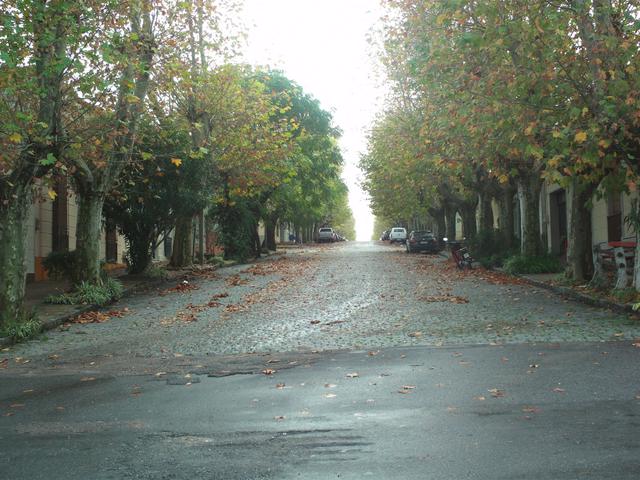 Uruguay is the only South American country located entirely in the temperate zone. The country is flat grassland and all locations are particularly vulnerable to rapid changes from weather fronts and forceful winds as there are no high mountains that could act as shields. As Uruguay is located south of the Equator (approximately at the same latitude as Johannesburg and Sydney), summer and winter are reversed compared to the Northern Hemisphere. In the winter temperatures under freezing are rare but not unheard of.
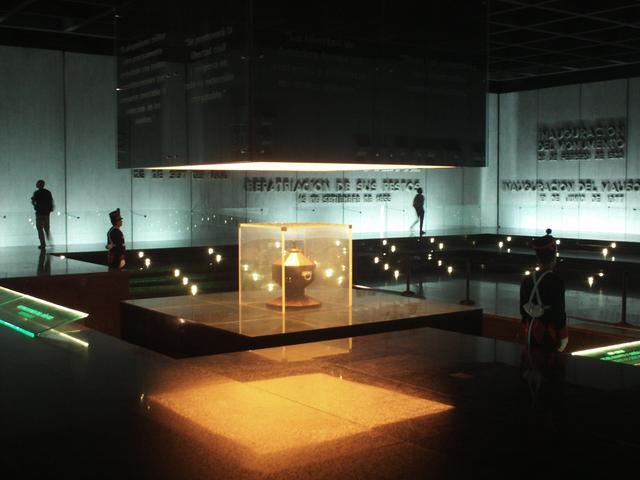
-HydQY.medium.jpg) Uruguay was discovered by Spanish Adelantados in the late 16th century, and was part of the United Provinces of the River Plate until 1811. (Although plata literally means "silver" in Spanish, "plate" is the traditional and correct translation as it was used as a synonym for precious metals up until the 19th century.) Originally, Uruguay was simply known as the Banda Oriental, or Eastern Band, of colonies along the eastern edge of the Uruguay and Plate Rivers.
Uruguay was discovered by Spanish Adelantados in the late 16th century, and was part of the United Provinces of the River Plate until 1811. (Although plata literally means "silver" in Spanish, "plate" is the traditional and correct translation as it was used as a synonym for precious metals up until the 19th century.) Originally, Uruguay was simply known as the Banda Oriental, or Eastern Band, of colonies along the eastern edge of the Uruguay and Plate Rivers.
When Buenos Aires expelled the last Viceroy, Baltasar Cisneros, the capital moved to Montevideo. The rebel navy sailed from Buenos Aires in an attempt to overcome the Spanish troops in that city, aided by the local rebel troops.
When Montevideo was finally freed from Spain, Uruguay intended to secede from Buenos Aires, only to be invaded by the Brazilian Empire, which started the Argentine-Brazilian war in 1813. After a variety of confusing twists, the war ultimately ended in a stalemate. With the assistance of mediation by the British government, both warring countries agreed to end their territorial claims on the Banda Oriental in 1828, thus giving birth to the new Eastern Republic of Uruguay. A constitution was subsequently drafted and adopted in 1830. British assistance in the creation of Uruguay led to a long history of British influence (including the habit of driving on the left), which ended only with World War II.
The Argentinian Civil War which ravaged that country during the 19th century was not a stranger to Uruguay, which soon gave birth to two opposing parties, the Whites (liberals) and the Reds (traditionalists) that eventually also led to a Uruguayan Civil War that went on in various hot and cold phases until the beginnings of the twentieth century. The story goes that the parties' colors originally came from armbands allegedly torn from the Uruguayan flag, but the conservatives switched to red armbands when they realized that red faded less quickly in the sun than blue.
However, the simmering tension between the left and right wings of Uruguayan politics persisted. From 1954 to 1967, Uruguay tried an unusual solution borrowed from Switzerland: a collegiate Executive Office in which a different member was designated President every year. In this way, Uruguay became the "Latin American Switzerland" for a while, acting as model of democracy and banking liberties until a military coup ended all this.
A Marxist urban guerrilla movement, the Tupamaros, launched in the late 1960s, led Uruguay's president Juan María Bordaberry to "agree" to military control of his administration in 1973. (They returned the favor by firing him from his job in 1976 and appointing the first of several puppet presidents.) By the end of 1974 the rebels had been brutally crushed (and Tupamaro leader and future president Jose Mujica was imprisoned at the bottom of a well), but the military continued to expand its hold over the government, by engaging in widespread torture and disappearances of alleged insurgents and anyone unfortunate enough to be perceived as opponents of the regime. Civilian and democratic rule was not restored until 1985.
Today, Uruguay's political and labor conditions are among the most free on the continent. It ranks 18th in the Democracy Index. In 2004, a center-left to left-wing coalition (the Frente Amplio or Broad Front) which included the Tupamaros won elections which left them in control of both houses of congress, the presidency, and most city and regional governments. In 2009, former guerrilla leader Mujica was elected president.
Culturally the country is closest to its large western neighbor Argentina, with which it shares its traditional elements of gaucho (South American cowboy) culture. In Montevideo and on the coast the gaucho is more of a national symbol than a part of daily life, but in the north (cities like Rivera and Bella Unión) you'll see modern-day gauchos going about their lives, riding horses in traditional clothing.
Uruguay also has Lusitanian influences, like the large Rio-like carnivals in the first months of the year in many cities, the historical old town of Colonia — a 17th-century Portuguese outpost and a UNESCO World Heritage Site, as well as portuñol, a mix of Spanish and Portuguese spoken near the Brazilian border. Amerindian traits can be found in Uruguayan culture, from cuisine to vocabulary, but there is no Amerindian population left. Finally the Uruguayans share the passion for association football/soccer with Argentina and Brazil and the very first world championships were actually held in Montevideo in 1930 — won by the host nation.
- January 1 - New Year's Day
- January 6 - Wise Men's Day
- Carnival (Moveable)
- Tourism Week (Moveable)
- April 19 - Landing of the 33 Patriots Day
- May 18 - Battle of Las Padras
- June 19 - Birthday of José Gervasio Artigas and Never Again Day
- July 18 - Constitution Day
- August 25 - Independence Day
- December 25 - Christmas (officially Family Day)
January 1 - New Year's Day
January 6 - Wise Men's Day
Carnival (Moveable)
Tourism Week (Moveable)
April 19 - Landing of the 33 Patriots Day
May 18 - Battle of Las Padras
June 19 - Birthday of José Gervasio Artigas and Never Again Day
July 18 - Constitution Day
August 25 - Independence Day
December 25 - Christmas (officially Family Day)
Spanish is spoken everywhere. The pronunciation and the use of the vos pronoun instead of tú is practically the same as the Spanish variety spoken in Argentina, also known as Rioplatense Spanish. However it is remarkably different from e.g. the Spanish spoken in Spain both when it comes to pronunciation, grammar and vocabulary. If you are not familiar with the local dialect, be prepared to regularly having to ask people you're talking with to repeat themselves.
Although most Uruguayans have studied English at school, they do not actually speak or use it. However, some Uruguayans have studied English at private institutes, so they can speak it well. Outside Montevideo, Colonia and Punta del Este there are few English speakers. In most tourist spots (shopping centers and in Punta del Este) there is someone who is proficient in English and upscale restaurants and those that cater to tourists often have someone in the staff that speaks English. In practice, knowledge of basic Spanish is indispensable for independent travel in Uruguay.
If you try to communicate in Spanish or with gestures, most Uruguayans will try to help you out. Those who can speak English will often single you out and begin a conversation themselves, eager to try out their English. People are kind and helpful, and they will be glad to meet with a foreigner.
In major tourist spots and anywhere near the Brazilian border, you can get by with Portuguese. Don't be surprised if you talk to someone in Portuguese and they just respond in Spanish, figuring that if you speak Portuguese you can understand enough Spanish to get what they're saying. Near the border, you may also hear Portuñol, a mixture of Portuguese and Spanish.
The deaf community in Uruguay uses Uruguayan Sign Language (lengua de señas uruguaya).
If you want to study Spanish in a language academy, you may want to check out the Grupo de Turismo Idiomático, a private sector initiative supported by the Ministry of Tourism.
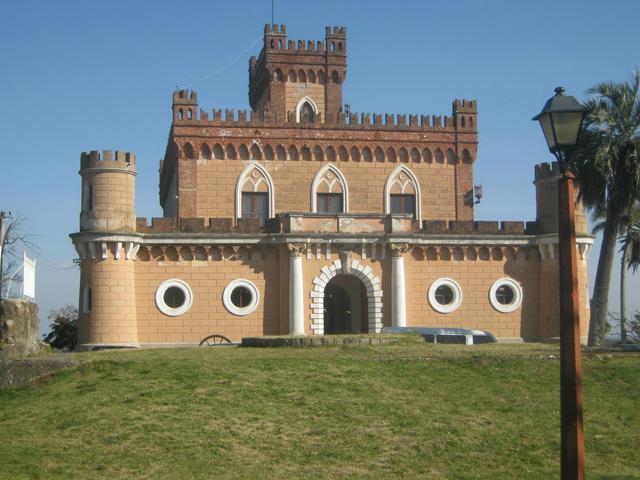
While there are interesting things to see all over Uruguay, the main sights of interest are concentrated on the coastline. Perhaps unsurprisingly the largest concentration of things to see is the capital, Montevideo. There the "father of Uruguayan nationhood", general Jose Artigas rests in a mausoleum under an equestrian statue of himself in the middle of Plaza Independencia surrounded by buildings iconic to the capital such as Palacio Salvo, the old and new presidential palaces, the city gate and the Edificio Ciudadela. Passing through the city gate one will arrive in the old town of Montevideo hosting several museums, old buildings that once were the residences of wealthy families as well as the Puerto del Mercado. Other points of interest not to be missed in Montevideo include the neoclassical parliament building Palacio Legislativo, the Centenario Stadium and the adjacent football museum and the 22 km long beach promenade Rambla stretching along the Atlantic shore with several sights next to or nearby it.
A two and a half hour bus trip west takes you to Colonia del Sacramento, a city established in 1680 by the Portuguese. While the modern part of the city isn't much of a tourist attraction, the well-preserved colonial barrio histórico is a UNESCO World Heritage site. As it is located a mere one hour from Buenos Aires by catamaran, it is also a popular day trip for visitors to the Argentinian capital.
East of Montevideo is Punta del Este, a beach resort popular among the rich and famous and the city where the Los Dedos sculpture and the Casa Pueblo resort museum are located. Just north of Punta del Este is the city of Maldonado with the lighthouse of José Ignacio. Closer to the capital is the city of Piriápolis where you can visit the Castillo de Piria.
Further off the beaten path, check out Uruguay's industrial history in Fray Bentos, where a former meat processing plant is also a World Heritage site. And of course that meat had to come from somewhere—Uruguay also has a strong history of agriculture, and visitors can tour estancias (ranches) dotted throughout the country's interior. In the northern interior, you're sure to encounter gauchos: Uruguayan cowboys who still wear traditional clothes and ride horses alongside the highway.
- One of the best experiences to have while your stay at Uruguay is to watch a football game between Nacional and Peñarol, the two most followed football teams in the nation, but be careful with the radical fans of both teams, since they can engage in fights and violence.
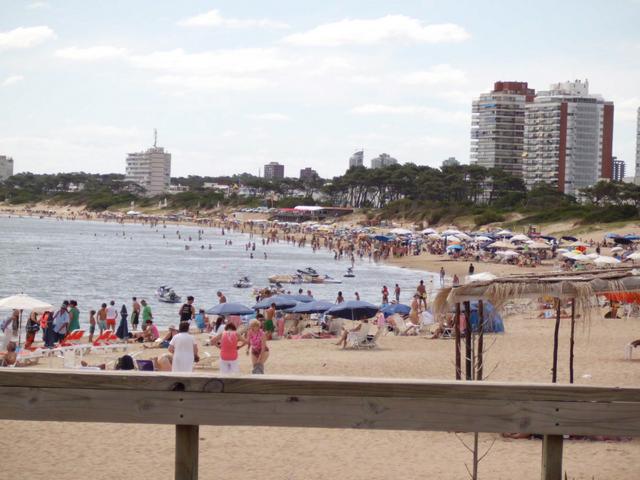
- Sunbathing, surfing and swimming at the beaches of the Atlantic coast. The most important beaches are in Punta del Este, Piriapolis, La Paloma, La Pedrera, Cabo Polonio, Punta del Diablo and Santa Teresa (national park and campground).
- Birdwatching at Rocha's tourist "estancias".
- Llamadas de Reyes - candombe drums - January 6 in Montevideo
- Desfile de Llamadas - candombe parade - first Friday of February in Barrio Sur, Montevideo
- Concurso de Carnaval - popular stage-productions divided in different styles: murgas, revistas, humoristas, parodistas and lubolos - February in Montevideo
- Fiesta de la Patria Gaucha - celebrating gaucho culture - first week of March in Tacuarembó
- Noche de la nostalgia (Nostalgia Night) - August 24, the night before Independence Day, when the nightclubs play oldies music and Uruguayans party the night away
One of the best experiences to have while your stay at Uruguay is to watch a football game between Nacional and Peñarol, the two most followed football teams in the nation, but be careful with the radical fans of both teams, since they can engage in fights and violence.
Sunbathing, surfing and swimming at the beaches of the Atlantic coast. The most important beaches are in Punta del Este, Piriapolis, La Paloma, La Pedrera, Cabo Polonio, Punta del Diablo and Santa Teresa (national park and campground).
[[Birdwatching]] at Rocha's tourist "estancias".
The Uruguayan currency is the peso (ISO code: UYU). Prices are quoted using the U$ symbol, which may be easily confused with the US dollar symbol, which in turn is often quoted in three different ways: US$, U$S or U$D (US dollar).
Prices on costlier goods and services (over US$100, generally speaking) are often quoted in American dollars instead of pesos, and US dollars are surprisingly widely accepted even at some fast food restaurants. Places that cater to foreign visitors often also accept Argentinian pesos or Brazilian reals. As all of these currencies use the symbol "$", so check which currency the prices are in if you're unsure.
Credit cards are not as widely accepted as in North America or Europe - smaller establishments often accept only cash (efectivo). Try to have more or less exact change as they even in a mid-size supermarket can have some problems giving you change back if you are paying for U$600 worth of purchases with a U$1000 bill. You can exchange a large bill for smaller change without paying a commission at Abitab, a one-stop shop with branches all over Uruguay that offers all kinds of services, including paying bills, buying tickets for performances, and adding money to transit cards.
Many Uruguayan ATMs can dispense US dollars in addition to pesos. You can find ATMs by looking for signs saying "BanRed" or "RedBrou". RedBrou has lower fees, but many of their machines are deposit-only. Alternatively, head for a branch of Banco República, which usually has ATMs; they state a fee of US$0.75-1.50, which however apparently does not apply to certain cards, e.g. some German credit cards that offer free withdrawals worldwide. So, best to try once, then you know.
You can bring euros but exchange rates are usually 5-10% off the official rate, whereas many credit card rates only are 1% off plus the usual card fee of 0-3%. So, coming from Europe probably cards are to be preferred considering their safety and convenience. US dollars however can be exchanged at highly competetive rates, inheriting a fee of often just 1% or less. Cambios (aka Bureau de change) are numerous and widespread; wherever you have a bank or a (Red)Brou, there will most likely also be a Cambio in town.
Exchanging euros at the airport is expensive with rates about 20% off the official interbank rates.
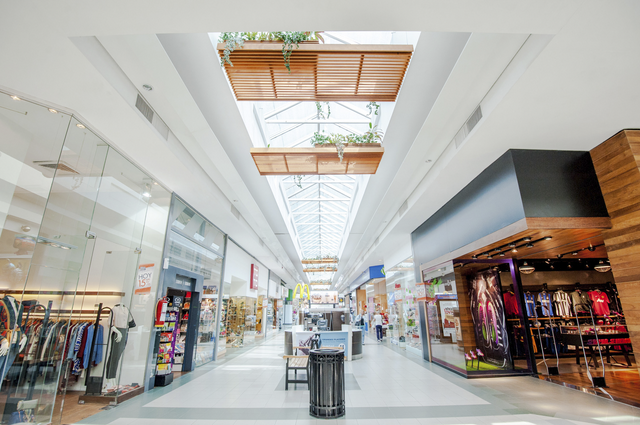 Uruguay is like many developing countries in that the retail industry is still dominated by small specialized shops, small supermarkets, and small, crowded shopping malls. There are no true department stores in the country remotely comparable to the giant stores found in New York or Paris. Even the shopping buildings along Avenida 18 de Julio in central Montevideo are not department stores but collections of 10-20 smaller stores. In the entire country, there is only one true hypermarket, Geant (operated a joint venture between local chain Disco and the French chain Geant), that constitutes a reasonably decent facsimile of hypermarkets elsewhere (down to the huge parking lot, high ceiling and wide aisles). Uruguay does not have the big box "category killer" stores for which the U.S. is famous (and which have been copied to a lesser extent in Australia and Europe).
One quite widespread supermarket chain is Ta-ta. These relatively small supermarkets sell a wide range of products from food and household items to clothes and even things you can bring home as souvenirs. If you've forgotten to bring something for your trip you can probably find it there. Most of them are open seven days a week.
Day stores such as Ta-Ta, Devoto, Tienda Inglesa and Disco do close early, commonly at 9PM, but essential goods can be bought at gas stations that remain open 24/7 all over the country.
There are several so-called shopping centers, four of them located in the capital: Montevideo Shopping Center, Punta Carretas Shopping Center, Portones Shopping, Tres Cruces Shopping (which also serves as a long-distance bus station), and the newly opened Nuevo Centro.
Uruguay does not manufacture most consumer goods locally. Most items in the stores have either been imported from China, or from Argentina or Brazil. Even worse, Uruguay charges high import tariffs and high value-added tax (IVA) of about 22% on virtually everything. Accordingly, imported goods cost as much as in Australia, Canada, or Europe. Uruguayan products on the other hand - chiefly comprised of food and leather products - can be very affordable.
Some parts of Uruguayan stores feature numerous high-quality brands familiar to any North American, like Dove soap, Colgate toothpaste, Listerine mouthwash, Del Monte canned fruit, and so on. There are other brands with familiar logos but strange names; for example, Coca-Cola's South American juice brand is del Valle, which has a logo similar to Coca-Cola's North American juice brand, Minute Maid.
However, Uruguay is not a major priority for most other brands found in the developed world, which means their products are (luckily!) rare or nonexistent here. Locally available brands (as noted, imported mostly from China) tend to be of poor quality. Because the Uruguayan market is so small and most Uruguayans are still relatively poor compared to consumers elsewhere, Uruguayan retailers lack the bargaining power of their North American or European counterparts. In turn, Chinese factories often sell their highest-quality product lines to the dominant First World markets and send their mediocre-quality product lines to Uruguay and other small developing countries. For example, while American and European consumers are accustomed to advertisements for luxury bedding made of 700+ thread count textiles woven from Egyptian or pima cotton, luxury bedding in Uruguay consists of 250+ thread count textiles woven from cotton/polyester blends.
Popular items to buy include yerba mate gourds, antiques, wool textiles, and leather goods: jackets, purses, wallets, belts, etc. With regard to textiles and leather goods, although the prices may look like great bargains, one must keep in mind that local designs are inferior to designs elsewhere. Uruguay is still decades behind other countries when it comes to the quality of metalworking, which is a serious problem since leather goods like purses and belts have metal parts like clasps and buckles.
Usually 10% in restaurants will be enough. Tipping taxi drivers is entirely optional.
 Uruguayan cuisine is typical for temperate countries, high on butter, fat, and grains, low on spice. It has an important Italian influence due to the strong Italian inmigration. If you are from the Mediterranean or Mexico, you will find it bland, but if you come from the Northern Europe, Russia or the US, you won't have trouble getting used to it.
As of May 2014, breakfast for 4 people (a liter of fruit juice and two packages of biscuits) can cost as little as U$100 in a supermarket, a serving of fast food costs about the same while meals in sit down restaurants generally speaking start from U$300. Many restaurants charge a cover charge.
Restaurants and some other services give discounts if you pay with a foreign credit card. (The discount, which was established by the government to encourage tourism, is technically a reduction in value-added tax.)
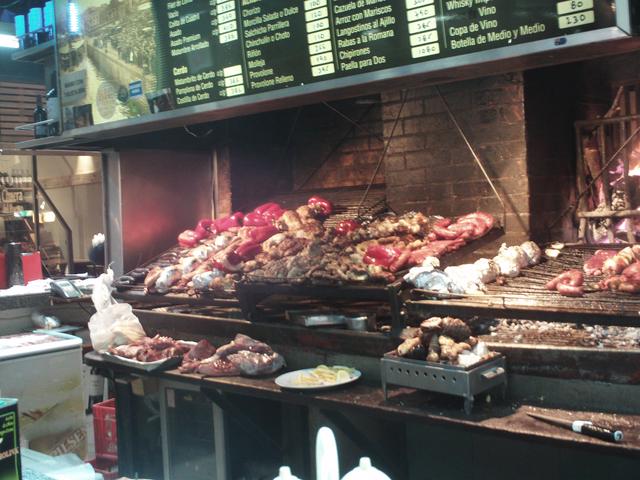
There are many public markets where you can get a hundred varieties of meat. Vegetarians can order ravioli just about anywhere, but check to make sure the sauce doesn't contain meat.
Empanadas (hand-sized meat or cheese pies) make an excellent portable, inexpensive, and delicious snack or lunch. You can find them easily at many corner bakeries.
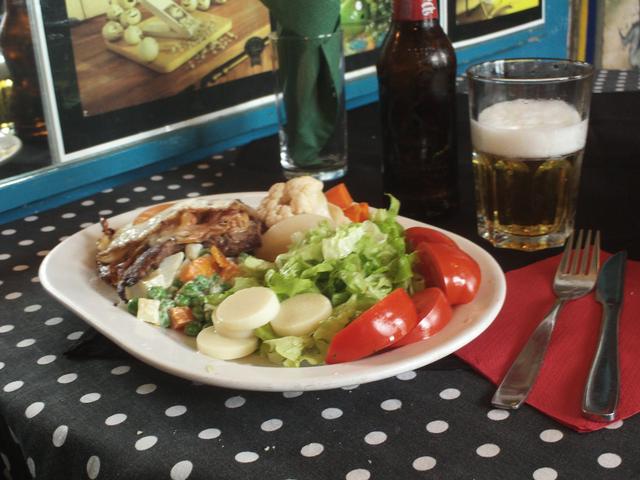 Uruguay has traditionally been a ranching country, with cattle outnumbering people more than two-to-one, and therefore features excellent (and affordable) steaks. One dish that should not be missed is chivito, a heart-attack-on-a-platter sandwich (some guidebooks call it a "cholesterol bomb") that is made of a combination of grilled tenderloin steak, tomato, lettuce, onion, eggs (hard-boiled and then sliced), ham, bacon, mozzarella cheese and mayonnaise and fries. There are two versions of chivito. Al pan means it's served "on bread", this is the classic variant and it looks like a hamburger served on a plate. If it is served al plato it is like a hamburger minus the bread and often with more vegetables.
Asado is a typical Uruguayan barbeque, consisting of a variety of grilled meats (beef short ribs, sausage, blood sausage and sweetbreads and other offal) over wood coals. Almost all Uruguayans know how to make it and its variations appear on most restaurant menus. For a traditional experience, try it at the "Mercado del Puerto" market, in Montevideo's port area. As many of the European immigrants to the area around Rio de la Plata a century ago came from Italy, Italian dishes have a special place in the local cuisine, often with a local twist. The Central European schnitzel's local relative Milanesa is made with beef instead of pork and is also available as a sandwich.
Bizcochos are popular pastries that can be bought at local bakeries among with other local confectioneries and sandwiches such as the sandwich olímpico, which can also be found at most supermarkets.
Tortas fritas (a sort of fried pancake), pasteles and garrapiñada (sugar-roasted peanuts) among with hamburgers and choripanes are commonly sold on the street.
Uruguay, with its long shoreline, also enjoys an excellent variety of seafood and fish. The flavor of the most commonly offered fish, brotola, may be familiar to people from North America, where it is called hake.
For desserts, dulce de leche, a kind of caramel made with sweetened milk, is found in all manner of confections, from ice cream to alfajores (dulce de leche-filled cookie sandwiches), Ricardito and chajá (available in all supermarkets).
Mate (MAH-teh), a tea-like infusion made from the yerba mate plant and drunk hot through a straw, is the unofficial national drink of Uruguay. It's widely drunk on the streets, but can hardly be ordered in restaurants; as young and old go around with their own cup and thermos bottle on the street, there would likely be no-one ordering it in a café or restaurant if they offered it. You may have to buy a package at a supermarket and make your own. The drinking gourds are widely available and range from economical to super-deluxe silver and horn. Mate is a social drink. If you are with a group of Uruguayans they will probably offer you some, do be mindful, it will be hot and may taste somewhat bitter. If you try some it will make everybody happy.
Uruguay is also acquiring a reputation for its fine wines, especially those made from the Tannat grape. The "VCP" label (Vino de Calidad Preferente) identifies qualify wines, in contrast to table wines (vinos de mesa).
Alcohol is relatively inexpensive. Beer often come in large, 1l bottles that can go for as low as U$50. The two domestic brands found everywhere are Pilsen and Patricia, with Zillertal being a distant third. There are a number of craft brewery brands as well. Import beer is available at large supermarkets and pubs, but not at regular restaurants.
A bottled mix of wines called medio y medio can be found at most stores.
The most common strong alcohol beverage is surprisingly whisky, even many famous brands such as Johnnie Walker being manufactured in Uruguay under license. A 1l bottle of the cheapest brands can be bought for U$250 in a supermarket.
Even cheaper strong alcohols are the locally distilled grappas and cañas that can be bought at most supermarkets and also can be tasted in many pizzerias where they also sell grappa con limón, the same liquor flavoured with lemon.
Nightlife goes late in Uruguay. Nightclubs often waive the cover charge for "early" arrivals until midnight, and it's not uncommon for a concert or a night of partying to end around dawn.
Facebook has a Bolivia, Paraguay, Uruguay Backpacker / Traveler group where you can find other travellers and up-to-date information on the country. In general, also see South America#Cope.
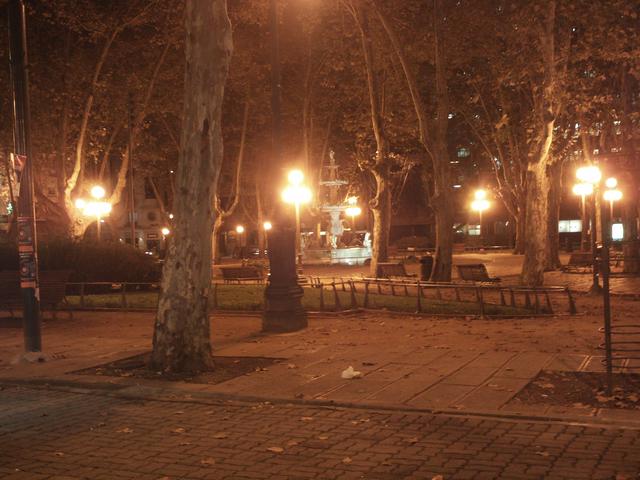 Historically, Uruguay has enjoyed a very low rate of violent crime compared to its neighbors. Thus, Argentines and Brazilians traditionally go on vacation in Uruguay because they love not having to worry about being carjacked, kidnapped, or murdered while on vacation. Even today, Uruguay is still relatively free of those types of crimes.
However, this does not mean that Uruguay is crime free. The major differences are that most Uruguayan crimes are either nonconfrontational or do not involve the gratuitous use of firearms. Montevideo in particular has seen its crime rate gradually rise since the severe 2001-2002 financial crisis, and now has moderately high levels of theft, burglary, and robbery similar to those found in major U.S. cities. Fortunately, Punta del Este and most rural areas continue to enjoy relatively low crime levels. In Montevideo, take precautions: use a money belt and/or hotel safe for valuables, look alert, keep out of obvious slums, and avoid wandering around unfamiliar or iffy neighborhoods at night. Overall, Montevideo is safer than large European cities like Paris, Berlin, London or Madrid.
In a security emergency, call 911 or 999. For firefighters, call, 104. For ambulance, call 105.
Cannabis is one of the most widely used drugs in the country and legal as well. Uruguay is the first country in the world where the sale, growth and distribution of cannabis is legal. Regarding the legality of marijuana, possession for personal use is not penalized if it concerns minor quantities (a few grams), either Uruguayan or foreign. Possession of major quantities (for example, one kilogram) is illegal and punishable by law. Remember that the recent legalization of this drug as for the personal use (medicinal or recreational), sale or storage of the plant (~480 grams per year) is only for Uruguayan citizens of 18 years and above (natural or legal citizenship) with legal capacity. Likewise with alcohol, driving under the influence of marijuana is not allowed, and such breach may carry a fine.
Stray dogs can be found all over Uruguay. They might follow you around a bit hoping for food, but they are rarely aggressive. If they come too close for your taste, (pretend to) pick up a stone and they will understand.
Tap water is safe to drink in all major cities, though most locals prefer to drink bottled water. That said, if your hotel or host tells you to drink bottled water, you should follow their instructions—some houses have water storage tanks that may not be completely clean.
The Hospital Britanico (British Hospital), SUMMUM and BlueCross & BlueShield Uruguay have European-quality service and they are clean and efficient. Asociación Española, Medica Uruguaya and CASMU are the largest healthcare companies in Uruguay and they have European-quality level. Just don't make any unwise alcohol drinking decisions.
Tropical diseases are not a major concern in Uruguay; the malaria and dengue present in parts of nearby countries are absent here. Vaccines are generally recommended for Hepatitis A and typhoid, though.
In the Southern Hemisphere winter you won't encounter many insects in Uruguay, but in the summer there are some mosquitoes, especially after big rainstorms.
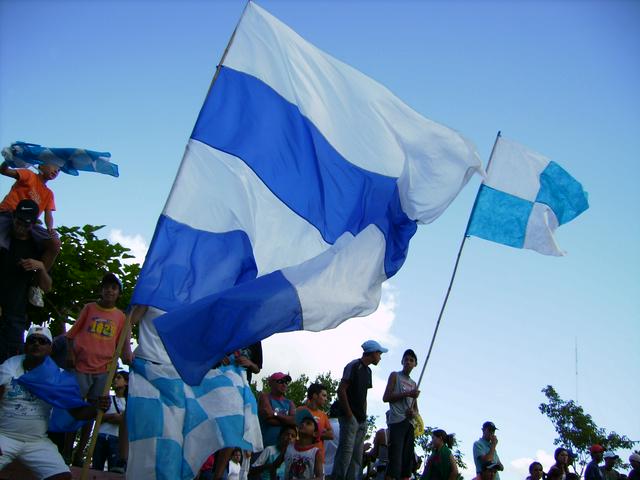 Uruguay is a socially progressive country. Women got the vote in Uruguay 12 years before France. Uruguay is a secular state unlike Argentina, Chile or Paraguay; the Uruguayan state has not supported any religion since 1917. Even national holidays are officially referred to with secular names—the week before Easter is officially "Tourism Week" and December 25th is "Family Day"! The population is mainly Catholic, but not very practicing.
Uruguay is considered to be safe and welcoming to gay and lesbian visitors: it is ranked 12th in the world in the Spartacus Gay Travel Index. It was the first Latin American country to pass a civil union law, and same-sex marriage was legalized in mid-2013. Even in rural areas, gay travelers experience little overt discrimination. There are a few gay and lesbian bars in Montevideo and in Punta del Este. The only public monument to sexual diversity is in Ciudad Vieja (the old city) in Montevideo. On the last Friday of September, Montevideo celebrates "Diversity Month" with a parade on 18 de Julio in the center of the city.
Like in other Latin American countries, it's common to greet people with a kiss on the cheek. But unlike most other countries, where this is only done between two women or between a woman and a man, in Uruguay it's not uncommon for men to greet each other this way too! (Those men who prefer not to kiss another man on the cheek will shake hands instead.) As in many countries, these kisses are really more of a cheek-to-cheek touch with a kiss in the air.
Punctuality is not essential here – meeting a few minutes late is not uncommon nor considered rude.
Uruguayans normally keep their shoes on when entering a house; conventional wisdom here is that walking around your house barefoot makes it easier to catch a cold.
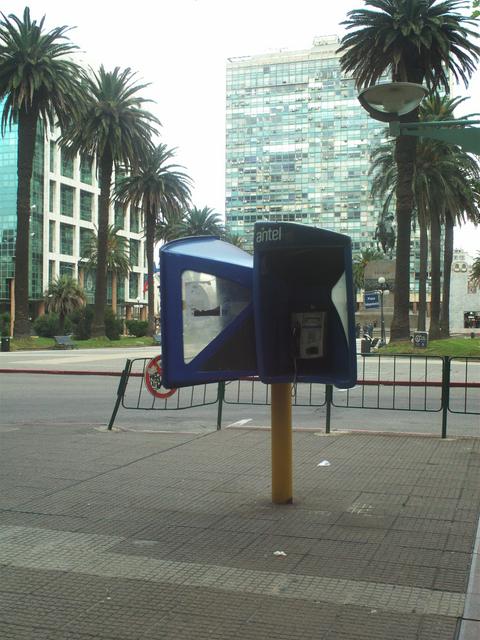
The national landline telephone monopoly is Antel, which provides all public pay phones and is also the sole provider of landline Internet service.
Although Antel pay phones only take Antel's proprietary magnetic cards (that are difficult if not impossible to obtain), it is possible to use international calling cards to call home by taking the phone off the hook, waiting for a dial tone, and dialing the correct access code. However, note that many public pay phones are not properly maintained. If you do not hear a touch tone emitted for each key, that means the phone is defective and you must try another one.
Uruguay's country code is +598. Montevideo and suburbs have landline numbers beginning in 2, while the rest of the country has landline numbers beginning with 4.
Antel also operates a cell phone network, and competes with two private companies, Movistar and Claro. All three have numerous kiosks and stores throughout the country. Both the European (1800 MHz) and North American (1900 MHz) frequencies are used.
Some hostels in tourist areas, such as Colonia or the Atlantic Coast during summer, offer free SIM cards, and the operators usually sponsor big events, in which free SIM cards might also be given out.
All three companies offer GSM, 3G HSPA and 4G LTE connectivity. As of early 2018, Claro charged a flat rate of 15 UYU a day for mobile data use, and also had many other packs available. Antel charges per data usage, and local knowledge has it that 200 UYU is enough for a month.
The national postal service is Correo Uruguayo. Most of their post offices are very hard to find and are open from 9 am to 5 pm Monday through Friday; some are open from 9 am to 12 pm on Saturdays.
Letterboxes for depositing outbound mail are made out of cheap blue translucent plastic and are extremely difficult to find outside of post offices. Some post offices have three boxes: one for the local city, one for domestic mail ("interior") and one for international ("exterior").
Uruguayan letterboxes are designed only for indoor use. Keep in mind that Correos licenses many retailers, such as pharmacies, as postal agents, and letterboxes can sometimes be found around those agents' premises as well.
Antel is the only provider of landline Internet service, while Dedicado is the main provider of fixed wireless Internet service. WiFi is ubiquitous and can be found in virtually all decent hotels as well as many restaurants, cybercafes, and shopping malls.
Antel WiFi hotspots are normally available only to Antel landline Internet subscribers, unless you are in a place with free service like Carrasco International Airport, in which case a public username and password for free access are prominently posted and always username: antel password: wifi. Dedicado WiFi hotspots are free for everyone.
Some public parks also have free (but unreliable) WiFi provided by the government—look for a network with a name like "Ceibal" or "Ceibalwifi".
Uruguay borders Argentina to the west and Brazil to the east. Buenos Aires, the capital of Argentina, is just a ferry ride away, and Rio Grande do Sul, the southernmost state in Brazil, has deep cultural connections with Uruguay.
The border of Paraguay, the next closest country, is about 500 kilometers away from the extreme northwest of Uruguay.