
Opole is the capital city of Opole Voivodeship, in south west Poland. The historical capital of Upper Silesia was badly damaged during the USSR invasion of Silesia at the end of World War II, but many fine houses in the old town have been rebuilt. The city is known for the one of the most popular song festivals in Poland, which takes place each year in June.
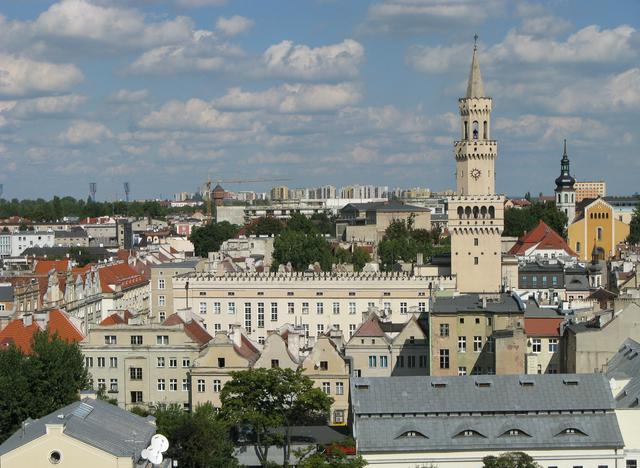
Opole is one of the oldest cities in Poland, continuously inhabited since the 8th century and quickly becoming an important centre of power, defense and trade. It is considered the historical capital of Upper Silesia, being much older than cities like Katowice, which grew rapidly only during the industrial revolution of the 19th century.
Opole has been a capital of its own Duchy carved out of Poland in the 13th century, when the Polish Piast dynasty started dividing the country into local hereditary fiefdoms. This lasted until the 16th century, when the dynasty died out and a complicated history of the city and region changing hands begun, with it ending in Prussia and later the German Empire, with Germans becoming the majority. After the Second World War, Opole was given to Poland and much of the local German population expelled.
With less than 120,000 inhabitants, Opole is now the smallest city to be a regional capital in Poland by population, and its voivodeship has the smallest population as well.
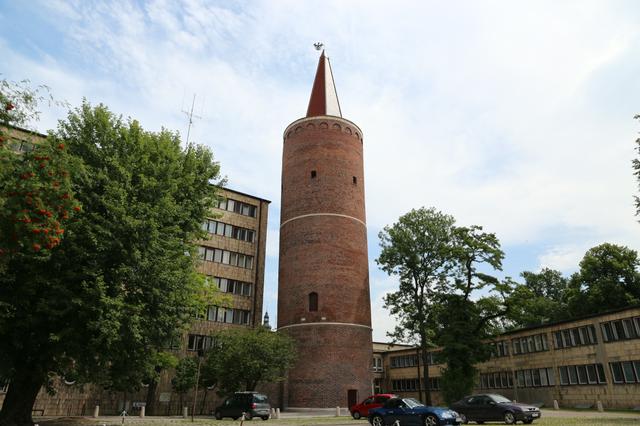
- Piast Tower. The sole remainder of a medieval castle built by the local Piast dukes of Opole as a residence and defensive facility. The tower was a late addition, stemming from the 14th century, while the construction of the castle started in 1228. As the former Duchy of Opole started changing hands between surrounding kingdoms and empires, the castle was subjects to periods of ruin and reconstruction. Finally, in 1928, the German authorities deemed the castle to be in poor condition and ordered its demolition to make room for a new government office complex. After much public outcry from the local Polish (at that time) minority, the tower was preserved and remains standing between the modernist buildings, which still serve the regional government of Opole.
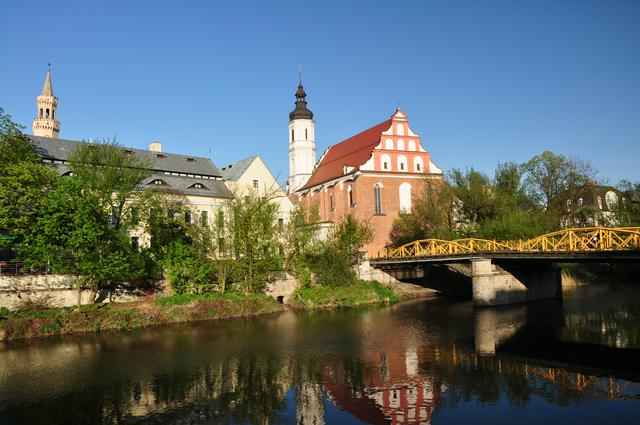
- Holy Trinity Church. A 14th century Franciscan church including a Piast mausoleum
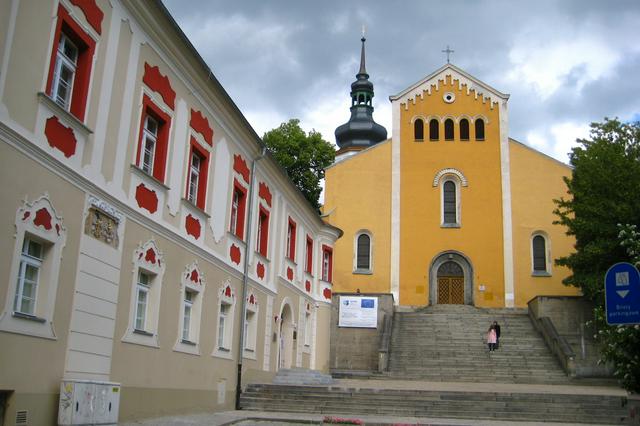
- Church on the Hill. The church's full name is a mouthful to pronounce, so the locals refer to it by its uphill location
- Town Hall. The neo-renaissance Town Hall is a result of numerous reconstructions and expansions. Especially its tower had a tumultous history, being rebuilt many times, the last time in 1936, with the aim to resemble Palazzo Vecchio of Venice. Unlike many other town halls of major cities in Poland, the one in Opole is still used for its original function and most of the official business pertaining to the city authorities is conducted inside.
- Train station. Eclectic train station building
- Most Groszowy. The pedestrian bridge with wrought iron railings was constructed at the turn of the 20th century. Crossing the bridge originally cost 1 grosz (smallest currency unit), hence the name. Otherwise, the bridge is called Zielony Mostek (the green bridge), referring to its colour, or Most Zakochanych (lovers' bridge) for the custom of loving couples locking a padlock on the railings to signify their commitment.
- Castle Pond with fountains. The name is a bit misleading as the pond was actually created from the remains of the moat after the castle was demolished. It serves a purely recreational purpose, with an active musical fountain in the summer and a long tradition of ice-skating in the winter, with the pond hosting the German ice-skating championships in 1934. The wooden house with the restaurant was originally erected for the local ice-skating society. The musical fountain performs a lights-and-music show on summer evenings.
- Ceres Fountain, Plac Daszyńskiego.
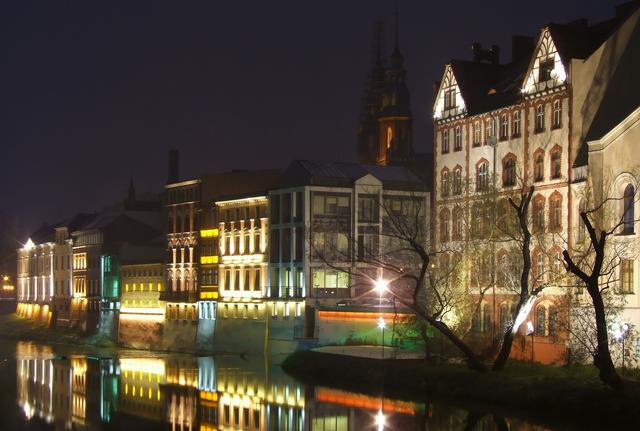
- Venice of Opole. A wall of historic buildings directly over the Młynówka river looks quite spectacular and nothing like Venice, actually, but more like canals of Hamburg for example. Some of the best photos of Opole are taken there at night.
- Saint Sebastian Church.
- Opole Regional Museum. Several branches in three different buildings. 10 / 6 zł.
-MoSaQ.medium.JPG)
- Opole Open-Air Museum of Rural Architecture, ul. Wrocławska 174. 12 / 6 zł, Mondays free.
- Modern Art Gallery, pl. Teatralny 12. 10AM - 6PM M-Su.
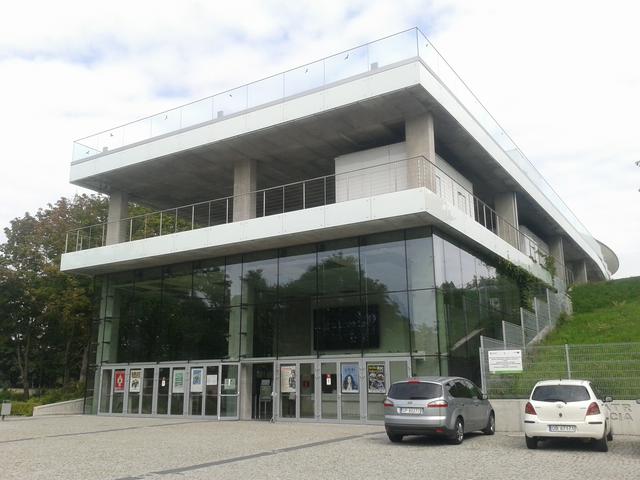
Opole Regional Museum. Several branches in three different buildings. 10 / 6 zł.
Opole Open-Air Museum of Rural Architecture, ul. Wrocławska 174. 12 / 6 zł, Mondays free.
Modern Art Gallery, pl. Teatralny 12. 10AM - 6PM M-Su.
Song Museum.
Piast Tower. The sole remainder of a medieval castle built by the local Piast dukes of Opole as a residence and defensive facility. The tower was a late addition, stemming from the 14th century, while the construction of the castle started in 1228. As the former Duchy of Opole started changing hands between surrounding kingdoms and empires, the castle was subjects to periods of ruin and reconstruction. Finally, in 1928, the German authorities deemed the castle to be in poor condition and ordered its demolition to make room for a new government office complex. After much public outcry from the local Polish (at that time) minority, the tower was preserved and remains standing between the modernist buildings, which still serve the regional government of Opole.
Holy Trinity Church. A 14th century Franciscan church including a Piast mausoleum
Church on the Hill. The church's full name is a mouthful to pronounce, so the locals refer to it by its uphill location
Town Hall. The neo-renaissance Town Hall is a result of numerous reconstructions and expansions. Especially its tower had a tumultous history, being rebuilt many times, the last time in 1936, with the aim to resemble Palazzo Vecchio of [[Venice]]. Unlike many other town halls of major cities in Poland, the one in Opole is still used for its original function and most of the official business pertaining to the city authorities is conducted inside.
Train station. Eclectic train station building
Most Groszowy. The pedestrian bridge with wrought iron railings was constructed at the turn of the 20th century. Crossing the bridge originally cost 1 grosz (smallest currency unit), hence the name. Otherwise, the bridge is called Zielony Mostek (the green bridge), referring to its colour, or Most Zakochanych (lovers' bridge) for the custom of loving couples locking a padlock on the railings to signify their commitment.
Castle Pond with fountains. The name is a bit misleading as the pond was actually created from the remains of the moat after the castle was demolished. It serves a purely recreational purpose, with an active musical fountain in the summer and a long tradition of ice-skating in the winter, with the pond hosting the German ice-skating championships in 1934. The wooden house with the restaurant was originally erected for the local ice-skating society. The musical fountain performs a lights-and-music show on summer evenings.
Ceres Fountain, Plac Daszyńskiego.
Venice of Opole. A wall of historic buildings directly over the Młynówka river looks quite spectacular and nothing like Venice, actually, but more like canals of [[Hamburg]] for example. Some of the best photos of Opole are taken there at night.
Saint Sebastian Church.
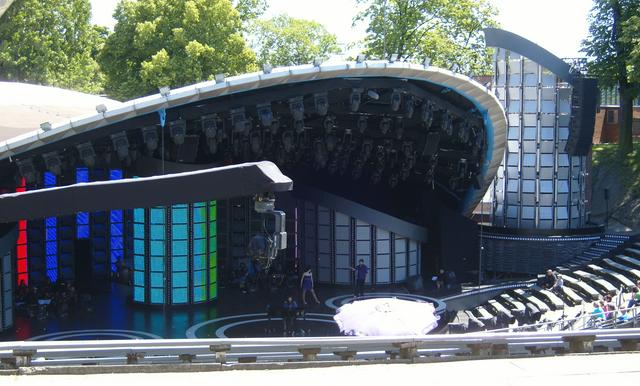
- National Centre of Polish Song. The most prominent function of the amphitheatre is hosting the annual Polish song festival in June, but it remains busy in the warmer months with other concerts and events
- River cruises.
- ZOO. 18 / 12 zł.
- Opole Philharmonic.
National Centre of Polish Song. The most prominent function of the amphitheatre is hosting the annual Polish song festival in June, but it remains busy in the warmer months with other concerts and events
River cruises.
ZOO. 18 / 12 zł.
Opole Philharmonic.
- Solaris Center. A fairly large shopping gallery in the city centre, upscale by local standards, with many of the usual suspects in chain retail (ZARA, promod etc.) A big part is occupied by the Helios multi-screen cinema. Also includes a fairly large electronics store and a sizeable food court filled with fast food options.
- Karolinka. A strip mall on the outskirts anchored by the Auchan hypermarket, featuring many of the stores that would not fit within city centre galleries, including furniture stores and a big Decathlon sporting gear store
- Turawa Park. Another strip mall on the outskirts - actually next to the ringroad and easier to reach from some of the neighbouring villages than the city itself. Anchor tennants are the Carrefour supermarket and Praktiker home improvement store.
- Galeria Opolanin.
- Galeria Ziemowit.
Solaris Center. A fairly large shopping gallery in the city centre, upscale by local standards, with many of the usual suspects in chain retail (ZARA, promod etc.) A big part is occupied by the Helios multi-screen cinema. Also includes a fairly large electronics store and a sizeable food court filled with fast food options.
Karolinka. A strip mall on the outskirts anchored by the Auchan hypermarket, featuring many of the stores that would not fit within city centre galleries, including furniture stores and a big Decathlon sporting gear store
Turawa Park. Another strip mall on the outskirts - actually next to the ringroad and easier to reach from some of the neighbouring villages than the city itself. Anchor tennants are the Carrefour supermarket and Praktiker home improvement store.
Galeria Opolanin.
Galeria Ziemowit.
- Manekin. A branch of the Polandwide chain of pancake-and-crepe restaurants, known for their hearty servings and low prices, is located on of the busiest and also nicest street corners of Opole's old town. Expect a bit of a wait and not leaving hungry
- Sopelek. Opole's leading ice cream parlor chain made a name for itself with an extensive menu of fancy ice-cream-based desserts, all of which are very generous in size. Regular scoop-and-cone ice cream for takeaway is also on offer. Selected locations include:
- Sopelek Krakowska.
- Sopelek Spychalskiego.
- Sopelek Solaris Center.
Manekin. A branch of the Polandwide chain of pancake-and-crepe restaurants, known for their hearty servings and low prices, is located on of the busiest and also nicest street corners of Opole's old town. Expect a bit of a wait and not leaving hungry
Sopelek. Opole's leading ice cream parlor chain made a name for itself with an extensive menu of fancy ice-cream-based desserts, all of which are very generous in size. Regular scoop-and-cone ice cream for takeaway is also on offer. Selected locations include:
- Sopelek Krakowska.
- Sopelek Spychalskiego.
- Sopelek Solaris Center.
Sopelek. Opole's leading ice cream parlor chain made a name for itself with an extensive menu of fancy ice-cream-based desserts, all of which are very generous in size. Regular scoop-and-cone ice cream for takeaway is also on offer. Selected locations include:
- Sopelek Krakowska.
- Sopelek Spychalskiego.
- Sopelek Solaris Center.
Sopelek. Opole's leading ice cream parlor chain made a name for itself with an extensive menu of fancy ice-cream-based desserts, all of which are very generous in size. Regular scoop-and-cone ice cream for takeaway is also on offer. Selected locations include:
- Sopelek Krakowska.
- Sopelek Spychalskiego.
- Sopelek Solaris Center.
Sopelek. Opole's leading ice cream parlor chain made a name for itself with an extensive menu of fancy ice-cream-based desserts, all of which are very generous in size. Regular scoop-and-cone ice cream for takeaway is also on offer. Selected locations include:
- Sopelek Krakowska.
- Sopelek Spychalskiego.
- Sopelek Solaris Center.
- The Castle of Moszna is a fairytale edifice in a beautiful park and a popular day trip destination (half an hour by car from Opole)
- Brzeg, an oft-overlooked historic town in the region, is 20 minutes by train and 40 by car
- Wrocław, a large city rich in history and heritage, is less than an hour by train and a little more by car, making it possible to do a day trip there
The Castle of Moszna is a fairytale edifice in a beautiful park and a popular day trip destination (half an hour by car from Opole)