
Quito is the capital of Ecuador. It was founded in 1534 on the ruins of an ancient Inca city. Today, two million people live in Quito. It was the first city to be named a UNESCO World Heritage Site in 1978 (along with Kraków in Poland).
Quito lies between two mountain ranges and its altitude is 2,850 m (9,350 feet). It may take you a couple of days to get accustomed to the altitude.
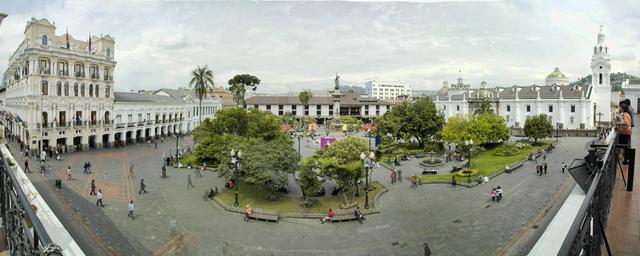
Quito is roughly divided into three parts: the Old City at the centre, with southern and northern districts to either side. The greatest concentration of tourist facilities is in the North. Quito's Old City is the largest in the Americas. It has undergone a huge restoration and revitalization program, mainly financed by the Inter-American Development Bank. It boasts no fewer than 40 churches and convents, 17 squares and 16 convents and monasteries. It's been called the 'Reliquary of the Americas' for the richness of its colonial- and independence-era architecture and heritage. It's a great quarter to wander, with several excellent museums and plenty of restaurants and terrace and courtyard cafes for a rest while sightseeing.
Modern, northern Quito (on a map, up until the southern tip of the old airport - now called Parque Bicentenario) is a fun place to explore, with plenty of museums, urban parks, restaurants, and nightlife. The southern and northern (from Parque Bicentenario up) districts of the city are more working class and seldom visited by tourists.
Be prepared to speak some basic Spanish in order to get along. Quito is an excellent city in which to learn Spanish before heading off to other places in South America. The Spanish spoken in Quito is very clear and it is spoken slowly as compared to coastal areas. There are many excellent Spanish schools, where you can have private or group lessons very economically. These schools will also arrange homestay accommodation which is convenient, inexpensive and a wonderful way to immerse yourself in the culture and try the local food.
Very few locals speak English except in the touristy areas of North Quito which includes "La Mariscal" quarter, where most tourist businesses are located. La Mariscal occupies several square blocks in North Quito and is the place to be if you wear a backpack. Bars, restaurants, hostels and internet cafes abound. Young people from many countries tend to congregate there.
Ecuador, especially the Sierra region that includes Quito, is culturally a very conservative society. This is reflected in manner of dress. People of all socio-economic backgrounds tend to dress up in Ecuador. For men, this means a pair of trousers and a button down shirt. For women, slacks or dresses are acceptable. Men and women seldom wear short pants in Quito, although casual clothes have become somewhat more accepted especially among the young and on very hot days. Some popular nightclubs and restaurants enforce a dress code. Lastly, remember that Quito is said to have "all four seasons in a day". Once the sun goes down it can get downright cold. Dressing in layers is a good idea.
The standard weather forecast just doesn't suit Quito. It's tropical location, altitude, and surrounding mountains make it a city of microclimates and intra-day variations. If you see rain forecast for every day of your visit, it doesn't usually mean a full day or rain, or even that it will rain in the part of the city you are visiting. Take an umbrella - dress in layers.
- Quito Visitors' Bureau, +593 2 2570 786, +593 2 2586 591. Has several information centres around the city. These include at the International Arrivals terminal at the airport; the small Parque Gabriela Mistral, on Reina Victoria in the Mariscal quarter; the Banco Central Museum in the Mariscal District; and finally, in the Old Town, on the ground floor of the Palacio Municipal on one side of Plaza Grande - their main centre. This includes helpful staff, lockers for leaving bags, maps, leaflets and books for sale, a store of Ecuadorian crafts. This offices offers subsidised guided tours, with various routes available. The Visitors' Bureau publishes a useful A3-size map with all the city's attractions. You can pick it up at their information offices. They also publish a number of pocket guides on various themes, including walking guides, a guide to the city's viewpoints, a guide to the Mariscal, routes north, south and northwest. Their website has an interactive map, listings of hotels and restaurants, videos, etc.
- Ministry of Tourism office, at Calle Briceño E1-24 y Guayaquil (near the Simón Bolívar ecovia stop, +593 2 399-9333. caters to tourists.
Quito Visitors' Bureau, +593 2 2570 786, +593 2 2586 591. Has several information centres around the city. These include at the International Arrivals terminal at the airport; the small Parque Gabriela Mistral, on Reina Victoria in the Mariscal quarter; the Banco Central Museum in the Mariscal District; and finally, in the Old Town, on the ground floor of the Palacio Municipal on one side of Plaza Grande - their main centre. This includes helpful staff, lockers for leaving bags, maps, leaflets and books for sale, a store of Ecuadorian crafts. This offices offers subsidised guided tours, with various routes available. The Visitors' Bureau publishes a useful A3-size map with all the city's attractions. You can pick it up at their information offices. They also publish a number of pocket guides on various themes, including walking guides, a guide to the city's viewpoints, a guide to the Mariscal, routes north, south and northwest. Their website has an interactive map, listings of hotels and restaurants, videos, etc.
Ministry of Tourism office, at Calle Briceño E1-24 y Guayaquil (near the Simón Bolívar ecovia stop, +593 2 399-9333. caters to tourists.
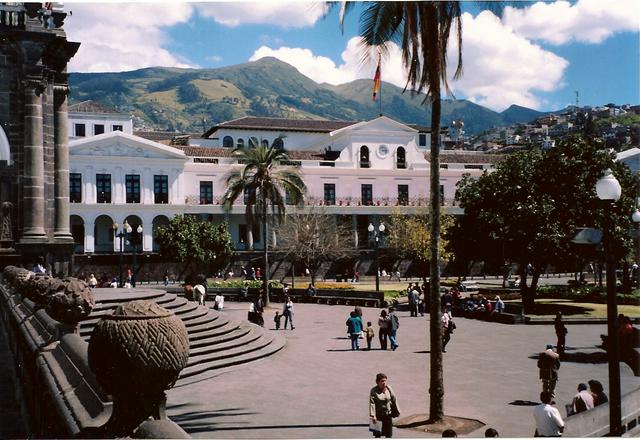
- Conjunto monumental San Francisco. The church dates to the 1570s and was devoted to San Francis, since the Franciscan order was the first to settle in the area. Hence the city's official name: San Francisco de Quito. The church contains masterpieces of syncretic art, including the famous "Virgin of Quito" by Legarda. The sculpture represents a winged virgin stepping on the devil's head (in the form of a serpent) and is displayed in the main altar. The virgin would later be inaccurately replicated on top of Panecillo hill. The museum next door to the church is arranged through the monastic compound and includes access to the choir.
- Museo Nacional -- MuNa (formerly Museo del Banco Central), Av. Patria y Av. Seis de DiciembreEdificio de la Casa de la Cultura Ecuatoriana (in the Casa de la Cultura complex and adjacent to the Parque El Ejido. Casa de la Cultura station in Ecovía bus., +593 2 3814 550 ext 6010. Tuesday-Sunday 9 a.m.-6 p.m., closed Monday. Perhaps Ecuador's most renowned museum with different rooms, devoted to pre-Columbian, Colonial and gold works of art, among other topics. Some of the famous pieces include whistle bottles shaped like animals, elaborate gold headdresses and re-created miniature scenes of life along the Amazon. The museum is well-organized, and it takes about 3–4 hours to see everything. Entrance $2. Guides who speak several different languages including English, French and Spanish are available for a small fee. Do not confuse this museum with the Banco Central which is a small exhibition downtown, across from La Compañía church. This exhibit usually shows currency or stamps. free.
- Casa de la Cultura. Closed for renovations until May 2018. Shows a patchwork of local artists. Free entrance.
- Museo de la Ciudad, Garcia Moreno street (In the Old Town, directly opposite the Carmen Alto monastery. A lovely museum with two floors encircling two quiet courtyards, the "Museo de la Ciudad" provides more of a social history of Ecuador than other museums in Quito. Re-enacted scenes from daily life of Ecuador's citizens through the years include a hearth scene from a 16th-century home, a battle scene against the Spanish, and illustrations of the building of Iglesia de San Francisco church.
- Botanical Gardens. It's a wonderful escape from the city, with all of Ecuador's ecosystems represented with a wide variety of flora. You can take a guided tour or just wander. The highlight for many people are the two glassed-in orchidariums. $10 for adults, $5 students.
- Museo Etnohistorico de Artesanias del Ecuador Mindalae, Reina Victoria N26 – 166 y La Niña, +593 2 2230609. M-F 09:30–17:30; Sa 10:00–17:30. An extremely original project in the north part of the Mariscal District, this museum provides an 'ethno-historical' view of Ecuador's amazingly rich cultural diversity. You can find out about the country's different peoples, from the coast to the Andes to the Amazon, and their crafts in a specially-built and designed structure. The museum has a large fair-trade shop that sells handicrafts and natural products. $3.
- Itchimbia cultural complex and park. This hill provides stunning views of central and northern Quito, as well as the distant peak of Cayambe to the northeast. The hillside was made into a park and an impressive cultural centre established here in 2005. The centre holds temporary exhibitions. At the weekends, there are workshops and fun for children. Pim's restaurant is open at the complex. The complex closes at 18:00. Once it closes, you can head to the nearby Cafe Mosaico to watch the sunset until about 19:00. It's a great spot to watch the fading of the light on the mountainside with the floodlights of the Old Town's churches.
- Museo Guayasamin and Capilla del Hombre. Daily 10:00-17:00. This museum houses the collection of Ecuador's most renowned contemporary artists, Oswaldo Guayasamin. It has a fine collection of pre-Columbian, colonial and independence art, and houses many of the artist's works. The adjoining Chapel of Man was built posthumously to house some of Guayasamin's vast canvases on the condition of Latin American Man. Adults $8; students, seniors, people with disabilities $4; children under 12 free.
- Calle de la Ronda. This street in the Old Town was restored by Municipality and FONSAL in 2007. It was transformed with the help and cooperation of the local residents. It's a romantic cobbled street just off the Plaza Santo Domingo (or it can be reached via Garcia Moreno by the City Museum). There are shops, patios, art galleries and modest cafe restaurants now, all run by residents. Cultural events are common at the weekends. It lacks the liveliness and buzz of the adjacent streets. Go in the late afternoon to find the most shops open and people wandering the laneway.
- La Vírgen del Panecillo. El Panecillo is a large hill on top of which is La Virgin del Panecillo, a large statue of the 'winged' Virgin Mary. She can be seen from most points in the city. Local legend has it that she is the only virgin in Quito. Never walk up the hill, always take a taxi or a bus as the walk up can be dangerous.
- Museo Casa del Alabado, Cuenca N1-41, Bolívar, +593 2 228 0940. Th-Tu and holidays 09:00-17-30 (last entry 17:00); W 13:30-17:30 (last entry 17:00). The permanent collection is made up of pre-Columbian archaeological pieces, from most societies that once inhabited all regions of what is now Ecuador. The Alabado is organized thematically and not chronologically or geographically to allow visitors to generate their own visual and cultural connections about the pieces, in an innovative cultural framework. The works are displayed beautifully in a restored colonial building just off the Plaza San Francisco. Tours in Spanish, English or French every day, at 10:30, 12:00 and 15:30. Services for visitors with reduced mobility: ramps, lift, bathroom and wheelchair. Adults $6, children 4-12 $2, children up to 3 free.
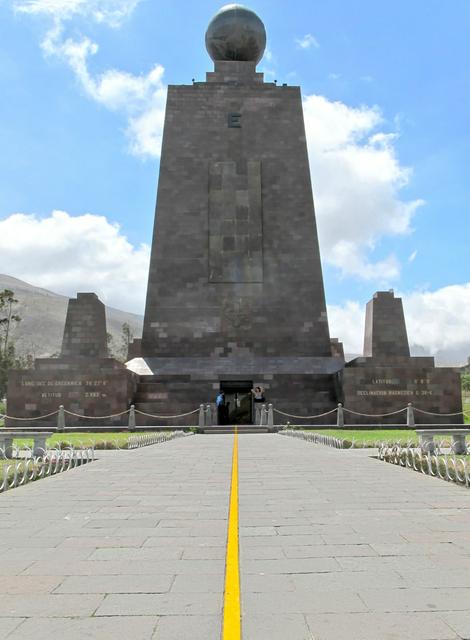
- Mitad del Mundo. Just outside of Quito is where the measurements were first made that proved that the shape of the Earth is in fact an oblate spheroid. Commemorating this is a large monument that straddles the equator called Mitad del Mundo or middle of the world. The entrance for the park is $3.50 (included entrance to small museums - April 2016). Visit here if you're interested in learning some alternative facts and seeing some kitsch. Because it's not on the equator itself, and it's not a serious cultural or educational experience. No, the water doesn't really go down the plughole the opposite way in the hemispheres, and if you want to take it seriously you won't enjoy your time here. For some of the attractions like the planetarium, the price is $7.50. You can also go to the Intiñan Solar Museum which is right next to the monument, on the other side of the north fence. The museum is actually on the equator. For $4 you can have a tour of this little museum.
- Iglesia de la Compañia de Jesus. This church is regarded by many as the most beautiful in the Americas. Partially destroyed by fire, it was restored with assistance from the Getty Foundation and other benefactors. Stunning.
Conjunto monumental San Francisco. The church dates to the 1570s and was devoted to San Francis, since the Franciscan order was the first to settle in the area. Hence the city's official name: San Francisco de Quito. The church contains masterpieces of syncretic art, including the famous "Virgin of Quito" by Legarda. The sculpture represents a winged virgin stepping on the devil's head (in the form of a serpent) and is displayed in the main altar. The virgin would later be inaccurately replicated on top of Panecillo hill. The museum next door to the church is arranged through the monastic compound and includes access to the choir.
Museo Nacional -- MuNa (formerly Museo del Banco Central), Av. Patria y Av. Seis de DiciembreEdificio de la Casa de la Cultura Ecuatoriana (in the Casa de la Cultura complex and adjacent to the Parque El Ejido. Casa de la Cultura station in Ecovía bus., +593 2 3814 550 ext 6010. Tuesday-Sunday 9 a.m.-6 p.m., closed Monday. Perhaps Ecuador's most renowned museum with different rooms, devoted to pre-Columbian, Colonial and gold works of art, among other topics. Some of the famous pieces include whistle bottles shaped like animals, elaborate gold headdresses and re-created miniature scenes of life along the Amazon. The museum is well-organized, and it takes about 3–4 hours to see everything. Entrance $2. Guides who speak several different languages including English, French and Spanish are available for a small fee. Do not confuse this museum with the Banco Central which is a small exhibition downtown, across from La Compañía church. This exhibit usually shows currency or stamps. free.
Casa de la Cultura. Closed for renovations until May 2018. Shows a patchwork of local artists. Free entrance.
Museo de la Ciudad, Garcia Moreno street (In the Old Town, directly opposite the Carmen Alto monastery. A lovely museum with two floors encircling two quiet courtyards, the "Museo de la Ciudad" provides more of a social history of Ecuador than other museums in Quito. Re-enacted scenes from daily life of Ecuador's citizens through the years include a hearth scene from a 16th-century home, a battle scene against the Spanish, and illustrations of the building of Iglesia de San Francisco church.
Botanical Gardens. It's a wonderful escape from the city, with all of Ecuador's ecosystems represented with a wide variety of flora. You can take a guided tour or just wander. The highlight for many people are the two glassed-in orchidariums. $10 for adults, $5 students.
Museo Etnohistorico de Artesanias del Ecuador Mindalae, Reina Victoria N26 – 166 y La Niña, +593 2 2230609. M-F 09:30–17:30; Sa 10:00–17:30. An extremely original project in the north part of the Mariscal District, this museum provides an 'ethno-historical' view of Ecuador's amazingly rich cultural diversity. You can find out about the country's different peoples, from the coast to the Andes to the Amazon, and their crafts in a specially-built and designed structure. The museum has a large fair-trade shop that sells handicrafts and natural products. $3.
Itchimbia cultural complex and park. This hill provides stunning views of central and northern Quito, as well as the distant peak of Cayambe to the northeast. The hillside was made into a park and an impressive cultural centre established here in 2005. The centre holds temporary exhibitions. At the weekends, there are workshops and fun for children. Pim's restaurant is open at the complex. The complex closes at 18:00. Once it closes, you can head to the nearby Cafe Mosaico to watch the sunset until about 19:00. It's a great spot to watch the fading of the light on the mountainside with the floodlights of the Old Town's churches.
Museo Guayasamin and Capilla del Hombre. Daily 10:00-17:00. This museum houses the collection of Ecuador's most renowned contemporary artists, Oswaldo Guayasamin. It has a fine collection of pre-Columbian, colonial and independence art, and houses many of the artist's works. The adjoining Chapel of Man was built posthumously to house some of Guayasamin's vast canvases on the condition of Latin American Man. Adults $8; students, seniors, people with disabilities $4; children under 12 free.
Calle de la Ronda. This street in the Old Town was restored by Municipality and FONSAL in 2007. It was transformed with the help and cooperation of the local residents. It's a romantic cobbled street just off the Plaza Santo Domingo (or it can be reached via Garcia Moreno by the City Museum). There are shops, patios, art galleries and modest cafe restaurants now, all run by residents. Cultural events are common at the weekends. It lacks the liveliness and buzz of the adjacent streets. Go in the late afternoon to find the most shops open and people wandering the laneway.
La Vírgen del Panecillo. El Panecillo is a large hill on top of which is La Virgin del Panecillo, a large statue of the 'winged' Virgin Mary. She can be seen from most points in the city. Local legend has it that she is the only virgin in Quito. Never walk up the hill, always take a taxi or a bus as the walk up can be dangerous.
Museo Casa del Alabado, Cuenca N1-41, Bolívar, +593 2 228 0940. Th-Tu and holidays 09:00-17-30 (last entry 17:00); W 13:30-17:30 (last entry 17:00). The permanent collection is made up of pre-Columbian archaeological pieces, from most societies that once inhabited all regions of what is now Ecuador. The Alabado is organized thematically and not chronologically or geographically to allow visitors to generate their own visual and cultural connections about the pieces, in an innovative cultural framework. The works are displayed beautifully in a restored colonial building just off the Plaza San Francisco. Tours in Spanish, English or French every day, at 10:30, 12:00 and 15:30. Services for visitors with reduced mobility: ramps, lift, bathroom and wheelchair. Adults $6, children 4-12 $2, children up to 3 free.
Mitad del Mundo. Just outside of Quito is where the measurements were first made that proved that the shape of the Earth is in fact an oblate spheroid. Commemorating this is a large monument that straddles the equator called Mitad del Mundo or middle of the world. The entrance for the park is $3.50 (included entrance to small museums - April 2016). Visit here if you're interested in learning some alternative facts and seeing some kitsch. Because it's not on the equator itself, and it's not a serious cultural or educational experience. No, the water doesn't really go down the plughole the opposite way in the hemispheres, and if you want to take it seriously you won't enjoy your time here. For some of the attractions like the planetarium, the price is $7.50. You can also go to the Intiñan Solar Museum which is right next to the monument, on the other side of the north fence. The museum is actually on the equator. For $4 you can have a tour of this little museum.
Iglesia de la Compañia de Jesus. This church is regarded by many as the most beautiful in the Americas. Partially destroyed by fire, it was restored with assistance from the Getty Foundation and other benefactors. Stunning.
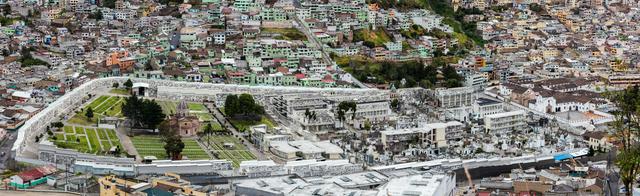
- Explore the Old Town With its gorgeous mixture of colonial and republican/independence era architecture (late 1500s to 1800s), relaxing plazas and a stunning number of churches. If you happen to be there during Christmas or Easter, you'll be amazed at the number of events, masses, and processions that bring out the crowds. You'll find craft shops, cafes, restaurants and hotels across its grid of streets.
- A recommended walking tour that could enhance your vision of the Historic Center is as follows. Take the trolley (watch your belongings) south until "Cumanda" stop. Get down, you are on Maldonado street. There you will have an impressive view of what once was the "Jerusalem" ravine, which stands between Panecillo and the core. Walk north past the trolley stop and go down a narrow stairway that brings you to La Ronda street, of Pre-Columbian origins. Walk up picturesque La Ronda until you reach Av. 24 de Mayo. This boulevard was built on top of this section of Jerusalem ravine to connect the two sides of town. On Garcia Moreno Street turn north and you will arrive to the Museo de la Ciudad, which provides an easy and interactive history of Quito. Then walk on Garcia Moreno street until Sucre, which is a pedestrian street. La Compania is at the corner and if you go up Sucre street you will reach San Francisco. If you continue on Garcia Moreno you will reach the Main (independence) Square. If you go to San Francisco, then walk to La Merced and down to the Main Square. This itinerary follows a chronological and logical sequence of sites. Most people do it backwards, turning La Ronda and Museo de la Ciudad as distant points where you're usually worn out by the time you get there. In any event, the Historic Center is so vast that you need more than one visit to see it all. The recommended walk provides you with a good overview if you're short of time or want to see as much as possible on a first day.
- La Floresta is Quito's artsy neighborhood, and home to many of Quito's most beautiful murals. In La Floresta, you can find everything from 150-year-old colonial houses to creative relaxing cafe's. Also known for great restaurants and street food (Parque de las Comidas), La Floresta is worth a visit for people looking for Quito's hidden gems.
- Watch The old men play Ecuador's version of bocce at Parque El Ejido. You can also see some serious games of Ecua-volley, the local version of volleyball, on a Saturday or Sunday.
- Bicycle Ride the Ciclopaseo takes place every Sunday. 30 km (20 miles) of roads running north-south through the city are completely closed to traffic. People cycle, run and blade the route. Up to 30,000 people take part. Several bike shops rent bikes for visitors to be able to take part.
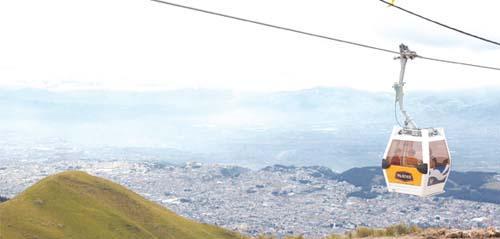
- The TelefériQo is the world's second-highest cable car. It's on the eastern flanks of the Pichincha Volcano which overlooks the whole city. It hoists visitors up to an amazing 4,000 m (12,000 feet). On clear days, you can spot half-a-dozen volcanoes and see the entire city below. The 18-minute cable car trip costs $4 for locals, but $8.50 (Jan 2018) for foreigners ($6.50 for children and seniors, $9.80 for large dogs (!), and $4.90 for small dogs). There is also an express lane option for more money. Take a taxi to the base of the TelefériQo ($4-6 from La Mariscal) or ask your hotel about buses. Don't let the taxi driver make you pay for parking. They don't pay, so it is just a scam.
- Hike Pichincha Volcano You can hike from the upper TelefériQo station to the Guagua Pichincha Volcano, which is active. You should set out from the upper cable car station before 10:30. This is not an easy hike, and there have been reports of robberies. Do your research. Hiring a guide is recommended.
- Go Mountain Biking, Foch E4-283 (corner of Av. Amazonas in La Mariscal, +593 2 2568 323. There are many outfits offering one- to multi-day mountain biking trips to the surrounding volcanos, lakes, and valleys. Biking Dutchman is one of the oldest and most well-regarded.
- Green Horse Ranch, Quito, Ecuador. The Pululahua Crater is one of the most amazing places to ride, but chances are you will not find anything about it in your guide book. Astrid, the owner of the ranch who moved to Ecuador from Germany about 15 years ago, will pick you up in Quito and bring you to the ranch (about 45-minute drive). Rides of various lengths are available and she has a wide variety of horses ready for novices and experts. Her and her staff are incredibly friendly and everything is included in the price.
Explore the Old Town With its gorgeous mixture of colonial and republican/independence era architecture (late 1500s to 1800s), relaxing plazas and a stunning number of churches. If you happen to be there during Christmas or Easter, you'll be amazed at the number of events, masses, and processions that bring out the crowds. You'll find craft shops, cafes, restaurants and hotels across its grid of streets.
A recommended walking tour that could enhance your vision of the Historic Center is as follows. Take the trolley (watch your belongings) south until "Cumanda" stop. Get down, you are on Maldonado street. There you will have an impressive view of what once was the "Jerusalem" ravine, which stands between Panecillo and the core. Walk north past the trolley stop and go down a narrow stairway that brings you to La Ronda street, of Pre-Columbian origins. Walk up picturesque La Ronda until you reach Av. 24 de Mayo. This boulevard was built on top of this section of Jerusalem ravine to connect the two sides of town. On Garcia Moreno Street turn north and you will arrive to the Museo de la Ciudad, which provides an easy and interactive history of Quito. Then walk on Garcia Moreno street until Sucre, which is a pedestrian street. La Compania is at the corner and if you go up Sucre street you will reach San Francisco. If you continue on Garcia Moreno you will reach the Main (independence) Square. If you go to San Francisco, then walk to La Merced and down to the Main Square. This itinerary follows a chronological and logical sequence of sites. Most people do it backwards, turning La Ronda and Museo de la Ciudad as distant points where you're usually worn out by the time you get there. In any event, the Historic Center is so vast that you need more than one visit to see it all. The recommended walk provides you with a good overview if you're short of time or want to see as much as possible on a first day.
La Floresta is Quito's artsy neighborhood, and home to many of Quito's most beautiful murals. In La Floresta, you can find everything from 150-year-old colonial houses to creative relaxing cafe's. Also known for great restaurants and street food (Parque de las Comidas), La Floresta is worth a visit for people looking for Quito's hidden gems.
Watch The old men play Ecuador's version of bocce at Parque El Ejido. You can also see some serious games of Ecua-volley, the local version of volleyball, on a Saturday or Sunday.
Bicycle Ride the Ciclopaseo takes place every Sunday. 30 km (20 miles) of roads running north-south through the city are completely closed to traffic. People cycle, run and blade the route. Up to 30,000 people take part. Several bike shops rent bikes for visitors to be able to take part.
The TelefériQo is the world's second-highest cable car. It's on the eastern flanks of the Pichincha Volcano which overlooks the whole city. It hoists visitors up to an amazing 4,000 m (12,000 feet). On clear days, you can spot half-a-dozen volcanoes and see the entire city below. The 18-minute cable car trip costs $4 for locals, but $8.50 (Jan 2018) for foreigners ($6.50 for children and seniors, $9.80 for large dogs (!), and $4.90 for small dogs). There is also an express lane option for more money. Take a taxi to the base of the TelefériQo ($4-6 from La Mariscal) or ask your hotel about buses. Don't let the taxi driver make you pay for parking. They don't pay, so it is just a scam.
Hike Pichincha Volcano You can hike from the upper TelefériQo station to the Guagua Pichincha Volcano, which is active. You should set out from the upper cable car station before 10:30. This is not an easy hike, and there have been reports of robberies. Do your research. Hiring a guide is recommended.
Go Mountain Biking, Foch E4-283 (corner of Av. Amazonas in La Mariscal, +593 2 2568 323. There are many outfits offering one- to multi-day mountain biking trips to the surrounding volcanos, lakes, and valleys. Biking Dutchman is one of the oldest and most well-regarded.
Green Horse Ranch, Quito, Ecuador. The Pululahua Crater is one of the most amazing places to ride, but chances are you will not find anything about it in your guide book. Astrid, the owner of the ranch who moved to Ecuador from Germany about 15 years ago, will pick you up in Quito and bring you to the ranch (about 45-minute drive). Rides of various lengths are available and she has a wide variety of horses ready for novices and experts. Her and her staff are incredibly friendly and everything is included in the price.
There are lots of artisans working on unique crafts in the capital. These include guitar-makers, candle makers, tanners and leather-workers, silversmiths, ceramicists and woodcarvers. You can find them at their workshops, published in a guide by the Visitors' Bureau.
There are also several fair-trade shops in Quito which promise to pay the craftspeople fairly for their products. The ones at the Tianguez (Plaza San Francisco), El Quinde (Plaza Grande), and Museo Mindalae are all very good.
There are many shopping malls in Quito such as Quicentro, Mall el Jardin, CCI, CC. El Bosque, Megamaxi, Ventura Mall, Ciudad Comercial el Recreo, San Luis, etc. and every street corner has several small "Mom and Pop" shops or stands where only a couple of items are for sale. If your shopping list is very long, you may spend all day looking around for the stores that have the items on your list.
There are many casual wear stores like MNG, Benetton, Lacoste, Guess, Fossil, Bohno, and Diesel. So if you need some items Quito is in fact a very good place to buy nice clothes at relatively low prices.
Ecuador's indigenous peoples include many highly skilled weavers. Almost everyone who goes to Ecuador sooner or later purchases a sweater, scarf or tapestry. In Quito vendors are found along the sidewalks of more touristy neighborhoods. You should also consider travelling directly to some of the artisan markets, such as the famous one in Otavalo. If you haven't got time for Otavalo, you can find virtually the same gear at the market on Jorge Washington and Juan Leon Mera in the Mariscal district. The Mariscal is replete with dozens of souvenir, craft and T-shirt stores which make shopping for a gift very easy.
- Zapytal, Foch E4-298 v Av Amazonas, +593 2 528 757. Hand-made shoes. A wide selection in stock plus made to measure if you have 8 days to spare. A selection of corresponding (spectator shoes), riding boots and women's shoes, $80.
- Guitarras Guacan, Chimborazo y Bahia, +593 2-2583-475. Master Luthier Cesar Guacan's quaint guitar workshop at the base of the Virgin del Panecillo - great guitars for both professionals and budget-conscious.
- Hotel Mariot, Avenida Orellana 1172 Y Avenida Amazonas, +593 2 297-2000. Art gallery and shops off the lobby. Hotel Mariot is one of the best hotels in Quito and is located in the bustling buzzy Mariscal district, this conference hotel is 2 km from the Centro de Exposiciones Quito and 4 km from Plaza de la Independencia.
- Galeria de Arte Creacion, Amaonas N24-03 y Wilson, +593 2 223-3550. Art studio, located on Amazon and Wilson, very close to the Mariott and the Hilton. Lessons in art, painting and watercolor, oil painting, modern art classes, Monday to Saturday.
- Hotel Quito Art Gallery, Av. González Suárez N27 142, +593 2 3964-900.
- Swiss Hotel, 1820, Torre Boreal, Avenue 12 De Octubre N24-739, +593 2 256-7600. Art gallery and shopsoff the lobby. This upscale hotel is 3 km from Parque La Carolina and 4 km from Plaza de la Independencia square.
- El Jardin, Av. Amazonas N6-114 y República Esquina. Art galleries and shopping.
Hotel Mariot, Avenida Orellana 1172 Y Avenida Amazonas, +593 2 297-2000. Art gallery and shops off the lobby. Hotel Mariot is one of the best hotels in Quito and is located in the bustling buzzy Mariscal district, this conference hotel is 2 km from the Centro de Exposiciones Quito and 4 km from Plaza de la Independencia.
Galeria de Arte Creacion, Amaonas N24-03 y Wilson, +593 2 223-3550. Art studio, located on Amazon and Wilson, very close to the Mariott and the Hilton. Lessons in art, painting and watercolor, oil painting, modern art classes, Monday to Saturday.
Hotel Quito Art Gallery, Av. González Suárez N27 142, +593 2 3964-900.
Swiss Hotel, 1820, Torre Boreal, Avenue 12 De Octubre N24-739, +593 2 256-7600. Art gallery and shopsoff the lobby. This upscale hotel is 3 km from Parque La Carolina and 4 km from Plaza de la Independencia square.
El Jardin, Av. Amazonas N6-114 y República Esquina. Art galleries and shopping.
Zapytal, Foch E4-298 v Av Amazonas, +593 2 528 757. Hand-made shoes. A wide selection in stock plus made to measure if you have 8 days to spare. A selection of corresponding (spectator shoes), riding boots and women's shoes, $80.
Guitarras Guacan, Chimborazo y Bahia, +593 2-2583-475. Master Luthier Cesar Guacan's quaint guitar workshop at the base of the Virgin del Panecillo - great guitars for both professionals and budget-conscious.
You name it, and it's available in Quito. Restaurants range from the basic places offering chicken and rice for $1.50 to international food with very expensive prices. The country benefits from all worlds, with a variety of dishes inspired by both coastal and Andean produce. Seafood and fish is fresh and delicious, while meats, particularly pork, are excellent. These combine with typical ingredients such as potatoes, plantains and all sorts of tropical and Andean fruits.
A good area to head to for eating out is the Plaza El Quinde (or Foch) which is in the Mariscal district at Foch y Reina Victoria. There are dozens of restaurants and eateries all around this area. La Floresta, up the hill from the Mariscal around 12 de Octubre, also has many fine restaurants. The La Floresta traffic circle turns into an evening market after 5PM and the most popular dish served is tripa mishqui (grilled beef or pork intestines).
Churrasco is a great Ecuadorian version of a Brazilian dish. Tallarin is a popular noodle dish mixed with chicken or beef.
Chinese restaurants are known as "Chifas" and are very abundant. Chaulafan is the local term for fried-rice, a very popular dish. Cebiche (also spelled ceviche) is a very popular dish in which clams or shrimp are marinated in a broth. Worth trying, but look for a well known restaurant with many locals to be sure you are getting fresh seafood.
When buying from lower-priced restaurants or shops, if you only have bills larger than a $5, it's a good idea to get them changed at a bank first.
- Pim's. An Ecuadorian franchise. 4 locations: Panecillo, Cumbaya, Itchimbia and Isabel La Catolica (next to the Swissotel).
- Restaurant Techo del Mundo, Av. González Suárez N27 142 (In the 7th floor of Hotel Quito, +593 2 254 4600. 06:00-01:30 (Su until 00:00). Luxurious restaurant with a spectacular view located in the 5-star hotel “Hotel Quito”, international and Ecuadorian cuisine.
- El Capuleto, Av. Eloy Alfaro y 6 de Diciembre, +593 2255 0611. 10:00-24:00 (Su until 22:00). A quiet Italian restaurant in the middle of the city. The homemade pizza and the cappuccino are excellent.
- Tibidabo, General Salazar 934 y 12 de Octubre, +593 2 223-7334. M-F 12:30-16:00 and 18:30-23:00; Sa 18:30-23:00. International cuisine. Moderate. Attentive service in a comfortable, unpretentious atmosphere. Reservations recommended.
- Restaurante Las Redes - Seafood. Moderate. Popular with the locals; well known for ceviche. Amazonas 845. +593 2 252 5697.
- Ille de France - French. Expensive and excellent. Formal attire. Reina Victoria 1747. +593 2 255 3292. Hours: Daily 19:00-23:00.
- El Nispero, Valladoli N24-438 y Cordero, +593 2 222 6398. Fine Ecuadorian cuisine in an elegant atmosphere. Moderate. Business casual. Hours: Tu-Sa 12:00-16:00, and 19:00-23:00; Su-M 12:00-16:00. Reservations recommended.
- Cebiches de la Rumiñahui Ceviches are its specialty. Reasonable prices for excellent cebiche. Popular with locals. Real Audiencia N59-121 La Mariscal. Also in the food courts of "Quicentro Shopping" Mall, "San Marino Shopping" Mall and "El Recreo" Mall.
- Restaurante Vegetariano, Salinas, near the intersection with Riofrio. Vegetarian almuerzos for $2. Juice, soups, snacks, soya milk, vegy steaks, etc. Good vegy food, in a very clean environment. They also sell powdered soya milk, and a few dietary supplements.
- Restaurante Vegetariano, Av Mariania de Jesus, down the hill from the junction with Hungaria. Chinese type veggie food. Complete Almuerzos with brown rice $2.50, or get separate elements: soup 70¢, main $1.80, and great juices 50¢ or 70¢. Pearl tea $1.20 or $1.50. Soy milk 80¢. Chaumien, Chaulafan, Chop Suey all $2.50.
- Restaurante Vegetariano, Does almuerzos for $2, brown rice, good juice. Standard vegetarian fare.
- Mongos, Mongolian Grill. Calama 469 y Juan Leon Mera, in the heart of trendy gringolandia new town. All your can eat buffets (vegetarian $3.99, with meats $5.99. Includes salad or soup entre, and one free drink. Great quality meat.
- Mulligan's, Calama E5-44 y Juan Leon Mera (La Mariscal, +593 2 223-6844. Tu-Sa 12:30-24:00, Su 13:00-18:00. Need a break from all the new tastes, get a taste and comfort from home. This American style Sports Bar has great food and you can watch all your favorite sports on TV.
- Mea Culpa, Chile y Venezuela (Palacio Arzobispal) (Plaza Grande. Second floor., +593 2 2951 190, +593 2 2950 392. M-F 12:00-24:00, 19:00-23:00. Sa-Su closed. Among the best restaurants in town. Great service and food, taste the crepes de pangora (stone crab). Dishes are small, get an entry. Nice view of the plaza from some tables. Dress code: semi formal. $$$.
- Uncle Ho's, E8-40 Jose Calama y Diego de Almagro (2 Blocks from Plaza Foch, +593 2 5114030. M-Sa 12:00-23:00. Great fresh Asian food (Vietnamese & Thai) in funky surroundings with friendly service. Excellent martinis & drink specials. Prices - Appetizers $3–4, Mains $7–10. Tofu & veggie options, Local Ecuadorian specialities. $7-10.
- Achiote, Juan Rodriguez 282 y Reina Victoria (La Mariscal, +593 22501743. Traditional Ecuadorian cuisine with a gourmet twist!
Pim's. An Ecuadorian franchise. 4 locations: Panecillo, Cumbaya, Itchimbia and Isabel La Catolica (next to the Swissotel).
Restaurant Techo del Mundo, Av. González Suárez N27 142 (In the 7th floor of Hotel Quito, +593 2 254 4600. 06:00-01:30 (Su until 00:00). Luxurious restaurant with a spectacular view located in the 5-star hotel “Hotel Quito”, international and Ecuadorian cuisine.
El Capuleto, Av. Eloy Alfaro y 6 de Diciembre, +593 2255 0611. 10:00-24:00 (Su until 22:00). A quiet Italian restaurant in the middle of the city. The homemade pizza and the cappuccino are excellent.
Tibidabo, General Salazar 934 y 12 de Octubre, +593 2 223-7334. M-F 12:30-16:00 and 18:30-23:00; Sa 18:30-23:00. International cuisine. Moderate. Attentive service in a comfortable, unpretentious atmosphere. Reservations recommended.
Restaurante Las Redes - Seafood. Moderate. Popular with the locals; well known for ceviche. Amazonas 845. +593 2 252 5697.
Ille de France - French. Expensive and excellent. Formal attire. Reina Victoria 1747. +593 2 255 3292. Hours: Daily 19:00-23:00.
El Nispero, Valladoli N24-438 y Cordero, +593 2 222 6398. Fine Ecuadorian cuisine in an elegant atmosphere. Moderate. Business casual. Hours: Tu-Sa 12:00-16:00, and 19:00-23:00; Su-M 12:00-16:00. Reservations recommended.
Cebiches de la Rumiñahui Ceviches are its specialty. Reasonable prices for excellent cebiche. Popular with locals. Real Audiencia N59-121 La Mariscal. Also in the food courts of "Quicentro Shopping" Mall, "San Marino Shopping" Mall and "El Recreo" Mall.
Restaurante Vegetariano, Salinas, near the intersection with Riofrio. Vegetarian almuerzos for $2. Juice, soups, snacks, soya milk, vegy steaks, etc. Good vegy food, in a very clean environment. They also sell powdered soya milk, and a few dietary supplements.
Restaurante Vegetariano, Av Mariania de Jesus, down the hill from the junction with Hungaria. Chinese type veggie food. Complete Almuerzos with brown rice $2.50, or get separate elements: soup 70¢, main $1.80, and great juices 50¢ or 70¢. Pearl tea $1.20 or $1.50. Soy milk 80¢. Chaumien, Chaulafan, Chop Suey all $2.50.
Restaurante Vegetariano, Does almuerzos for $2, brown rice, good juice. Standard vegetarian fare.
Mongos, Mongolian Grill. Calama 469 y Juan Leon Mera, in the heart of trendy gringolandia new town. All your can eat buffets (vegetarian $3.99, with meats $5.99. Includes salad or soup entre, and one free drink. Great quality meat.
Mulligan's, Calama E5-44 y Juan Leon Mera (La Mariscal, +593 2 223-6844. Tu-Sa 12:30-24:00, Su 13:00-18:00. Need a break from all the new tastes, get a taste and comfort from home. This American style Sports Bar has great food and you can watch all your favorite sports on TV.
Mea Culpa, Chile y Venezuela (Palacio Arzobispal) (Plaza Grande. Second floor., +593 2 2951 190, +593 2 2950 392. M-F 12:00-24:00, 19:00-23:00. Sa-Su closed. Among the best restaurants in town. Great service and food, taste the crepes de pangora (stone crab). Dishes are small, get an entry. Nice view of the plaza from some tables. Dress code: semi formal. $$$.
Uncle Ho's, E8-40 Jose Calama y Diego de Almagro (2 Blocks from Plaza Foch, +593 2 5114030. M-Sa 12:00-23:00. Great fresh Asian food (Vietnamese & Thai) in funky surroundings with friendly service. Excellent martinis & drink specials. Prices - Appetizers $3–4, Mains $7–10. Tofu & veggie options, Local Ecuadorian specialities. $7-10.
Achiote, Juan Rodriguez 282 y Reina Victoria (La Mariscal, +593 22501743. Traditional Ecuadorian cuisine with a gourmet twist!
There are several Ecuadorian brands of beer, but you generally won't find any variety in Quito. Usually you'll get a choice of just two. The most prevalent throughout the country is Pilsener, with Club being a little more expensive, but not wildly more flavourful. There are some micro-brews available, but it's still a fledgling industry in Quito.
There are also some alcoholic drinks which can only be found in Quito like Mistelas, etc.
- Sport Planet, Av. America y Naciones Unidas, +593 2 267 790. Located on the 3rd floor of "Plaza de las Americas". Is the Ecuadorian version of Hollywood Planet. The night sky of northern Quito is incredible and the food is great.
- Turtle's Head, La Niña 626 y Amazonas, +593 2-256-5544. An English pub style bar that often has live music in the later hours. They have their own brews along with other popular beers. They also have pool tables, foosball, darts etc. Turtle's Head is also open in the nearby valley of Cumbaya, located in the main plaza across from the church.
- Cherusker, Joaquin Pinto y Diego de Almagro (vis-a-vis to Finn McCools, +593 2-6008895. M-Th 15:30-23:30, F Sa 15:30-01:30. German-run brew-pub with excellent beer, from Hefeweizen (blond wheat beer) to Stout. Offers mostly German food, such as sausages, schnitzel, potato salad and tasty Hamburgers. Has live sports on a big screen (HD), a beautiful garden and foosball. Wednesday Reggae Night, Thursday Classic and modern Rock. Packed on Fridays.
- Q bar+restaurant+lounge, Plaza Foch, La Mariscal, +593 2 255 7840. A very elegant lounge-style bar. It's located on Foch Plaza so you have access to an even wider options nearby.
- Sutra, J Calama 380, Mariscal Sucre. A great place to have some drinks and have a chat, or just to pass the time. Just above "no bar"
- El pobre Diablo, Isabel La Católica E12-06 y Galavis esq. La Floresta, +593 2 2235194, +593 2 2225397, +593 2 099216290. One of the oldest cafe-bars in Quito. Almost every week there are some kind of cultural activity or a live concert. The food and the drinks are moderately priced. The "Vino caliente" and "canelazo" are recommended. El pobre Diablo is located across the street from the Swiss Hotel. There is a local menu Monday to Friday featuring a four-course prix fixe lunch.
- Grima's Pub of Quito, Luis Cordero E12-141 y Av. Toledo. La Floresta, +593 2 223-0846. Grima is a great place for good drinks at a very reasonable price. Located on the lower level is one of the best art galleries featuring local artists in Quito. Tu-Su there is a DJ spinning the best in electronic & rock music in Quito.
- The Magic Bean, Foch # 681 E5-08 y Juan Leon Mera, +593 2 2566 181. A good menu, excellent quality and big portions, a good "backpacker" vibe to the restaurant and English speaking staff, fresh juices. For reading, the American newspaper "Miami Herald" is available. Super clean & centrally located, with a Hostel attatched to the restaurant Magic Bean. Very clean bathrooms for travellers on a budget. Fresh espresso, cappuccino, beer, wine, coffee, tea & a wide variety of pastry & ice cream.
- Zazu, Mariano Aguilera 331 & La Pradera, +593 2 254 3559. Upscale restaurant well worth the visit. Urban chic meets Quito, and the result is a very comfortable setting with outstanding cuisine and top notch service. Great wine list too. Located near the JW Marriott.
- Finn Mc Cool's, Corner of Diego de Almagro y Joaquin Pinto. La Mariscal (1 block from Plaza Foch, +593 2 2521780. 11:00 - late. Cozy Irish pub with friendly atmosphere, loads of Live sports, free pool and foosball, draft beer and good pub food all day. Poker Monday, Table Quiz Tuesday and good craic every night of the week. Get in before 16:00 on Sundays!
- República del Cacao, corner of Reina Victoria y J. Pinto. A nice place to have a cup of delicious hot chocolate. They also offer coffee, cookies and souvenirs (e.g. chocolate and cool t-shirts).
La Mariscal offers tons of places for dancing or just drinks.
- Varadero - Reina Victoria 1751 and La Pinta; Small, local and super sweaty, this bar-restaurant packs in the crowds for high-energy live Cuban music. Small cover to get in and drinks are moderately expensive.
- El Aguijon - A favorite of locals and tourist, if you like ska, new punk and all kinds of alternative rock music this is the place for you, this is the best place in the city for you to hear the fusion between Ecuadorian and Latin rhythms like salsa, meringue vallenatos, cumbias, reggae, trip hop, trance, and skapunk. Located in the Mariscal District.
- Blooms - Walking distance from Reina Victoria. It's more of beer pub than anything else, a nice place to start the night.
- Bungalow 6 - Located at Calama street - Place for "gringos" to mingle with the locals. It's an overall fun place to go - Wednesdays Ladies Night are the best day to go, definitley.
- No Bar - One of the oldest places in Quito. Located at Calama street and Juan Leon Mera.
Outside of La Mariscal are other clubs that are more famous among locals.
- Strawberry Fields Forever Calama y Juan Leon Mera - a unique Beatle Bar in the heart of La Mariscal/rock and roll and more.
Varadero - Reina Victoria 1751 and La Pinta; Small, local and super sweaty, this bar-restaurant packs in the crowds for high-energy live Cuban music. Small cover to get in and drinks are moderately expensive.
El Aguijon - A favorite of locals and tourist, if you like ska, new punk and all kinds of alternative rock music this is the place for you, this is the best place in the city for you to hear the fusion between Ecuadorian and Latin rhythms like salsa, meringue vallenatos, cumbias, reggae, trip hop, trance, and skapunk. Located in the Mariscal District.
Blooms - Walking distance from Reina Victoria. It's more of beer pub than anything else, a nice place to start the night.
Bungalow 6 - Located at Calama street - Place for "gringos" to mingle with the locals. It's an overall fun place to go - Wednesdays Ladies Night are the best day to go, definitley.
No Bar - One of the oldest places in Quito. Located at Calama street and Juan Leon Mera.
Strawberry Fields Forever Calama y Juan Leon Mera - a unique Beatle Bar in the heart of La Mariscal/rock and roll and more.
Check out the Guapulo area of Quito, its a winding steep area with several great bars and cafés with a real bohemian feel. Just be careful if you go in after sundown, since this area is a bit dodgy.
Sport Planet, Av. America y Naciones Unidas, +593 2 267 790. Located on the 3rd floor of "Plaza de las Americas". Is the Ecuadorian version of Hollywood Planet. The night sky of northern Quito is incredible and the food is great.
Turtle's Head, La Niña 626 y Amazonas, +593 2-256-5544. An English pub style bar that often has live music in the later hours. They have their own brews along with other popular beers. They also have pool tables, foosball, darts etc. Turtle's Head is also open in the nearby valley of Cumbaya, located in the main plaza across from the church.
Cherusker, Joaquin Pinto y Diego de Almagro (vis-a-vis to Finn McCools, +593 2-6008895. M-Th 15:30-23:30, F Sa 15:30-01:30. German-run brew-pub with excellent beer, from Hefeweizen (blond wheat beer) to Stout. Offers mostly German food, such as sausages, schnitzel, potato salad and tasty Hamburgers. Has live sports on a big screen (HD), a beautiful garden and foosball. Wednesday Reggae Night, Thursday Classic and modern Rock. Packed on Fridays.
Q bar+restaurant+lounge, Plaza Foch, La Mariscal, +593 2 255 7840. A very elegant lounge-style bar. It's located on Foch Plaza so you have access to an even wider options nearby.
Sutra, J Calama 380, Mariscal Sucre. A great place to have some drinks and have a chat, or just to pass the time. Just above "no bar"
El pobre Diablo, Isabel La Católica E12-06 y Galavis esq. La Floresta, +593 2 2235194, +593 2 2225397, +593 2 099216290. One of the oldest cafe-bars in Quito. Almost every week there are some kind of cultural activity or a live concert. The food and the drinks are moderately priced. The "Vino caliente" and "canelazo" are recommended. El pobre Diablo is located across the street from the Swiss Hotel. There is a local menu Monday to Friday featuring a four-course prix fixe lunch.
Grima's Pub of Quito, Luis Cordero E12-141 y Av. Toledo. La Floresta, +593 2 223-0846. Grima is a great place for good drinks at a very reasonable price. Located on the lower level is one of the best art galleries featuring local artists in Quito. Tu-Su there is a DJ spinning the best in electronic & rock music in Quito.
The Magic Bean, Foch # 681 E5-08 y Juan Leon Mera, +593 2 2566 181. A good menu, excellent quality and big portions, a good "backpacker" vibe to the restaurant and English speaking staff, fresh juices. For reading, the American newspaper "Miami Herald" is available. Super clean & centrally located, with a Hostel attatched to the restaurant Magic Bean. Very clean bathrooms for travellers on a budget. Fresh espresso, cappuccino, beer, wine, coffee, tea & a wide variety of pastry & ice cream.
Zazu, Mariano Aguilera 331 & La Pradera, +593 2 254 3559. Upscale restaurant well worth the visit. Urban chic meets Quito, and the result is a very comfortable setting with outstanding cuisine and top notch service. Great wine list too. Located near the JW Marriott.
Finn Mc Cool's, Corner of Diego de Almagro y Joaquin Pinto. La Mariscal (1 block from Plaza Foch, +593 2 2521780. 11:00 - late. Cozy Irish pub with friendly atmosphere, loads of Live sports, free pool and foosball, draft beer and good pub food all day. Poker Monday, Table Quiz Tuesday and good craic every night of the week. Get in before 16:00 on Sundays!
República del Cacao, corner of Reina Victoria y J. Pinto. A nice place to have a cup of delicious hot chocolate. They also offer coffee, cookies and souvenirs (e.g. chocolate and cool t-shirts).
As in every big city tourists should take special care in certain areas.
Do not travel up El Panecillo on foot; use a taxi even during the day. Not only is the neighborhood bad, but the road leading up the hill has very narrow sidewalks, and sometimes no sidewalks at all. This presents a risk of being, at best, overwhelmed with diesel fumes as busses chug by, at worst, getting run over.
It is probably best to avoid "Gringolandia" alone at night, as there is quite a bit of assault even during the day. Drunk foreigners are easy targets in this neighborhood full of bars and clubs, so stick with a group. This is not, however, a reason to miss out on all this lively area has to offer.
As the Old City becomes quite dead late at night, it is best to avoid walking around alone. However, the central squares of the Old Town are patrolled by police and well-lit, so it is fine for a stroll in a group at night. During the day, it is perfectly fine, bustling with locals, shopkeepers, hawkers and tourists, and well patrolled by police, especially at the main tourist attractions. Nevertheless, pickpocketing and pursesnatching can be a problem, so take normal precautions. The plaza and doors of the San Francisco church, and the main trolley station near Plaza Domingo are particularly notorious areas for this. Pickpocketing is done by highly skilled groups of 3 or 4 people. You are best off not bringing a wallet at all—just some bills split between various pockets. Also, watch out for the busses and trollies while in old town. On many streets, sidewalks can be very narrow, so it is best to pay attention at all times so you can flatten against the wall and cover your face (diesel fumes!) if you need to let one pass, especially when the sidewalk is crowded.
Mariscal Sucre and all parks among other areas can be unsafe at night so taxis are advised for even short distances. Keep your belongings as close and as secure as possible, and if you feel in danger, duck into a bar or shop, and then hail a taxi. Beware of credit card fraud, which is an increasingly serious problem in Quito as tourists are being targeted in the Mariscal area.
The area near Hospital Militar is quite dangerous, even in the late morning. The road "Solano" where Casa Bambu Hostel is situated is especially dangerous. Armed robberies have become more common. Men have been known to jump out of cars to target and physically threaten foreigners in order to steal their belongings. Although its views are amazing, exercise caution when walking to and from your accommodation. Taxis travel up and down this road frequently so if you can spare $1.50 to get into Mariscal Sucre, do so. Parks nearby are also dangerous. Perhaps walk around the parks instead of going through them.
The main bus station is an area known to target travelers (foreigners or locals alike). Watch your bags closely, before departure, during departure, even once on the bus. It is best not even to put your luggage in the overhead shelving or under your own seat, as you can be easily distracted and have all your key possessions stolen before realizing it. Watch your bags on top of, or under the bus, at every stop until you arrive at your destination. There are two important sorts of scams that you may encounter on buses:
One common one scam involves a thief impersonating bus staff (this can be easy because those of many companies have no uniforms) who will direct you to a seat and finding some excuse to ask you to put your bag in the overhead compartment or directly under your own seat where you cannot see it; an accomplice seated directly behind you will then slash open your bag and steal the belongings. Having the bag between your legs is not safe either as children are commonly used to climb down under the seat (from behind you), slash the bag, and remove belongings without you ever feeling a thing. Always have your bag on your lap.
Another scam will often have an accomplice who will provide a distraction such as pretending to sell sweets before spilling them all over you, giving their friend the chance to steal your belongings. This can't be emphasised enough: never let your belongings out of sight. If something suspicious is happening like this on a bus, just refuse to co-operate and hold your belongings close to you. Robberies of this kind are common, particularly on buses leaving Quito. It is worth considering paying $3 or $4 more for a trip on a more high-class bus as these often have additional security measures, which can prevent robberies of tourists and locals alike. On city buses, it is best not bring a backpack. If you absolutely have to bring one, wear it on your chest, not your back.
Finally, several neighborhoods located to the very north and south of the city are infamous among locals for having gang/delinquent trouble. "La Bota" to the north is specially notorious as it even locals try to avoid passing through it as much as possible.
Wearing "gringo" clothes (fishing vests, travellers' pants, bright colored t-shirts, dirty sandals) will make you a target. Ecuadorians in Quito generally dress conservatively; a pair of nice black pants or dark jeans and a non-descript white/off-white t-shirt will make you look a business person who knows his way around and not just another tourist posing as a Haight-Ashbury hippie.
Travellers in Quito are likely to be approached at some point or another by con artists or persons with "sob stories". Ignore such persons and be wary of anyone asking for money under any pretext, including children begging. If you feel charitable, Ecuador has lots of legitimate charities you can support.
Avoid associating at all with the drug trade in Ecuador. Ecuador has strict laws against possession, transportation and use of illegal drugs and foreigners caught transporting drugs at the airports have been sentenced to long prison terms. Unfortunately, any foreigner with an "alternative" or "hippie" appearance (such as men with long hair) may be assumed by some Ecuadorians to be looking for drugs. If you are approached about drugs in any context, it is safe to assume the person approaching you is up to no good.
One exception is use of entheogens by indigenous people. Interest in ayahuasca is prompting increasing numbers of Americans and Europeans to travel to South America in order to partake in traditional ceremonies, and Ecuador is one such place. It is advisable to plan such a trip with a reliable guide before you travel there.
All Ecuadorian citizens and visitors are required to carry ID at all times. If your stay in Ecuador is for a few months or longer, sooner or later, you will encounter a roadside police check and be requested to show ID. You can show your passport; however, carrying your passport around all the time is not advised due to the risk of loss of theft. A better option is to have a copy of your passport certified by your embassy and carry that. Students and long-term residents will be issued an Ecuadorian "censo" card that can also be carried in place of a passport for ID purposes.
If you are the victim of a crime it is suggested you report it to the Ecuadorian National Police (by law, you must report within 72 hours of the incident), as well as to your home country embassy and to the South American Explorers Club.
- Visitor Safety Service offices. Their job is to help with filling out forms, embassies and passports, etc. They have two vehicles for further assistance. Some staff speak English or other languages:
- , +593 2 254-3983. Opening Times: 24 hours, 7 days a week.. Be prepared to offer English lessons as a "bribe."
- , +593 2 295-5785. Opening Times: 24 hours, 7 days a week.. This office is known for its slow responses to crimes that are taking place; it is not uncommon to see locals yelling at these officers for not doing their jobs.
Visitor Safety Service offices. Their job is to help with filling out forms, embassies and passports, etc. They have two vehicles for further assistance. Some staff speak English or other languages:
- , +593 2 254-3983. Opening Times: 24 hours, 7 days a week.. Be prepared to offer English lessons as a "bribe."
- , +593 2 295-5785. Opening Times: 24 hours, 7 days a week.. This office is known for its slow responses to crimes that are taking place; it is not uncommon to see locals yelling at these officers for not doing their jobs.
Most Trolebus stations provide free WiFi.
- SIM cards at the airport. Expect to be greeted in the arrivals area by someone selling cards for Movistar - $65 for a month of unlimited calling, texting and Internet. There is also a lighter package for $55. In the Airport Center just across the road, there is a shop selling SIM cards for Claro. The Tuenti kiosk will sell you a $25 SIM with 30 days of service, 4 GB of data, 75 minutes of calling, and 60 text messages.
SIM cards at the airport. Expect to be greeted in the arrivals area by someone selling cards for Movistar - $65 for a month of unlimited calling, texting and Internet. There is also a lighter package for $55. In the Airport Center just across the road, there is a shop selling SIM cards for Claro. The Tuenti kiosk will sell you a $25 SIM with 30 days of service, 4 GB of data, 75 minutes of calling, and 60 text messages.
- Brazil Brazil, Av. Amazonas 1429 y Av. Col, +593 2-2563-142, +593 2-2563-141, +593 2-2563-086.
- China China, Ave Atahualpa 349 and Ave Amazonas, +593 2-2444362.
- Egypt Egypt, Avenida Tarqui E 4-56 Y 6 de Diciembre, +593 22509501.
- Greece Greece, Urb. Chiriboga 10ma transversal No. 109, entre Av. San Luis y Av. Del Progresso San Rafael, +593 2-2865848.
- Japan Japan, Ave Amazonas N39-123 and Calle Arizaga, Edf. Amazonas Plaza, Piso 11, +593 2 2278-700.
- United States United States of America, Ave Avigiras E12-170 y Ave. Eloy Alfaro (next to SOLCA, +593 2 398-5000.
Brazil Brazil, Av. Amazonas 1429 y Av. Col, +593 2-2563-142, +593 2-2563-141, +593 2-2563-086.
China China, Ave Atahualpa 349 and Ave Amazonas, +593 2-2444362.
Egypt Egypt, Avenida Tarqui E 4-56 Y 6 de Diciembre, +593 22509501.
Greece Greece, Urb. Chiriboga 10ma transversal No. 109, entre Av. San Luis y Av. Del Progresso San Rafael, +593 2-2865848.
Japan Japan, Ave Amazonas N39-123 and Calle Arizaga, Edf. Amazonas Plaza, Piso 11, +593 2 2278-700.
United States United States of America, Ave Avigiras E12-170 y Ave. Eloy Alfaro (next to SOLCA, +593 2 398-5000.
Quito is surrounded by a variety of places that could interest all kinds of tourists. A couple of hours on a bus ride is all it takes to reach them:
To the north, all tourists should visit the province of Imbabura, which has beautiful lakes such as Yaguarcocha and San Pablo. Hikers and mountain climbers can also ask for adventures in Cayambe National Park, home of the 3rd largest volcano in Ecuador. It's inactive. Otavalo is a town with an Indian market that is famous worldwide for the quality and variety of products on sale. Don't forget to haggle for your preferred price!
To the northwest of Quito lies the region of Mindo, a subtropical rainforest paradise, full of rivers, majestic waterfalls, unique wildlife and more. The region is home to a variety of animal wildlife sanctuaries, and is famous locally and internationally because of its beauty. At a slightly higher altitude to Mindo is the Cloudforest. The variety of plants, birds and butterflies is wonderful. The guides carry good quality binoculars to help you spot some of the many varieties of birds. After each guided walk you can return to the lodge for meals. Near the main buildings there are many humminbird feeders which attract many of the energetic and luminous birds. Accommodation is simple but very clean and pleasant with balconies from which you get beautiful views into the forest. You can visit the butterfly and hummingbird farm too for $3. The staff will show you around and explain to you in Spanish the life cycle of the butterflies (very worthwhile!) Landslides are known to occur on the roads to and from Mindo. Traffic can be held up for hours if this occurs. Trout (trucha in Spanish) is a specialty of Mindo and a dish of this should cost around $6. To get to Mindo from Quito, catch a taxi to Ofelia bus station ($5-6) and at the North bus terminal buy a ticket to Mindo for $2.50. The frequency of these buses differs between weekdays and weekends and travel guide times may be out of date. The earliest bus on a weekday is at 08:00 (April 2010). The bus trip is around 2 hours in length.
To the east, lies Papallacta which is a thermal water resort town. If you're into spas and relaxation, dipping into one of the natural hotwater pools for a couple of hours is a no brainer. The trucha (trout) dishes that are served here are also exquisite (~$5). Take a taxi to Cumbaya bus station (from Mariscal Sucre it should cost about ~$8) and from there you can catch a bus ($2.50) to Papallacta. Just ask the buses that stop if they are going there. The bus will drop you in the centre of the town or on the main highway just a few minutes walk from the town (be sure to remind the driver to let you out!). You can get on the back of a Ute by hailing it (with wooden seats) for about 50¢ per person to get to the hot springs. Entry into the hot springs is about $7. Be careful with your belongings here. You can hire lockers (50¢ per locker plus a $5 deposit) but staff advise that you leave your expensive valuables behind the counter. The choice is up to you.
By train - There are trains to Latacunga from Thursdays to Sundays leaving at 08:00. The train makes a stop for breakfast and at Cotopaxi National Park. It arrives in Latacunga at 12:00 and heads back to Quito at 14:00, arriving there at 18:00. The price is $10 for the return trip. You can use it as an excursion from Quito or get off at Latacunga and travel on from there by bus.