
The popular Tayrona National Park lies on the Caribbean coast near Santa Marta in Colombia. It has some of South America's loveliest coastline. This little, delightful spot has beautiful beaches, hammocks to rent for the night, food, water and surf (be careful, though; there is a strong riptide - experienced surfers only!) Additionally, you can get a guide to take you to a native village in the nearby mountains.
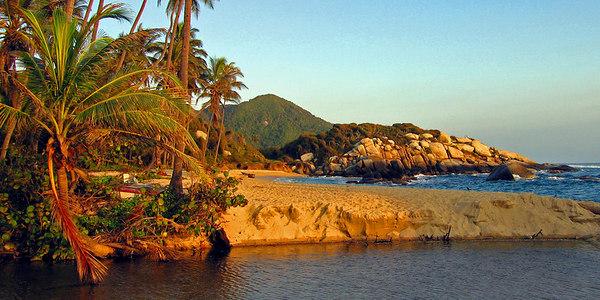
The concession of the Tayrona National Park was created in 1964 and it is on the Caribbean Coast in the north of Colombia, 34 km from the city of Santa Marta. It has not only an immense natural importance in this region, but it is also a cultural treasure. A long time ago, small groups of hunters and gatherers inhabited the park, and towards the 6th and 7th centuries, the coast and the mountain of the park were inhabited by the famous Tayrona tribe. You can admire their culture nowadays, because the Koguis, their direct descendants, as well as three other indigenous groups, still live in these areas and they maintain many of their traditions.
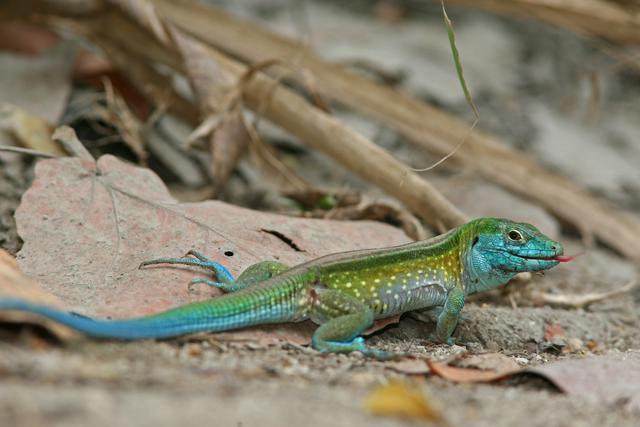 The park offers a big variety of flora and fauna because it includes two ecosystems between the mountain and the sea. It boasts fascinating wildlife including black howler and titi monkeys, red woodpeckers, iguanas, jaguars (which are rarely seen as they hunt at night), a variety of lizards, tropical marine life, and more than 400 species of birds, such as eagles, condors and the odd pet parrots kept at the restaurant at Arrecifes.
The vegetation is characterized by the ecological influence and the rain depending on the sector, from tropical dry forest to coral reefs.
The temperature varies between 25°C and 30°C, depending on the location and elevation. There are two rainy seasons from May to June and from September to November. The climate is temperate and hot.
The entrance fee is COP$54,500 for foreigners, COP$16,000 for Colombian citizens and COP$8,500 for students (you must bring student ID AND copy of passport to prove you are 25 or under) and children from the age of 5 to 12. The entrance can be booked in advance on the park website. That allows to avoid the queue at the entrance and to be sure to be able to enter in the park since the number of entrances are limited. Bags and personal belongings are checked for drugs and glass bottles at the park entrances.
The prices for food and water are very high inside the park compared to Colombian standards. For example a can of coke costs COP$3,000, a beer COP$5,000 and a 5-liter bottle is COP$7,000, although prices do vary from site to site (Cabo is a bit cheaper, Arecifes a bit more expensive since many more people stay there).
- El Zaíno. Most of the tourist attractions are located in the east of the park. So everybody has to enter the park through the gate of El Zaíno. It is on the highway between Santa Marta (36 km), Palomino (63 km) and Riohacha (134 km). At the gate unofficial guides are offering cheaper prices for tours. But most of the tours can be done on your own anyway.
- Cañaveral. Cañaveral is the only place which can be reached by car. A jeep or truck is running on this 4-km-long road for COP$2,000 per person. In Cañaveral there are a camping ground, exclusive cabanas and a restaurant. The beach is nice, but sometimes dangerous for swimming. The beach of Castilletes is a little off the road with the first accommodations in the park at the beach.
- Arrecifes. Arrecifes is the place with most of the good budget accommodations. It is as 45-min hike from Cañaveral to reach there. If you don't want to walk all the way you can go by horse (COP$20,000) or rent a donkey to carry your luggage. The beach is nice but dangerous for swimming. Instead head another 10 min to La Aranilla or 20 min to La Piscina.
- La Piscina. La Piscina is the safest place to swim and a great beach to hang out. It has a beautiful accommodation where you can enjoy your stay in Tayrona National Park.
- El Cabo San Juan de la Guía. A pair of spectacular beaches separated by a rocky outcrops. There is a large campground and restaurant that serves breakfast, lunch and dinner, which is surprisingly good and affordable. Besides there is also a basic but exclusive two-story wooden bungalow for rent on the rocky point. From La Piscina it's a 10-min walk and from Arricifes around 30 min of easy hiking.
- El Pueblito. An archaeological site similar to Ciudad Perdida only much smaller in size. It is a 1-2 hour uphill walk from El Cabo.
Since March 2019 the path to El Pueblito is closed, a local restaurant owner said it will be closed for the next 10 years (unverified).
El Zaíno. Most of the tourist attractions are located in the east of the park. So everybody has to enter the park through the gate of El Zaíno. It is on the highway between Santa Marta (36 km), Palomino (63 km) and Riohacha (134 km). At the gate unofficial guides are offering cheaper prices for tours. But most of the tours can be done on your own anyway.
Cañaveral. Cañaveral is the only place which can be reached by car. A jeep or truck is running on this 4-km-long road for COP$2,000 per person. In Cañaveral there are a camping ground, exclusive cabanas and a restaurant. The beach is nice, but sometimes dangerous for swimming. The beach of Castilletes is a little off the road with the first accommodations in the park at the beach.
Arrecifes. Arrecifes is the place with most of the good budget accommodations. It is as 45-min hike from Cañaveral to reach there. If you don't want to walk all the way you can go by horse (COP$20,000) or rent a donkey to carry your luggage. The beach is nice but dangerous for swimming. Instead head another 10 min to La Aranilla or 20 min to La Piscina.
La Piscina. La Piscina is the safest place to swim and a great beach to hang out. It has a beautiful accommodation where you can enjoy your stay in Tayrona National Park.
El Cabo San Juan de la Guía. A pair of spectacular beaches separated by a rocky outcrops. There is a large campground and restaurant that serves breakfast, lunch and dinner, which is surprisingly good and affordable. Besides there is also a basic but exclusive two-story wooden bungalow for rent on the rocky point. From La Piscina it's a 10-min walk and from Arricifes around 30 min of easy hiking.
El Pueblito. An archaeological site similar to Ciudad Perdida only much smaller in size. It is a 1-2 hour uphill walk from El Cabo.
Since March 2019 the path to El Pueblito is closed, a local restaurant owner said it will be closed for the next 10 years (unverified).
- Swimming. In La Piscina a reef in front of the coast forms a natural swimming pool. Other than Arrecifes it is safe to swim here.
- Snorkeling. Snorkeling at El Cabo is also a great pastime, provided the visibility is good. A variety of marine life including tropical fish can be seen nearer the rocks and on the reef further out into the ocean. It is recommended to bring one's own snorkeling gear.
Swimming. In La Piscina a reef in front of the coast forms a natural swimming pool. Other than Arrecifes it is safe to swim here.
Snorkeling. Snorkeling at El Cabo is also a great pastime, provided the visibility is good. A variety of marine life including tropical fish can be seen nearer the rocks and on the reef further out into the ocean. It is recommended to bring one's own snorkeling gear.
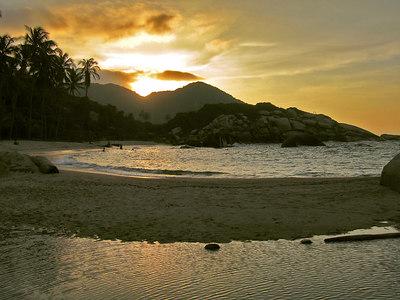 Food in Tayrona is a bit more expensive than other places in Colombia, especially considering the meals' quality. An average meal in the park can cost COP$30,000. A seafood-focused menu, the costs of transporting ingredients to the park, and marking up for tourists means eating on the beach is not cheap.
Travelers can get food from the different native or local restaurants present in Arrecifes, El Cabo and La Piscina. There is a variety of sea food, such as the tropical fish plate with rice and salad. Seafood dishes are also usually served with pataconés (fried plantain). Similar to bananas, plantains are usually firmer and not as sweet, with a neutral flavor like a potato. They are usually cut, fried and smashed into small pancake shapes, when they are fried again and served with food or as a snack on their own.
The local restaurants have a varied menu which includes breakfasts (with scrambled egg as the basis) seafood, meat (particularly steak and chicken), chips (papas fritas) and pastas. It is advisable to get in early, to avoid the disappointment of being told the restaurant is out of the meal you requested. Meals are ordered and paid for before receipt.
Between La Piscina and Arrecifes you can find a bakery called Panaderia. There they sell freshly made bread with cheese and chocolate filling. During the day someone travels through the park and sells some of the baked goods, if you are lucky you can catch them for a nice breakfast at the beach.
- Jenna - On the hike from the entrance to Arrecifes, there is a campsite just before you reach Arrecifes. Here they make fantastic bread with chocolate or dulce de leche (caramel) baked in and it only costs COP$2,000.
- The restaurant at Arrecifes sells delicious freshly squeezed juices. Try a fruit juice mix of 'lulo' (a fleshy yellow fruit indigenous to the Caribbean coast)and banana or maracuya (a local brand of grenadilla or passion fruit).
It is prohibited to swim in the sea near Arrecifes due to the danger of strong riptides.
It has been known for local thieves to listen to see if people are asleep in their tent and then open the tent and steal what they can find. Make sure to either use the lockers, keep valuables close to your person or do not bring them at all.