
 Umerkot is a historical town in southeastern Sindh. It is largely known for its gigantic historical fort and being the birthplace of Mughal emperor Akbar the Great, the location of which is marked by a monument.
"Umerkot lit" means the fort of Umer. It remained the capital of Greater Sindh, which also included some parts of present day Rajasthan state of India. The town became prominent during the time of the Mughals and later the British Raj. The Mughal king Akbar was born in Umerkot when his father Humayun fled from military defeat at the hands of Sher Shah Suri. Rana Prasad, a Hindu Sodha Rajput ruler of Amarkot, gave refuge to Humayun.
A significant folklore story relating to Umerkot is that of Umar Marvi, a young girl abducted by Umer, then-ruler and believed be the funder of the Umerkot, who wanted to marry because of her beauty. Upon her refusal she was imprisoned in the historic Umerkot Fort for many years until her release. Because of her courage, Marvi is an idol for the local people of Umerkot.
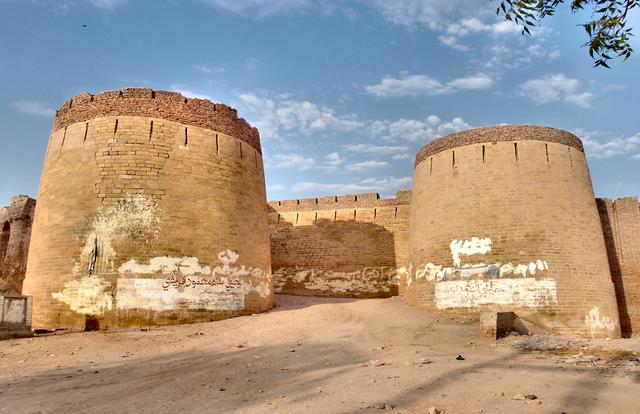
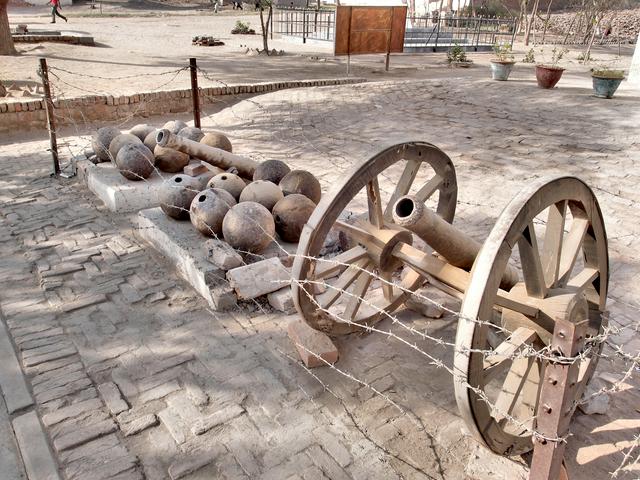
- Umerkot Fort. This imposing and historical fort is believed to have been built in the 11th century and by some estimates in the 13th century by Soomra rulers and later. The fortification was expanded by Kalhora rulers in 18th century. The fort remained under the control of many dynasties, who ruled the region such as Kalhoro, Talpurs, Rajput, Mughals and later the Britishers. The wide walls of fortification is made of dried bricks and filled with mud plaster. The fort rectangular in shape with large circular bastions at the each corners. Two large bastions at the main gate known as Shahi Darwaza, leads to twisted entrance into the fort are still in well preserved condition and surely gives an impressive look of the fort. Remains of some old structures can be found inside the fort as well a large watch tower in the middle of the fort accessible with stairway and have many cannons mounted on the watch tower, although without proper carriages.
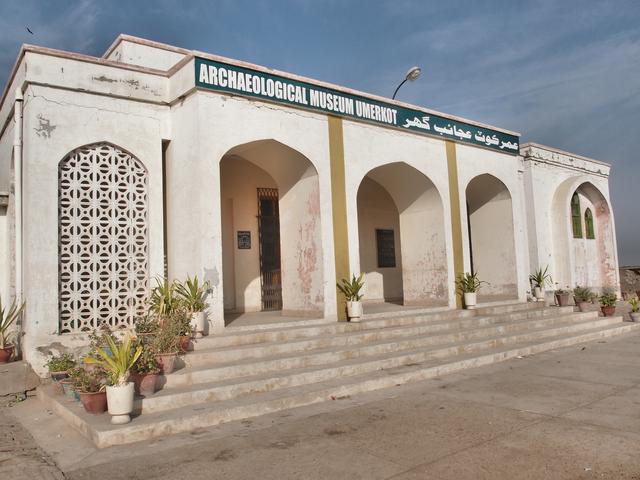
- Archaeological Museum Umerkot. 8AM-6PM daily. This museum comprises some small halls inside the Umerkot Fort. It has many items on display such as paintings of Mughal emperors, royal documents, armoury, manuscripts, specimens of calligraphies, jewellery showcasing the culture of Thar Desert, as well many Jain and Hindu sculptures. Rs 20 local and Rs 300 foreigner.
- Archaeological Museum Umerkot. 8AM-6PM daily. This museum comprises some small halls inside the Umerkot Fort. It has many items on display such as paintings of Mughal emperors, royal documents, armoury, manuscripts, specimens of calligraphies, jewellery showcasing the culture of Thar Desert, as well many Jain and Hindu sculptures. Rs 20 local and Rs 300 foreigner.
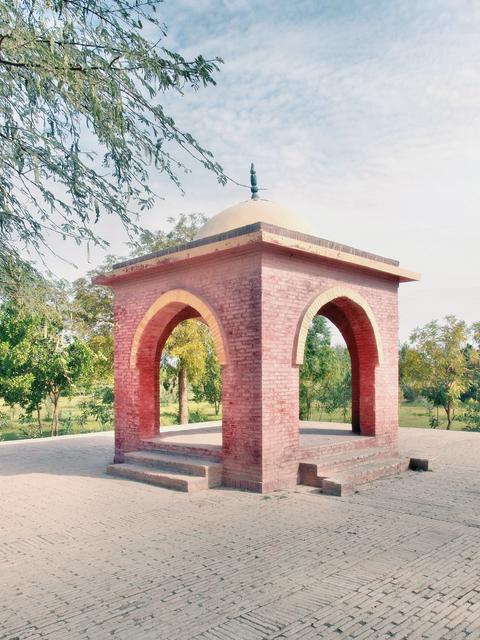
- Akbar Birthplace. A beautiful yet small monument with four archives built with pink jodhpur style bricks. Its dome at the top depicts the location where third Mughal emperor Akbar the Great was born on 14 October 1542 when his father Emperor Humayun and his Mughal Empress mother Hamida Banu Begum were taking refuge in Umerkotw hilst in the oasis garrison. Akbar is regarded as the greatest and most successful ruler of the Mughal Dynasty that ruled India for more than three centuries. He remained the emperor from 1556 until 1605.
Umerkot Fort. This imposing and historical fort is believed to have been built in the 11th century and by some estimates in the 13th century by Soomra rulers and later. The fortification was expanded by Kalhora rulers in 18th century. The fort remained under the control of many dynasties, who ruled the region such as Kalhoro, Talpurs, Rajput, Mughals and later the Britishers. The wide walls of fortification is made of dried bricks and filled with mud plaster. The fort rectangular in shape with large circular bastions at the each corners. Two large bastions at the main gate known as Shahi Darwaza, leads to twisted entrance into the fort are still in well preserved condition and surely gives an impressive look of the fort. Remains of some old structures can be found inside the fort as well a large watch tower in the middle of the fort accessible with stairway and have many cannons mounted on the watch tower, although without proper carriages.
- Archaeological Museum Umerkot. 8AM-6PM daily. This museum comprises some small halls inside the Umerkot Fort. It has many items on display such as paintings of Mughal emperors, royal documents, armoury, manuscripts, specimens of calligraphies, jewellery showcasing the culture of Thar Desert, as well many Jain and Hindu sculptures. Rs 20 local and Rs 300 foreigner.
Umerkot Fort. This imposing and historical fort is believed to have been built in the 11th century and by some estimates in the 13th century by Soomra rulers and later. The fortification was expanded by Kalhora rulers in 18th century. The fort remained under the control of many dynasties, who ruled the region such as Kalhoro, Talpurs, Rajput, Mughals and later the Britishers. The wide walls of fortification is made of dried bricks and filled with mud plaster. The fort rectangular in shape with large circular bastions at the each corners. Two large bastions at the main gate known as Shahi Darwaza, leads to twisted entrance into the fort are still in well preserved condition and surely gives an impressive look of the fort. Remains of some old structures can be found inside the fort as well a large watch tower in the middle of the fort accessible with stairway and have many cannons mounted on the watch tower, although without proper carriages.
- Archaeological Museum Umerkot. 8AM-6PM daily. This museum comprises some small halls inside the Umerkot Fort. It has many items on display such as paintings of Mughal emperors, royal documents, armoury, manuscripts, specimens of calligraphies, jewellery showcasing the culture of Thar Desert, as well many Jain and Hindu sculptures. Rs 20 local and Rs 300 foreigner.
Akbar Birthplace. A beautiful yet small monument with four archives built with pink jodhpur style bricks. Its dome at the top depicts the location where third Mughal emperor Akbar the Great was born on 14 October 1542 when his father Emperor Humayun and his Mughal Empress mother Hamida Banu Begum were taking refuge in Umerkotw hilst in the oasis garrison. Akbar is regarded as the greatest and most successful ruler of the Mughal Dynasty that ruled India for more than three centuries. He remained the emperor from 1556 until 1605.
- Shahi Bazaar. A large bazaar houses numerous big and small shops and works as a main shopping area of town. The bazaar is the only big marketplace of Umerkot and can be good place to hunt down the Sindhi handicraft and souvenirs. The bazaar surely gives a good example of a traditional bazaars and worth to take a stroll.
Shahi Bazaar. A large bazaar houses numerous big and small shops and works as a main shopping area of town. The bazaar is the only big marketplace of Umerkot and can be good place to hunt down the Sindhi handicraft and souvenirs. The bazaar surely gives a good example of a traditional bazaars and worth to take a stroll.
There're many basic restaurants scattered throughout the town of Umerkot, all severing Pakistani food however not all are hygienic as most of less basic restaurants. Expect to pay minimum Rs 200 for a single dish wherever and whatever you eat.
- City Heart, College Rd, +92 238 500001, +92 347 3500002. Pakistani, Continental, Chinese dishes on the menu, some Bar B Q and fast food, fresh juices and plenty of desserts. Overall, a good place to dine in. Have air-conditioned lounge.
- Chandar Foods, Thar Bazaar. Have what might be the town's best sweets, cakes, ice creams, faloodahs and rose-milk here.
City Heart, College Rd, +92 238 500001, +92 347 3500002. Pakistani, Continental, Chinese dishes on the menu, some Bar B Q and fast food, fresh juices and plenty of desserts. Overall, a good place to dine in. Have air-conditioned lounge.
Chandar Foods, Thar Bazaar. Have what might be the town's best sweets, cakes, ice creams, faloodahs and rose-milk here.