
Toronto, Ontario to Topeka, Kansas: Trains, Buses, Fares, Today's Connections, Routes, Duration, Types of Trains, Station Guides, Tips, Journey
Canada Train Tickets
Scan QR code, download App to see Toronto, Ontario's more live update, station guide, plan and photos



Train schedule Toronto, Ontario to Topeka, Kansas
Popular train routes departing from Toronto, Ontario
* Coburg North(Coburg Nord)
* Burlington, North Carolina
* Orlando, Florida
* Charleston, South Carolina
* Boston (North Station), Massachusetts
* Buffalo (Exchange Street Station), New York
* Utica, New York
Popular train routes arriving in Toronto, Ontario
* Elkhart, Indiana
* St. Catharines, Ontario
* Cumberland (Amtrakin Asema), Maryland(Cumberland (Amtrak Station), Maryland)
* Clemson, Etelä Carolina(Clemson, South Carolina)
* La Crosse, Wisconsin
* Spokane (Amtrak), Washington
* Brattleboro, Vermont
* Worcester, Massachusetts
* Culpeper, Virginia
* Utica, New York
* Lynchburg, Virginia
* San Antonio, Texas
* Montreal (Gare Centrale), Quebec
* Roanoke, Virginia
* Fargo, Pohjois Dakota(Fargo, North Dakota)
* Wilmington, Delaware
* Baltimore (Pennin Asema), Maryland(Baltimore (Penn Station), Maryland)
* Poughkeepsie, New York
* Dallas (Eddie Bernice Johnson Union Station), Texas
* Raleigh, Pohjois Carolina(Raleigh, North Carolina)
* Oakville, Ontario
Popular train routes departing from Topeka, Kansas
* Atlantic City, New Jersey
* Sacramento, California
* Buffalo (Exchange Street Station), New York
* Niagara Falls, New York, United States
* New York (Penn Station), New York
* Champaign Urbana, Illinois
Popular train routes arriving in Topeka, Kansas
* New York (Penn Station), New York
* San Antonio, Texas
* Los Angeles, California
* Kansas City (Union Station), Missouri
* Houston (Amtrak), Texas
* Toronto, Ontario
* Chicago (Union Station), Illinois


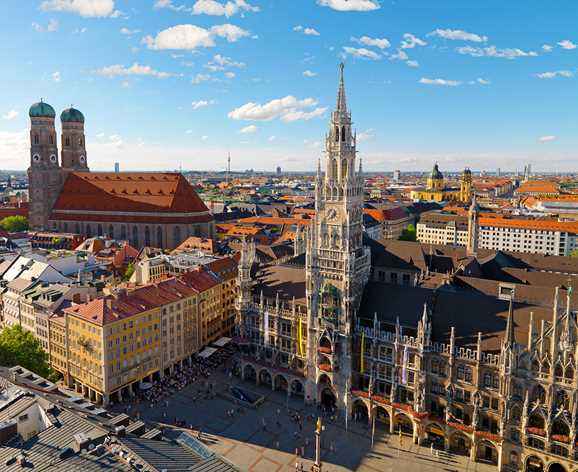
Toronto is the provincial capital of Ontario and the most populous city in Canada, with a population of 2,731,571 in 2016. Current to 2016, the Toronto census metropolitan area (CMA), of which the majority is within the Greater Toronto Area (GTA), held a population of 5,928,040, making it Canada's most populous CMA. The city is the anchor of the Golden Horseshoe, an urban agglomeration of 9,245,438 people (as of 2016) surrounding the western end of Lake Ontario. Toronto is an international centre of business, finance, arts, and culture, and is recognized as one of the most multicultural and cosmopolitan cities in the world.People have travelled through and inhabited the Toronto area, located on a broad sloping plateau interspersed with rivers, deep ravines, and urban forest, for more than 10,000 years. After the broadly disputed Toronto Purchase, when the Mississauga surrendered the area to the British Crown, the British established the town of York in 1793 and later designated it as the capital of Upper Canada. During the War of 1812, the town was the site of the Battle of York and suffered heavy damage by United States troops. York was renamed and incorporated in 1834 as the city of Toronto. It was designated as the capital of the province of Ontario in 1867 during Canadian Confederation. The city proper has since expanded past its original borders through both annexation and amalgamation to its current area of 630.2 km2 (243.3 sq mi). The diverse population of Toronto reflects its current and historical role as an important destination for immigrants to Canada. More than 50 percent of residents belong to a visible minority population group, and over 200 distinct ethnic origins are represented among its inhabitants. While the majority of Torontonians speak English as their primary language, over 160 languages are spoken in the city.Toronto is a prominent centre for music, theatre, motion picture production, and television production, and is home to the headquarters of Canada's major national broadcast networks and media outlets. Its varied cultural institutions, which include numerous museums and galleries, festivals and public events, entertainment districts, national historic sites, and sports activities, attract over 43 million tourists each year. Toronto is known for its many skyscrapers and high-rise buildings, in particular the tallest free-standing structure in the Western Hemisphere, the CN Tower.The city is home to the Toronto Stock Exchange, the headquarters of Canada's five largest banks, and the headquarters of many large Canadian and multinational corporations. Its economy is highly diversified with strengths in technology, design, financial services, life sciences, education, arts, fashion, business services, environmental innovation, food services, and tourism.
Toronto,Ontario - Guide, Attractions, Tours, Sightseeings | Train from/to Toronto,Ontario | Popular RoutesTopeka (; Kansa: Tó Pee Kuh) is the capital city of the U.S. state of Kansas and the seat of Shawnee County. It is along the Kansas River in the central part of Shawnee County, in northeast Kansas, in the Central United States. As of the 2010 census, the city population was 127,473. The Topeka Metropolitan Statistical Area, which includes Shawnee, Jackson, Jefferson, Osage, and Wabaunsee counties, had a population of 233,870 in the 2010 census. The name Topeka is a Kansa-Osage sentence that means "place where we dug potatoes", or "a good place to dig potatoes". As a placename, Topeka was first recorded in 1826 as the Kansa name for what is now called the Kansas River. Topeka's founders chose the name in 1855 because it "was novel, of Indian origin and euphonious of sound." The mixed-blood Kansa Native American, Joseph James, called Jojim, is credited with suggesting Topeka's name. The city, laid out in 1854, was one of the Free-State towns founded by Eastern antislavery men immediately after the passage of the Kansas–Nebraska Bill. In 1857, Topeka was chartered as a city. The city is well known for the landmark U.S. Supreme Court case Brown v. Board of Education of Topeka, which overturned Plessy vs. Ferguson and declared racial segregation in public schools to be unconstitutional. The U.S. Navy has named three ships USS Topeka after the city.
Topeka,Ks - Guide, Attractions, Tours, Sightseeings | Train from/to Topeka,Ks | Popular Routes
Canada Train Tickets
Scan QR code, download App to see Toronto, Ontario's more live update, station guide, plan and photos
Hot Journeys
* Helsinki(Helsinki) -> Rovaniemi(Rovaniemi)
* Milan -> Rome(Roma)
* London(London) -> Edinburg
* Madrid(Madrid) -> Barcelona
* Milan -> Venice(Venezia)
* Berlin(Berlin) -> Frankfurt
* Frankfurt -> Munich(Müchen)
* Stuttgart -> Frankfurt
* Berlin(Berlin) -> Munich(Müchen)
* Bratislava(Bratislava) -> Warsaw(Warszawa)
* Dusseldorf(Düsseldorf) -> Munich(Müchen)
* Barcelona -> Madrid(Madrid)
* Florence -> Prato(Prato)
* Rome(Roma) -> Venice(Venezia)
* Frankfurt -> Berlin(Berlin)
* Frankfurt Airport(Frankfurt Flughafen) -> Cologne(Köln)
* Basel(Basel) -> Paris
* Madrid(Madrid) -> Barcelona
* Dusseldorf(Düsseldorf) -> Frankfurt Airport(Frankfurt Flughafen)
* Beijing(北京) -> Shanghai(上海)
* Oxford -> London(London)
* Paris -> Venice(Venezia)
* Interlaken -> Lucerne(Luzern)
* Warsaw(Warszawa) -> Krakow(Kraków)
* Zurich(Zürich) -> Paris
* Milan -> Florence
* Milan -> Venice(Venezia)