Dortmund Central to Basel, Badischer Bahnhof: Trains, Buses, Fares, Today's Connections, Routes, Duration, Types of Trains, Station Guides, Tips, Journey

Germany Train Tickets

Scan QR code, download App to see Dortmund Central's more live update, station guide, plan and photos
apple-store google-store

Train schedule Dortmund Central(Dortmund Hbf) to Basel, Badischer Bahnhof


Popular train routes departing from Dortmund Central(Dortmund Hbf)


Popular train routes arriving in Dortmund Central(Dortmund Hbf)


Popular train routes departing from Basel, Badischer Bahnhof


Popular train routes arriving in Basel, Badischer Bahnhof


Departure

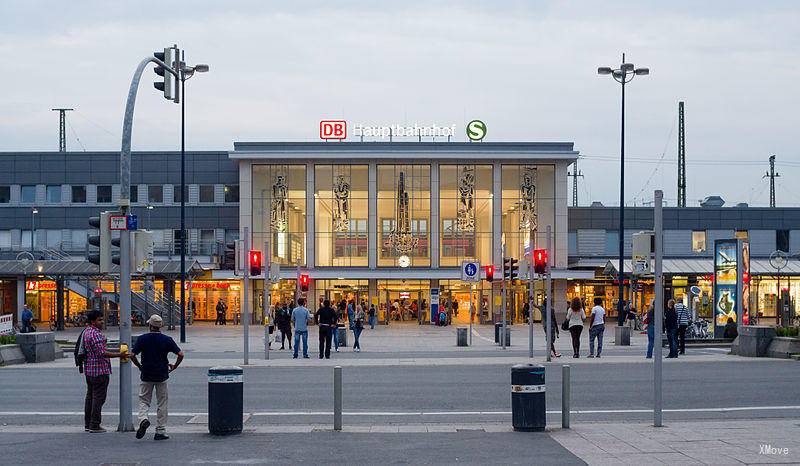
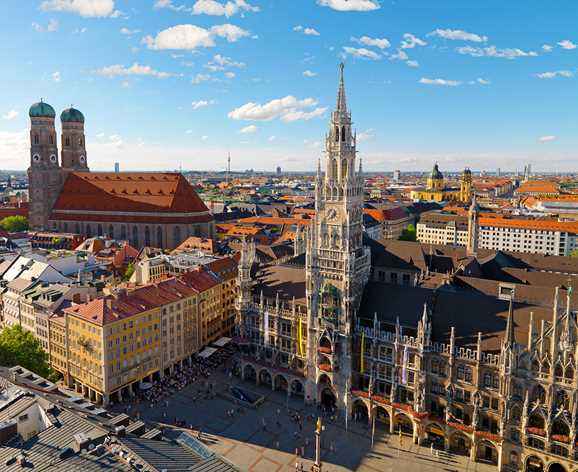
Dortmund (, also UK: , US: , German: [ˈdɔʁtmʊnt] ; Low German: Düörpm [ˈdyːœɐ̯pm̩]; Latin: Tremonia) is, with a population of 586,600 (2017), the third-largest city of Germany's most populous federal state of North Rhine-Westphalia after Cologne and Düsseldorf, and Germany's eighth-largest city. It is the largest city (by area and population) of the Ruhr, Germany's largest urban area with some 5.1 million (2011) inhabitants, as well as the largest city of Westphalia. On the Emscher and Ruhr rivers (tributaries of the Rhine), it lies in the Rhine-Ruhr Metropolitan Region and is considered the administrative, commercial, and cultural centre of the eastern Ruhr. Founded around 882, Dortmund became an Imperial Free City. Throughout the 13th to 14th centuries, it was the "chief city" of the Rhine, Westphalia, the Netherlands Circle of the Hanseatic League. During the Thirty Years' War, the city was destroyed and decreased in significance until the onset of industrialization. The city then became one of Germany's most important coal, steel and beer centres. Dortmund consequently was one of the most heavily bombed cities in Germany during World War II. The devastating bombing raids of 12 March 1945 destroyed 98% of buildings in the inner city center. These bombing raids, with more than 1,110 aircraft, hold the record to a single target in World War II.The region has adapted since the collapse of its century-long steel and coal industries and shifted to high-technology biomedical technology, micro systems technology, and also services. In 2009, Dortmund was classified as a Node city in the Innovation Cities Index published by 2thinknow and is the most sustainable and digital city in Germany.Dortmund is home to many cultural and educational institutions, including the Technical University of Dortmund and Dortmund University of Applied Sciences and Arts, International School of Management and other educational, cultural and administrative facilities with over 49,000 students, many museums, such as Museum Ostwall, Museum of Art and Cultural History, German Football Museum, as well as theatres and music venues like the Konzerthaus or the Opera House of Dortmund. The city is known as Westphalia's "green metropolis". Nearly half the municipal territory consists of waterways, woodland, agriculture and green spaces with spacious parks such as Westfalenpark and Rombergpark. This stands in a stark contrast with nearly a hundred years of extensive coal mining and steel milling in the past. Dortmund is home to Ballspielverein Borussia 09 e.V. Dortmund, commonly known as Borussia Dortmund, a successful club in German football.

Dortmund - Guide, Attractions, Tours, Sightseeings | Train from/to Dortmund | Popular Routes

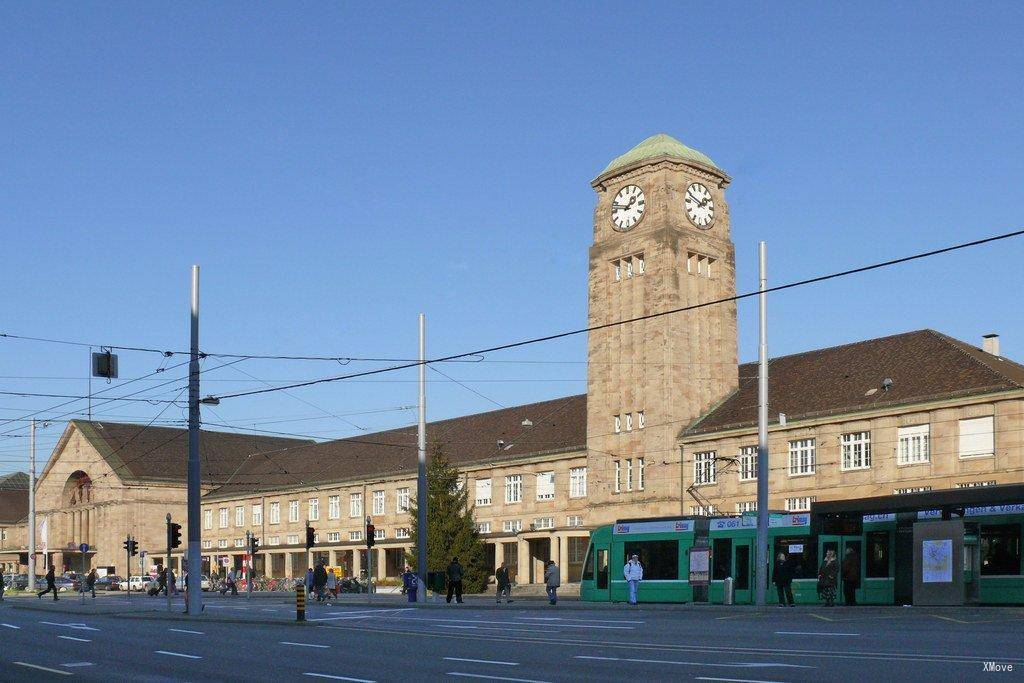
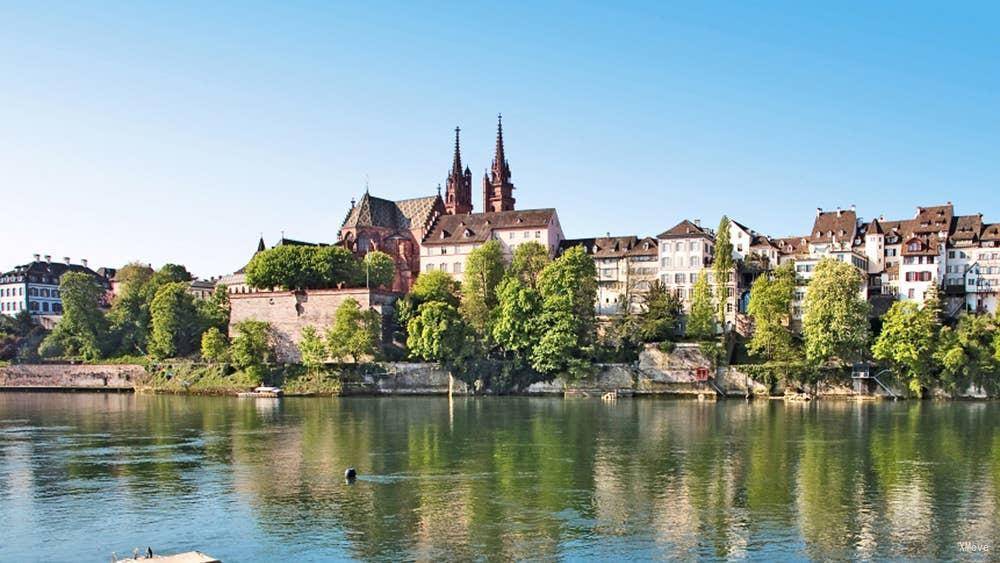
Basel ( BAH-zəl, German: [ˈbaːzl̩] ) or Basle ( BAHL; French: Bâle [bɑl]; Italian: Basilea [baziˈlɛːa]; Romansh: Basilea [baziˈleːa] ) is a city in northwestern Switzerland on the river Rhine. Basel is Switzerland's third-most-populous city (after Zürich and Geneva) with about 180,000 inhabitants.Located where the Swiss, French and German borders meet, Basel also has suburbs in France and Germany. As of 2016, the Swiss Basel agglomeration was the third-largest in Switzerland, with a population of 541,000 in 74 municipalities in Switzerland (municipal count as of 2018). The initiative Trinational Eurodistrict Basel (TEB) of 62 suburban communes including municipalities in neighboring countries, counted 829,000 inhabitants in 2007.The official language of Basel is (the Swiss variety of Standard) German, but the main spoken language is the local Basel German dialect. The city is known for its many internationally renowned museums, ranging from the Kunstmuseum, the first collection of art accessible to the public in Europe (1661) and the largest museum of art in the whole of Switzerland, to the Fondation Beyeler (located in Riehen). The University of Basel, Switzerland's oldest university (founded in 1460), and the city's centuries-long commitment to humanism, have made Basel a safe haven at times of political unrest in other parts of Europe for such notable people as Erasmus of Rotterdam, the Holbein family, Friedrich Nietzsche and in the 20th century also Hermann Hesse and Karl Jaspers. The city of Basel is Switzerland's second-largest economic centre after the city of Zürich and has the highest GDP per capita in the country, ahead of the cantons of Zug and Geneva. In terms of value, over 94% of Basel City's goods exports are in the chemical and pharmaceutical sectors. With production facilities located in the neighboring Schweizerhalle, Basel accounts for 20% of Swiss exports and generates one third of the national product.Basel has been the seat of a Prince-Bishopric since the 11th century, and joined the Swiss Confederacy in 1501. The city has been a commercial hub and an important cultural centre since the Renaissance, and has emerged as a centre for the chemical and pharmaceutical industries in the 20th century. In 1897, Basel was chosen by Theodor Herzl as the location for the first World Zionist Congress, and altogether the congress has been held there ten times over a time span of 50 years, more than in any other location. The city is also home to the world headquarters of the Bank for International Settlements. In 2019 Basel, was ranked among the ten most liveable cities in the world by Mercer together with Zürich and Geneva.

Basel - Guide, Attractions, Tours, Sightseeings | Train from/to Basel | Popular Routes
Destination

Germany Train Tickets

Scan QR code, download App to see Dortmund Central's more live update, station guide, plan and photos
apple-store google-store

Hot Journeys


Main Railway Operators


Ultimate Guide to German Railway

German Railway

Ultimate Guide to German Railways

For those who love to travel, the quality and service of German Railways (Deutsche Bahn AG or German Railway abbreviated as DB) are world-class, with free entry and exit without ticket gates, ICE high-speed trains with a speed of nearly 300 kilometers per hour, and dense With the railway network and precise and punctual schedules, if you want to enjoy the way of traveling through the state and provinces on the train, Germany can be said to be the best choice.

There are approximately 37,000 trains operating in Germany every day. Most of the trains are operated by 24 railway companies under Deutsche Bahn. Deutsche Bahn also has the world's third densest railwa...


Ultimate Guide to Flixbus

Flixbus

Ultimate Guide To FlixBus/FlixTrain

Friends who live in Europe know that buses are currently one of the cheapest ways to travel in Europe. Flixbus is currently the largest long-distance bus company in Europe.

At present, Flixbus not only does business in popular tourist cities, but most of the large residential towns in Europe have bus stations, including Germany, France, Italy, Netherlands, Poland, Czech Republic, Denmark, Sweden, Norway, Switzerland, Spain , Portugal, Hungary, Austria, Croatia, Belarus and other countries. Among them, the German route is the cheapest. Flixbus began to expand to the United States in 2018, and currently has thousands of sites in the United States. ...

Ultimate Guide to French Railway

French Railway

Ultimate Guide to French Railway

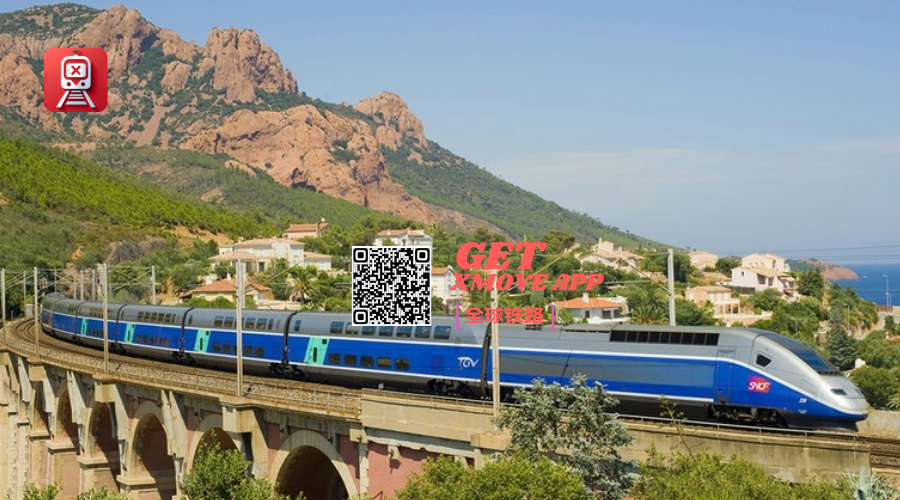
The French railway system is planned and constructed by the French National Railway Agency (Socicte Nationalc des Chemins de Fer Francais, abbreviated as SNCF). The route is centered on Paris and woven in all directions, including high-speed trains (Train a Grande Vitesse, abbreviated as TGV). Routes, and general train routes that go to cities and towns. Among these general train routes, the nationwide inter-regional route is called the "Grande Ligne" (GL for short), and the routes that only travel within a single area are collectively called "Regional Rapid Transport System" (Transports Express Regionaux, referred to as TER).

(https://sematicweb.detie.cn/railways/...

Ultimate Guide to Austrian National Railway

Austrian National Railway

Ultimate Guide to Austrian Railways

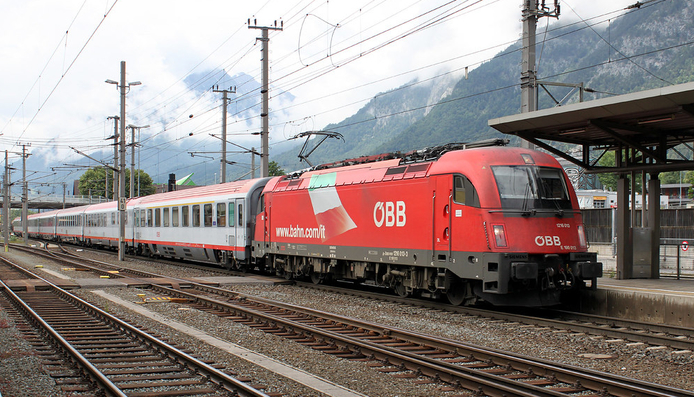
Traveling through Austria by train is now getting faster and easier. The best way to explore Austria is to travel through magnificent mountain views, lush alpine meadows, historic towns and picturesque villages. Austria is located in the central part of the European continent adjacent to Germany and Italy. It also borders the Czech Republic, Slovakia, Hungary, Slovenia, Liechtenstein and Switzerland. Its train network is well connected to surrounding countries. With a punctuality rate of 96%, ÖBB was one of the most reliable railway operators in Europe in 2018.

Austria’s main train service operator is the state-owned company ÖBB, which serves almost the entire country. There are some private railway companies that are not part of ÖBB. In the corr...